Guide No. 1 · The Castle Rolls
The Concentric Castle
A wall inside a wall. It sounds too simple to matter. It produced the most sophisticated fortifications ever raised in Britain - and then, almost at once, the great age of castle-building was over. This is the life of an idea.
Most of what people picture when they hear the word castle is older than the thing this essay is about, or younger than it, or a fake. The moment the concentric castle describes is narrow - a few decades on either side of 1290 - and almost all of it can still be stood inside today, mostly in Wales, mostly for the price of a Cadw ticket. It is worth understanding what you are looking at, because you are looking at the top of the curve.
The idea
A concentric castle is a castle with two complete rings of wall, one inside the other, the inner ring built higher than the outer. That is the whole invention. Everything follows from it.
Put a defender on each wall and they do not get in each other's way: the men on the tall inner wall shoot clean over the heads of the men on the low outer wall, so an attacker at the foot of the castle faces two tiers of fire at once, not one. Breach the outer ring and you have not broken in - you have walked into a killing ground between the walls, overlooked on every side, with a second and taller wall still to climb. There is no single weak point to rush, and, crucially, no single strong point to aim for either.
That last part was the real break with the past. The Norman castle, and the great square keeps that followed it, were built around a donjon - one enormous tower that was both the lord's residence and the last redoubt. Everything else could fall; the keep held. The concentric plan throws the keep away. There is no last tower to retreat to because the whole enclosure is the strong point, defended in depth, ring behind ring. It is a colder, more mathematical way of thinking about survival, and it arrived in Britain almost fully formed - because it was imported.
Where it came from
The idea came home with the crusaders. The great Hospitaller and Templar castles of the Latin East - Krak des Chevaliers above all - had been building defence in concentric rings for a century, refined against the siege engineering of a part of the world that took sieges very seriously. Behind them stood an even older model: the land walls of Constantinople, a triple line of ditch and wall and higher wall that had turned away army after army since the fifth century.
The man who would build Britain's greatest concentric castles had seen this world at first hand. Before he was king, Edward I went on crusade - the Ninth, in 1271 and 1272 - and spent the better part of a year at Acre, in a Holy Land defended by exactly these ideas. He came back a soldier with a soldier's eye for what worked, and, before long, a country to try it on.
Caerphilly comes first - and not from the king
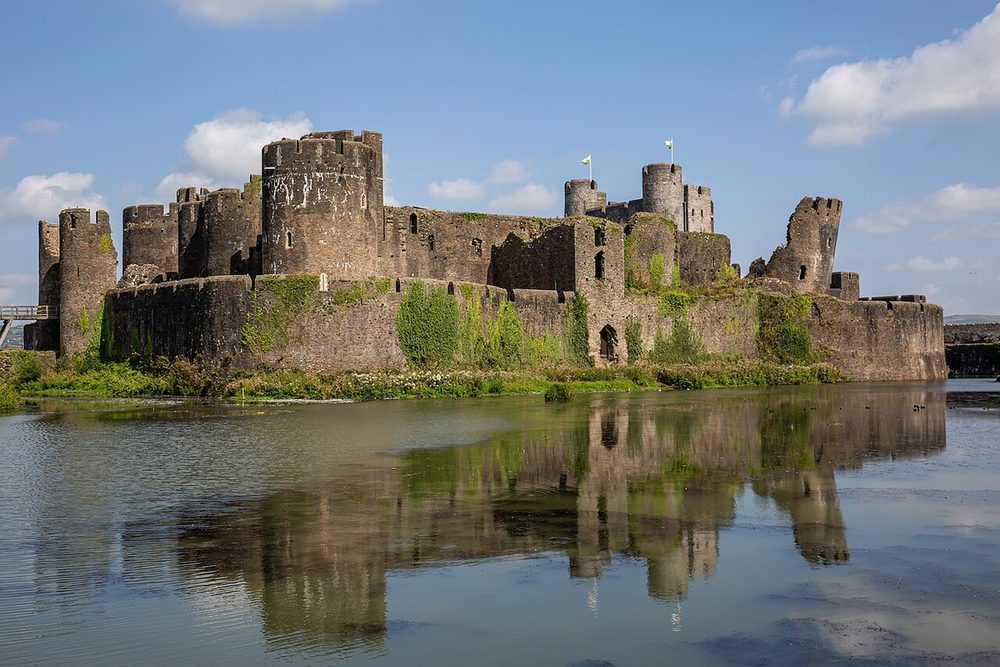
The first true concentric castle in Britain was not royal. It was begun in 1268 by Gilbert de Clare, Earl of Gloucester - "the Red Earl" - a Marcher baron locked in his own war with the Welsh prince Llywelyn ap Gruffudd, and rich enough to build without waiting for anyone's permission. What he raised at Caerphilly Castle was enormous, and it announced the whole future in one go: a compact double ring of walls set inside a vast, deliberate sheet of water, dams and lakes engineered so that no siege tower or mine could ever reach the walls on dry ground.
Cadw calls it the biggest castle in Wales and second only to Windsor in Britain. Its 30 acres include the lakes, though, and on recorded area Dover's walls alone enclose almost 32. Its water defences still work, and the moat is now shared with the local swans. Its most famous feature is a south-east tower that leans further out of true than the one at Pisa, a small catastrophe of subsidence that the castle has simply worn ever since. Caerphilly proved the concentric idea on British ground a full decade before the king took it up. When Edward did take it up, he did so on a scale no private lord could match.
The iron ring
Edward conquered Wales in two campaigns, in 1277 and again in 1282–83, and he held it the way the Romans had held frontiers: by building. The chain of fortresses he threw around Gwynedd is remembered as the "iron ring," and it is the single most concentrated and expensive castle-building programme in British history. The first campaign gave him Flint and Rhuddlan - at Rhuddlan he canalised three miles of the River Clwyd so that supply ships could sail to the gate. The second gave him the famous three: Conwy, Caernarfon and Harlech.
The mind behind the masonry belonged to a Savoyard: Master James of St George, brought from the mountains of Savoy where Edward had seen his work, and made master of the king's works in Wales. He is one of the very few medieval architects whose name survives attached to his buildings, and he earned it. At Harlech he set a concentric castle on a crag above the sea, built so it could always be resupplied by water - the sea has since retreated, and a modern steel footbridge now crosses the gap where ships once tied up. The genius of the iron ring was not any single castle but the system: a ring of mutually supporting fortress-ports, each able to feed the next by sea, holding down a conquered country from the coast inward.
Beaumaris: the perfect castle nobody finished
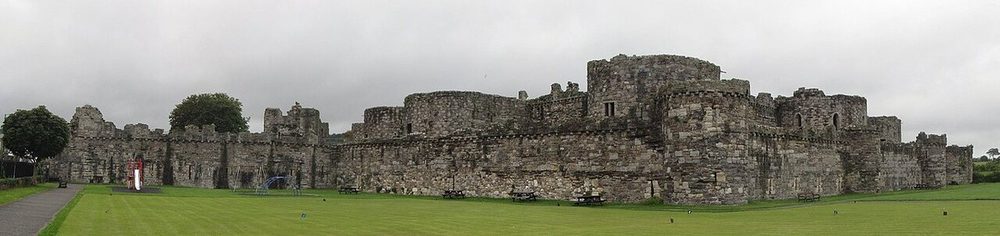
The last of them is the one the textbooks draw. Beaumaris, begun in 1295 on the flat shore of Anglesey after a final Welsh revolt, is the concentric idea in its pure state - perfectly symmetrical, a wall neatly within a wall within a moat, with no awkward crag or older building to force a compromise. On paper it is the most technically accomplished castle in the British Isles. Master James threw four thousand men at it in a single summer.
And then the money ran out. The Welsh threat receded, the Scottish wars swallowed the treasury, and Beaumaris was simply left - its walls never brought up to their planned height, its great towers stopped short. It is the reason the castle looks oddly squat in photographs: you are seeing a masterpiece halted at first-floor level. Its unfinished perfection is the whole story of the concentric castle in miniature - the design had reached the point where the only thing that could stop it was the sheer cost of building it, and the cost won.
Caernarfon, the exception
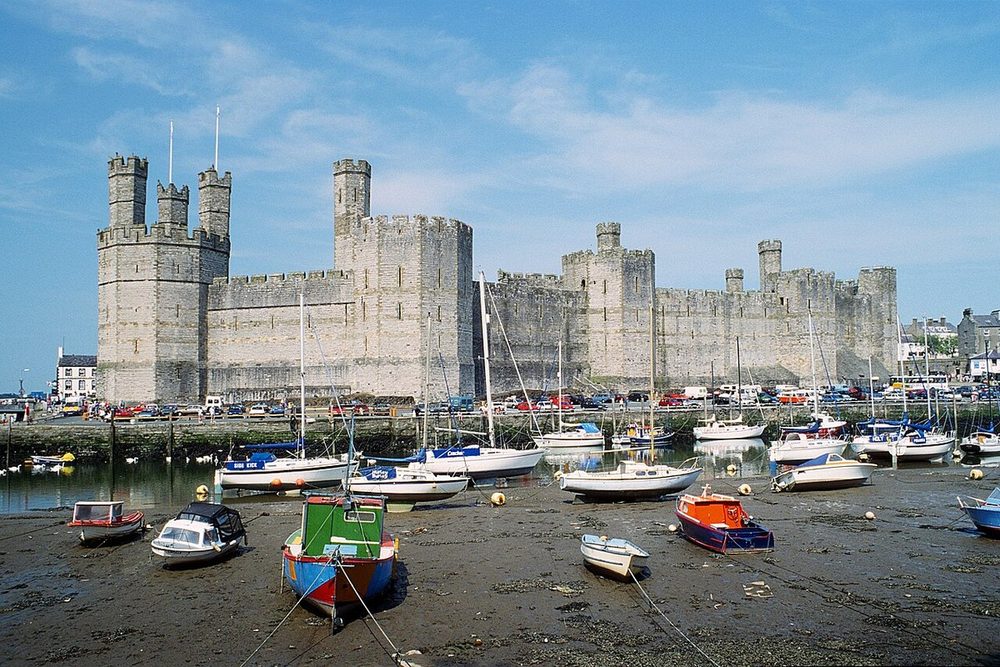
One of the great Edwardian castles is not really concentric at all, and it is the most famous of them. Caernarfon is a single powerful circuit rather than a ring-within-a-ring, and it was built to do a different job. Where the others are engineering, Caernarfon is propaganda. Its towers are polygonal, not round, and its walls are banded in coloured stone - features widely read as a deliberate echo of the land walls of Constantinople, and through them of imperial Rome itself. Wales had a legend that a Roman emperor was born at Caernarfon; Edward, who had a son born there in 1284, built a fortress-palace that made the claim in stone. It is the odd one out precisely because it was never only a machine for defence. It was an argument about who now ruled.
The top of the curve
Here is the paradox the concentric castle leaves behind. It was the most advanced fortification the Middle Ages produced in Britain, and it was almost the last. Within Edward's own reign the great programme had nearly bankrupted the crown, and no one after him could afford to build at that pitch. Gunpowder artillery, still crude in 1295, would within two centuries make high stone walls a liability rather than a strength. And the political conditions that produced private monsters like Caerphilly - over-mighty barons with their own armies and their own quarrels - were being ground down by exactly the centralising kings who built the iron ring.
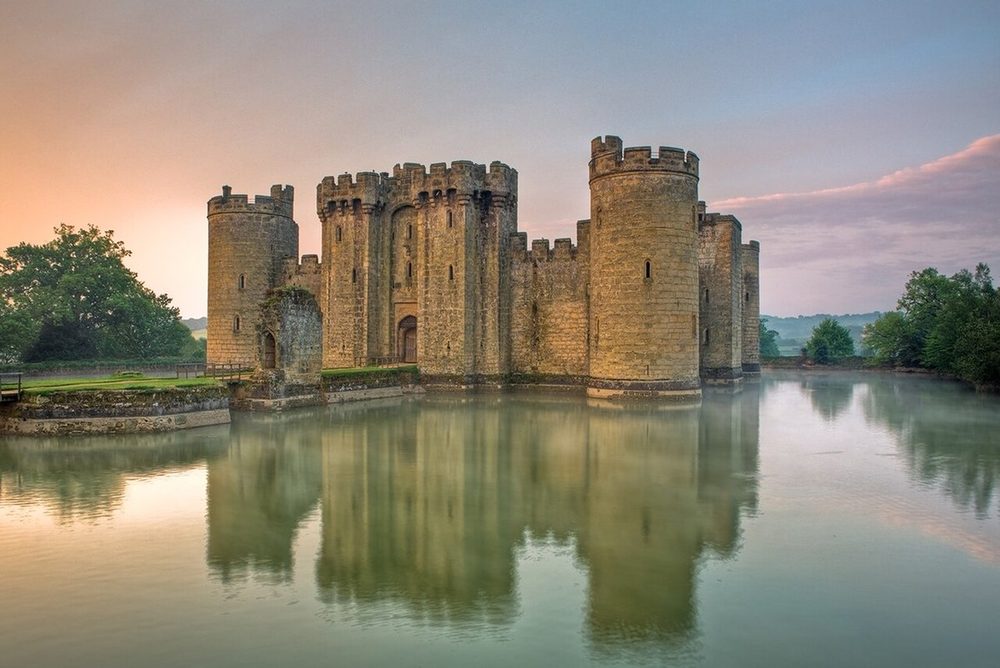
What came afterward looked like castles but meant something else. When Sir Edward Dallingridge built Bodiam in Sussex in 1385 - the moated, four-square, impossibly picturesque castle that launches a thousand postcards - he built something that would have embarrassed Master James: broad windows, thin walls, a plan better suited to entertaining than to holding out. Bodiam is a comfortable manor house wearing a suit of armour, a knight's statement about his own standing dressed up as a fortress. It is lovely, and it is the beginning of the end. The serious castle, the castle as a solved problem in the geometry of survival, had already happened. It happened in Wales, in the space of a generation, and you can still walk into the middle of it.
Where to stand inside the idea
The concentric moment survives better than almost any other phase of castle-building, because the Edwardian castles were built to last and most are now in state care. If you want to understand the idea by standing in it:
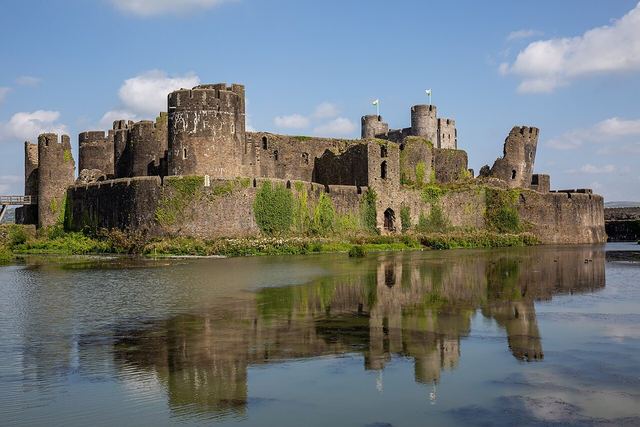
Caerphilly Castle
Where it started in Britain, and where the water defences still do their job. The one to see first.
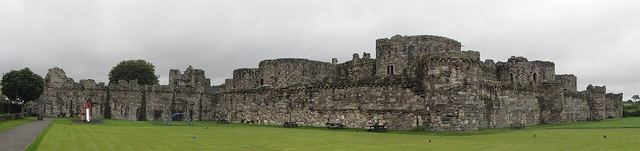
Beaumaris Castle
The theoretically perfect plan, frozen half-built. The clearest textbook diagram you can actually walk through.
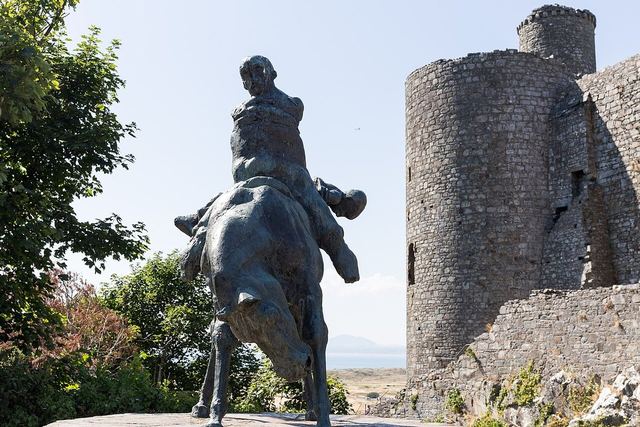
Harlech Castle
The concentric castle as sea-fortress, on its crag above a bay the sea has since abandoned.
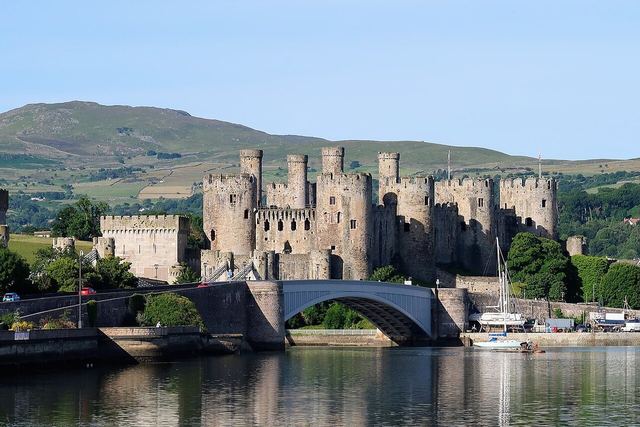
Conwy Castle
A single-circuit Edwardian giant rather than a true concentric plan, but among the most complete of all - you can walk nearly the entire wall-walk.
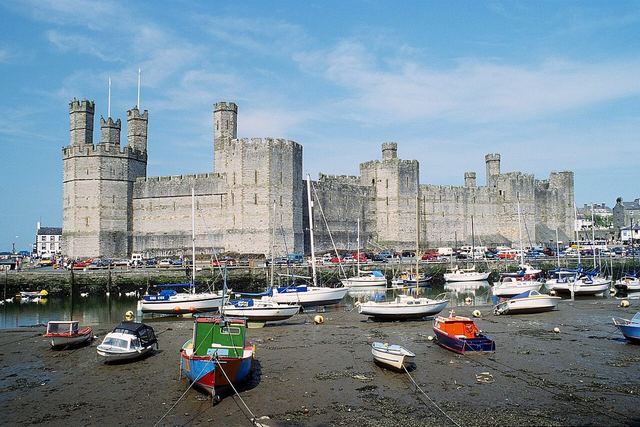
Caernarfon Castle
The other single-circuit giant, and the most complete of all - polygonal towers, banded stone, built as an argument in masonry.
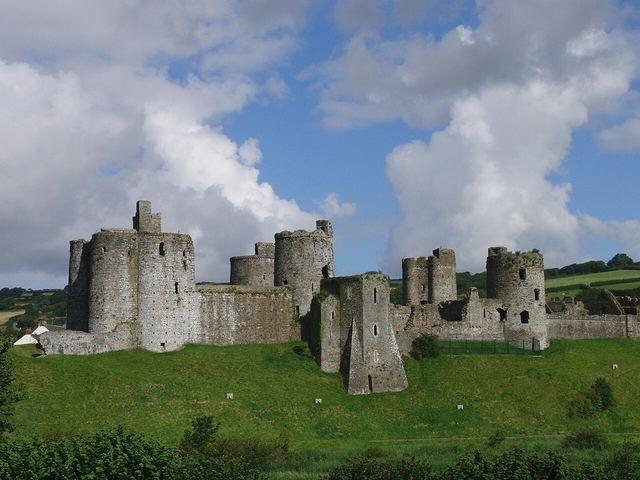
Kidwelly Castle
A Norman castle later given a concentric second ring, so you can see the idea being retro-fitted onto something older.
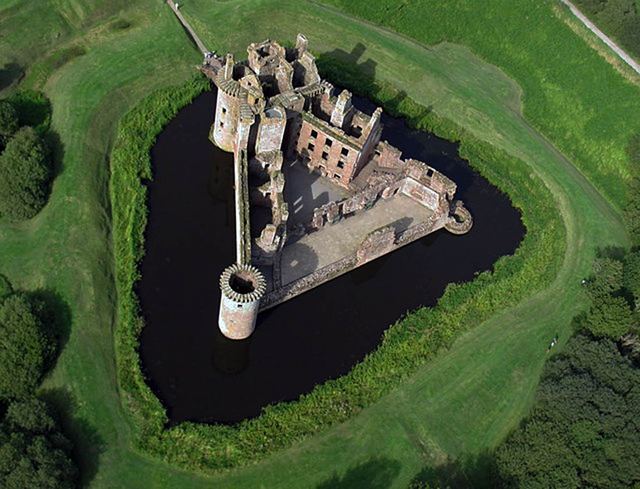
Caerlaverock Castle
In Scotland, not concentric but of the same generation and moated - a rare triangular plan, the same restless experimenting with the geometry of walls.