Guide No. 11 · The Castle Rolls
Caernarfon Castle
Edward I's other Welsh castles were built to win a siege. This one was built to win an argument - and its polygonal towers and banded stone are still making that argument, seven hundred years later.
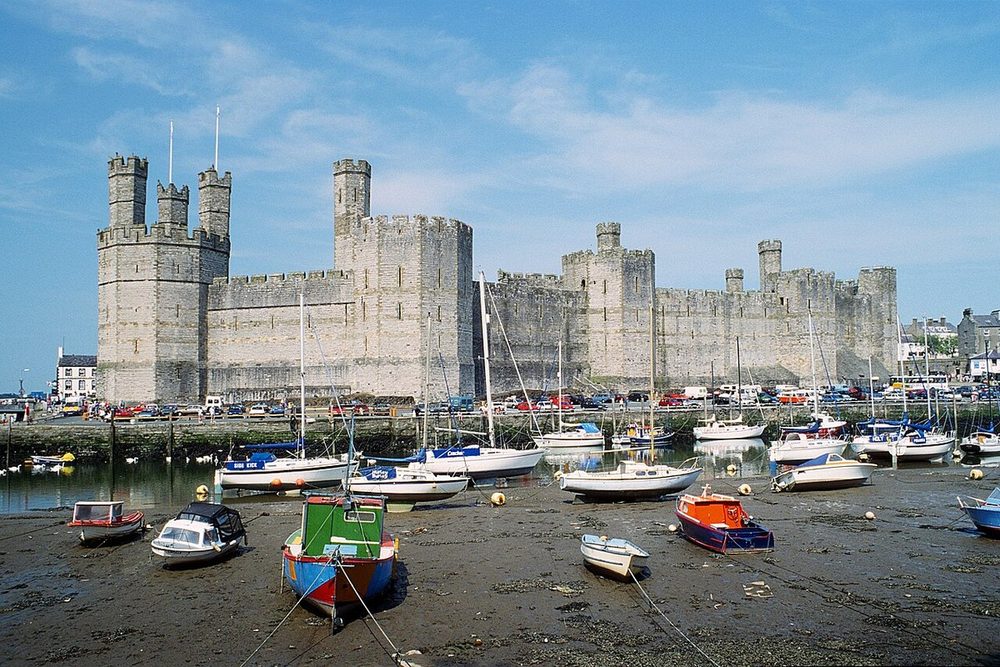
Caernarfon Castle went up from 1283 as the centrepiece of Edward I's conquest of Wales, part of the same building programme that produced Conwy, Harlech and Beaumaris. But where those castles are essentially engineering - rings of wall built to survive a siege - Caernarfon is closer to propaganda in stone. Its towers are polygonal rather than round, its walls banded in different coloured stone, features widely read as a deliberate imitation of the land walls of Constantinople, the most famous fortifications in the medieval world.
A fortress built to make a claim
Medieval Welsh legend held that a Roman emperor had been born at Caernarfon, in a story known as the Dream of Macsen Wledig. Edward I's own son, later Edward II, was born inside the half-built castle in 1284 - and the design's echoes of imperial Constantinople look, to most historians, like a deliberate attempt to fold that legend into a statement about the new rulers of Wales: not just conquerors, but heirs to an older imperial authority. Unusually for a medieval architect, the mind behind the masonry is known by name - Master James of St George, brought from Savoy to oversee Edward's Welsh castle-building programme - and Caernarfon shows him working as much as a propagandist as an engineer.
Still hosting royal ceremony, seven centuries on
Caernarfon was built as an integrated fortress-and-borough, its walls enclosing both the castle and a planted English town whose medieval walls still largely survive intact today - a rare combination that makes the whole site, castle and town together, part of the UNESCO World Heritage listing alongside Beaumaris, Conwy and Harlech. Its original role as the seat of English royal authority in Wales has echoed forward in an unexpected way: the formal investiture of the Prince of Wales has been held at Caernarfon in modern times, including the future Edward VIII in 1911 and Prince Charles in 1969, both ceremonies staged inside the very walls Edward I built to announce exactly that kind of authority in the first place.
Quick answers
Why does Caernarfon Castle look different from Edward I's other Welsh castles?
Most of Edward I's Welsh castles, like Beaumaris and Harlech, are concentric - a ring of wall inside another ring. Caernarfon is a single powerful circuit instead, with polygonal towers and walls banded in different coloured stone, widely thought to be a deliberate echo of the land walls of Constantinople. It was built to make an argument about imperial authority, not just to withstand a siege.
What is the legend connecting Caernarfon Castle to Rome?
Medieval Welsh legend, recorded in the tale known as the Dream of Macsen Wledig, held that a Roman emperor was born at Caernarfon. Edward I's son, later Edward II, was born at the castle in 1284, and the design's echoes of Constantinople's walls are usually read as a deliberate attempt to fold that legend into a claim about the new Plantagenet rulers of Wales.
Why is Caernarfon Castle linked to the Prince of Wales?
Caernarfon has hosted the formal investiture of the Prince of Wales in modern times, including the future Edward VIII in 1911 and Prince Charles in 1969, both held in the castle's grounds. The tradition draws on the castle's original role as the seat of English royal authority in Wales after Edward I's conquest.
Is Caernarfon Castle a World Heritage Site?
Yes - it's part of the UNESCO World Heritage Site 'Castles and Town Walls of King Edward I in Gwynedd', inscribed in 1986 alongside Beaumaris, Conwy and Harlech, in recognition of the group as the finest examples of medieval military architecture in Europe.