Guide No. 4 · The Castle Rolls
Scottish Tower Houses
Not a wall with a castle behind it - just the tower, standing alone, five storeys of a laird's whole life stacked one room on top of another. Scotland built more of these than any other kind of castle it ever produced, and it built them because it had to.
A tower house is a fortified home built as a single tall, narrow stone tower, rather than a spread of buildings inside a curtain wall. A hall for one floor, private chambers stacked above it, a kitchen and stores below, the whole household's life arranged vertically instead of spread out sideways. Scotland built well over 800 of them between the 14th and 17th centuries - more than any other type of castle the country ever produced - and several hundred still stand today, from bare roofless shells to fully furnished interiors you can still walk through room by room.
The idea
Where an English or French lord of the same rank might build a courtyard castle - a walled enclosure with a hall, a chapel and lodgings arranged around an open yard - a Scottish laird built up instead of out. A tower house is typically three to five storeys: storage and a kitchen at ground level in walls thick enough to need no windows, a great hall one floor up, and private chambers stacked above that, usually reached by a single tight turnpike stair that a handful of defenders could hold against a much larger attacking party. The wallhead was often crenellated, with a parapet walk behind which a small garrison could cover the base of the tower on every side.
It is, in effect, a castle's keep with everything else stripped away - the same vertical strongpoint idea that anchors a Norman motte and bailey or a great Edwardian castle, but built as the entire residence rather than as one building inside a larger complex.
Why so many, and why so vertical
The honest answer is mostly economics. Scotland was consistently poorer than England or France through the late medieval and early modern period, and a single tower needs a fraction of the stone, land and labour a sprawling courtyard castle demands to house a family just as securely. A tower house could also go up faster, and be defended by the household itself rather than a paid garrison - practical answers to a country where most lairds simply couldn't afford to build any other way. Height did double duty too: a tall tower announced a family's status across the whole surrounding estate, in a landscape without much else built of stone to compete with it.
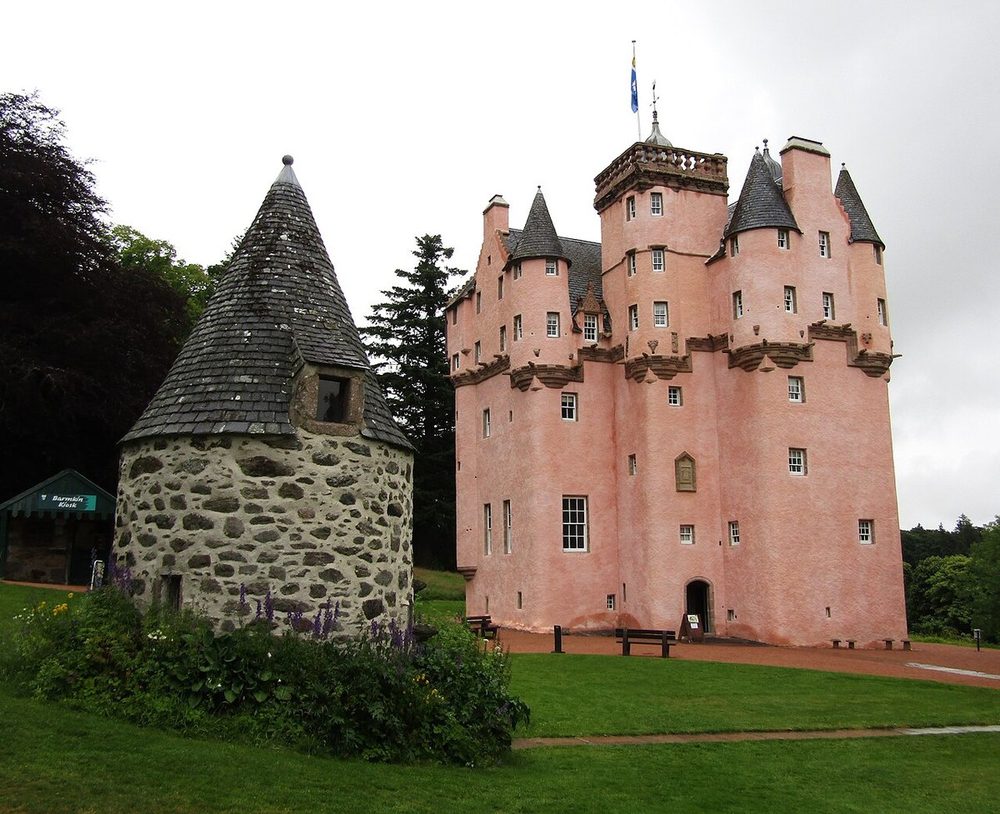
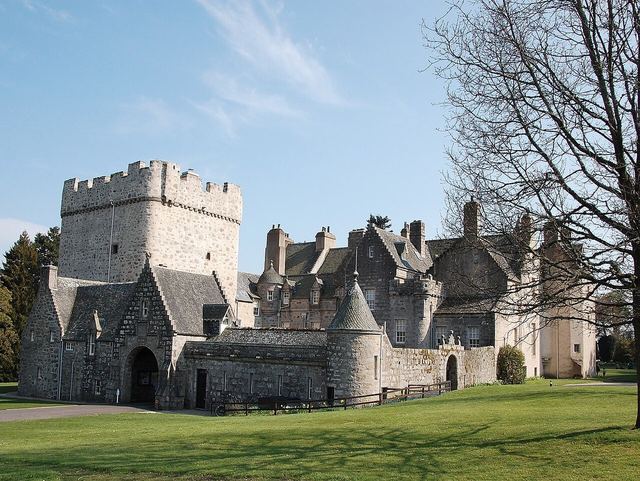
Drum's plain 13th-century keep is about as early and unadorned as the idea gets. By the time Craigievar was finished in 1626, the form had become genuinely decorative - corbelled turrets, ornamental corner towers, a silhouette closer to a fairy tale than a fortress, even as the defensive logic underneath stayed exactly the same.
The Z-plan, and other refinements
The simplest tower houses are a single rectangular block. A later, more sophisticated version adds round or square towers at opposite corners, angled so each tower's guns or gunloops cover the wall the other tower can't see - the Z-plan, named for the shape it makes on a floor plan. Claypotts outside Dundee is about as complete and legible an example of a Z-plan tower house as survives anywhere in Scotland. Huntingtower shows the idea arrived at from the opposite direction - two entirely separate tower houses, built a few feet apart in the 15th century, only stitched together into one castle by a connecting block a couple of hundred years later.
Smailholm: the tower that made Sir Walter Scott
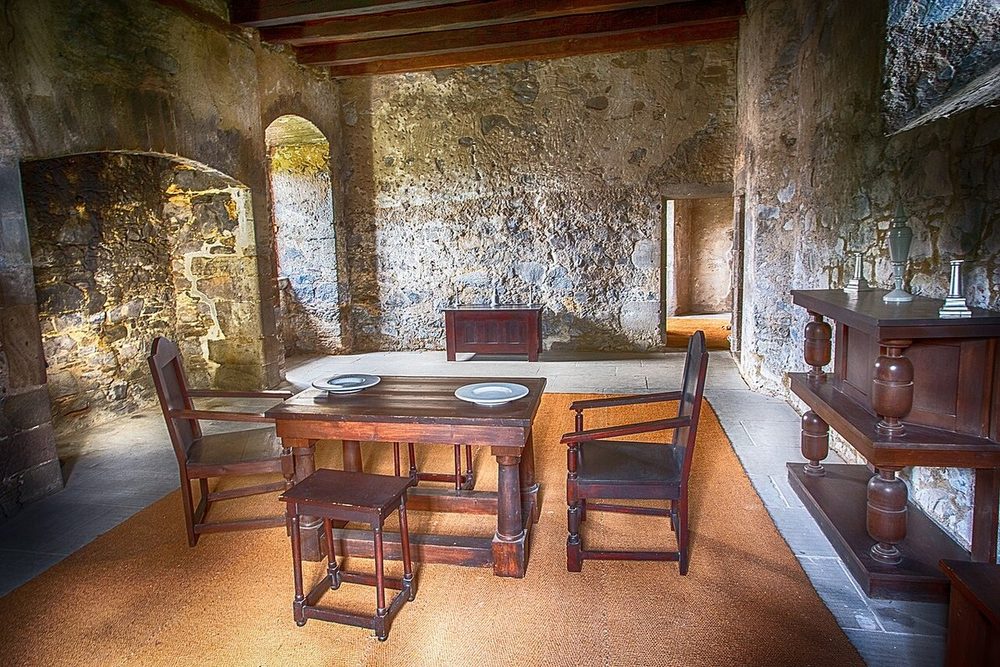
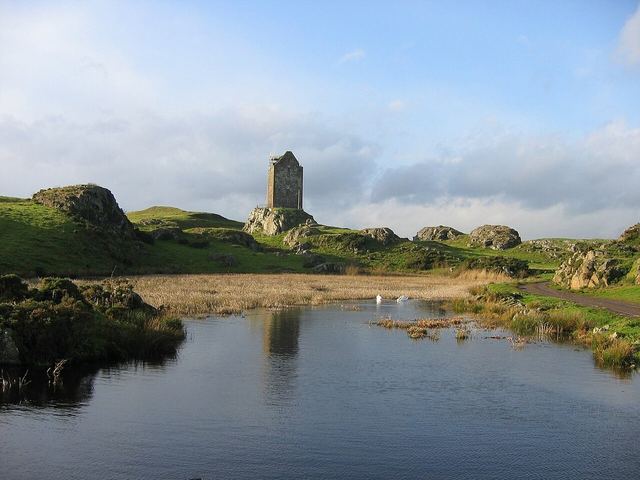
Not every tower house's afterlife was military. Smailholm in the Scottish Borders is about as stark and unadorned as the type gets - a single free-standing tower on a rocky outcrop, nothing added, nothing softened. As a sickly child, Walter Scott was sent to stay at his grandfather's farm beside it, and spent long summers in its shadow listening to Border ballads and stories of reivers and raids. He credited the experience directly with shaping the imagination that produced his poetry and novels, and Smailholm appears, thinly disguised, in his early work. A defensible farmhouse built for cross-border cattle raids ended up quietly responsible for a good part of Scotland's romantic self-image.
Quick answers
What is a Scottish tower house?
A Scottish tower house is a fortified stone residence built as a single tall, narrow tower rather than a spread-out courtyard castle - a defensible home for a laird's family, stacked vertically over three, four or five floors, usually with a hall on one level and private chambers above. Well over 800 were built in Scotland between the 14th and 17th centuries, more than any other type of castle the country produced.
Why did Scotland build so many tower houses?
Mostly economics. Scotland was consistently poorer than England or France in this period, and a single vertical tower needs far less stone, land and labour than a sprawling courtyard castle housing the same family securely. A tower house also went up faster and could be defended by a much smaller garrison - often just the household itself.
What's the difference between a tower house and a castle keep?
In practice, not much - a tower house is essentially a keep that stands alone as the whole castle, rather than one building inside a larger walled complex. The distinction is really about scale and status: a keep is one part of a great lord's castle, while a tower house was often the entire fortified residence of a smaller laird.
Can you still visit Scottish tower houses today?
Yes - several hundred survive in some form, and a good number are properly open to visitors, from roofless ruins like Smailholm to fully furnished, still-decorated interiors like Craigievar and Crathes. Historic Environment Scotland and the National Trust for Scotland care for most of the best-preserved examples.
Where to stand inside the idea
Eight tower houses on the roll, from a bare Borders peel tower to Scotland's most photographed fairy-tale castle:
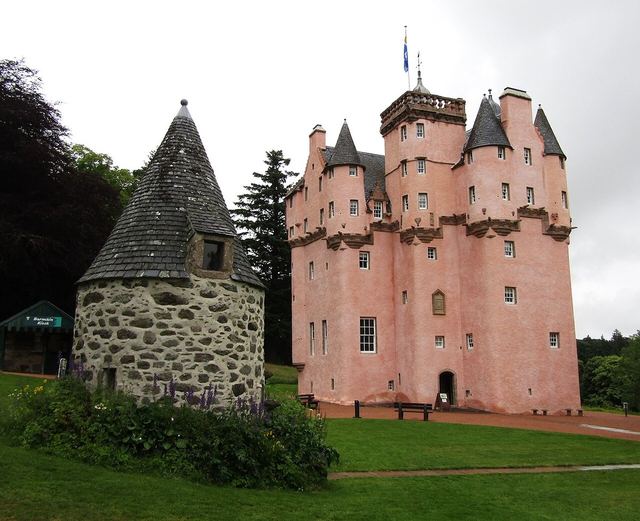
Craigievar Castle
The tower house as fairy tale - pink harled walls, turrets and a fantastical roofline, completed in 1626 and barely altered since. The single most photographed tower house in Scotland.
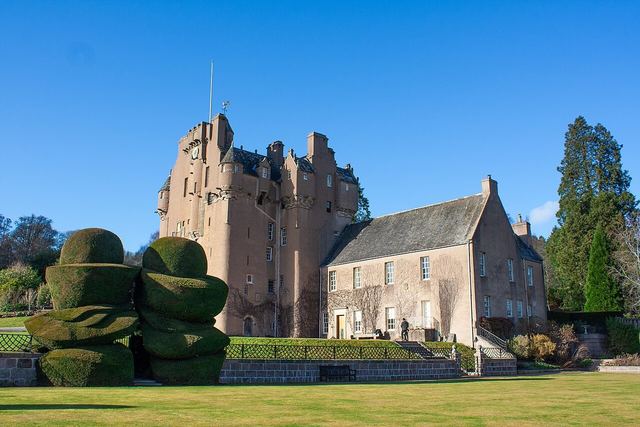
Crathes Castle
An L-plan tower house a few miles from Craigievar, with some of the finest original painted ceilings surviving anywhere in Scotland - a rare glimpse of how richly decorated these interiors actually were.
Drum Castle
One of the oldest tower houses in the country, its plain 13th-century square keep still standing at the core of a castle the Irvine family held for exactly 653 years, without a break.
Claypotts Castle
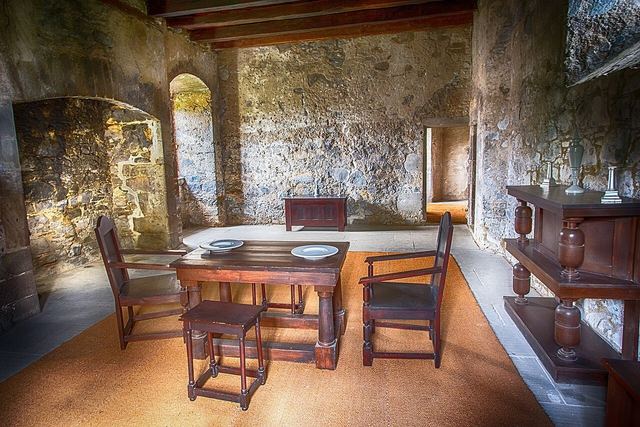
A textbook Z-plan tower house - a rectangular block with two round towers at opposite corners, each overlooking the walls the other couldn't cover. About as complete an example as survives anywhere.
Smailholm Tower
A stark, single free-standing peel tower on a rocky outcrop in the Borders, with nothing added and nothing softened. The young Walter Scott spent summers here, and it shaped everything he later wrote about the Borders.
Threave Castle
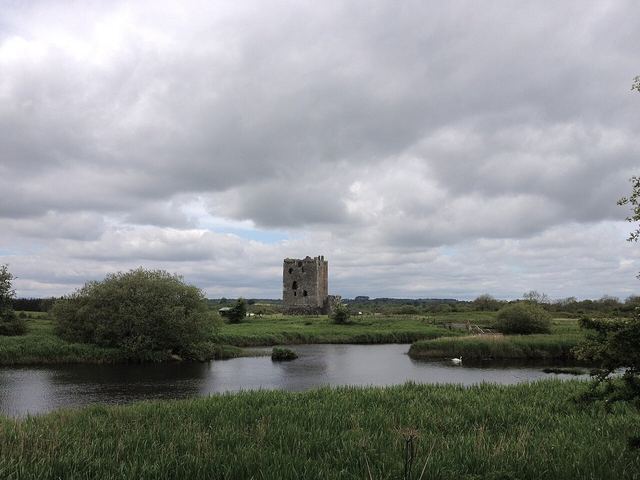
One of the earliest and most massive tower houses in Scotland, built around 1370 by Archibald 'the Grim' on its own island in the River Dee - reachable today only by a small boat.
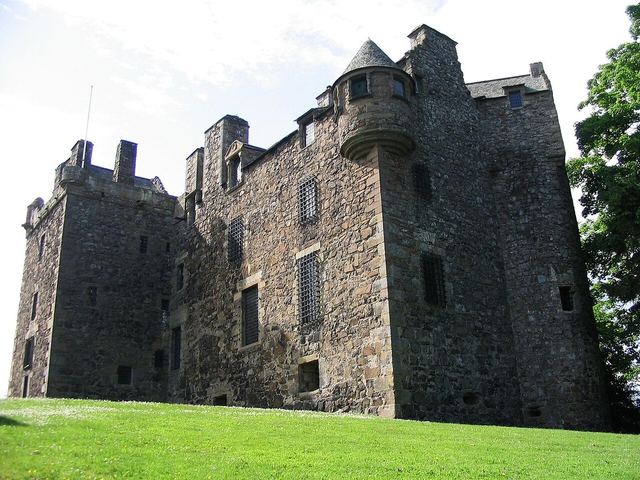
Elcho Castle
A late-16th-century laird's tower house with round corner towers and its original iron window grilles still in place, on the banks of the Tay near Perth.
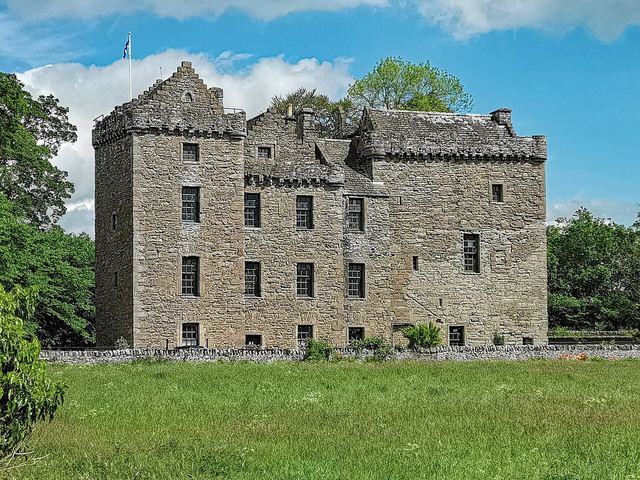
Huntingtower Castle
Not one tower house but two, built separately in the 15th century a few feet apart and only joined by a connecting block in the 17th - you can still see the seam where two towers became one castle.