Guide No. 6 · The Castle Rolls
Edinburgh Castle
A fortress on the plug of a dead volcano, besieged more often than anywhere else in Britain, that still holds the country's crown jewels behind its walls. This is how Castle Rock earned its scars.
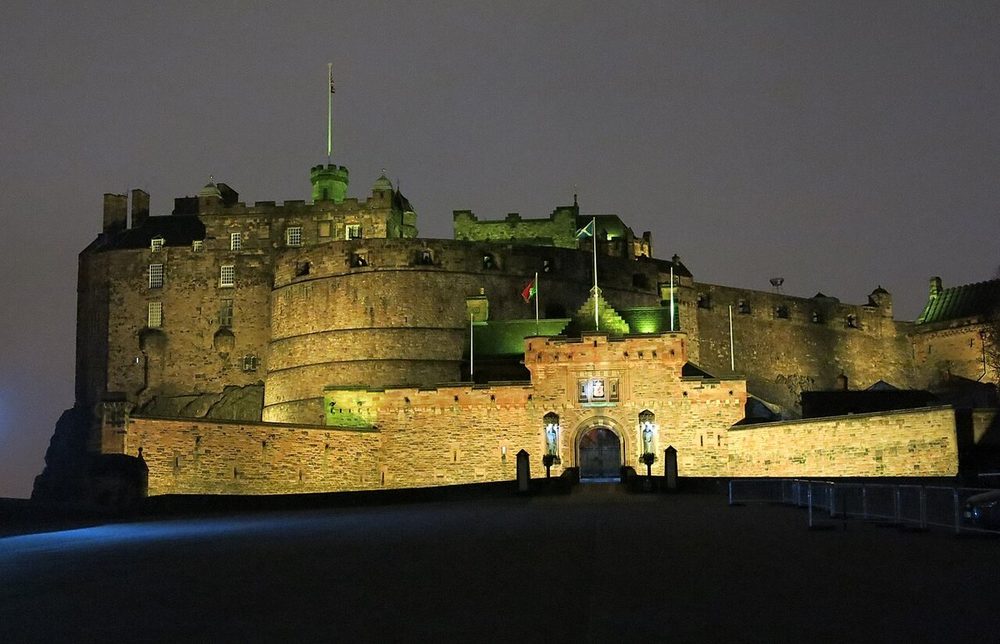
Edinburgh Castle stands on Castle Rock, the exposed core of a volcano extinct for around 350 million years, carved by glaciers into a crag with sheer drops on three sides and a single defensible approach on the fourth. People have fortified that rock since at least the Iron Age. What's there today is mostly the result of thirteen centuries of building, destroying and rebuilding on the same unbeatable position - which is also why, by Historic Environment Scotland's own count, it has been besieged more times than any other place in Britain.
A rock worth fighting for, over and over
The reason for all those sieges is simple geography: whoever held Castle Rock controlled the easiest route into Lothian, and a fortress that couldn't be starved or stormed from three of its four sides was worth almost any cost to take. The fiercest of the lot was the Lang Siege of 1571–73, fought during the civil war over the infant James VI's throne, when supporters of the exiled Mary, Queen of Scots held the castle for two years against a government army backed by English artillery. When it finally fell, the bombardment had brought down David's Tower, the castle's medieval keep, almost entirely - its ruined stump was simply built over, and the Half Moon Battery you see today sits directly on top of what was left of it.
Inside the walls, St Margaret's Chapel is the oldest building anywhere in Edinburgh, a plain twelfth-century Romanesque chapel that has somehow survived every siege the rest of the castle didn't. And the castle has held onto one genuinely enormous relic of its own fighting days: Mons Meg, a giant medieval siege bombard cast in 1449 and gifted to King James II, still standing on the ramparts - too heavy to have ever been very mobile, and too famous to ever be moved far from where it now sits.
What the castle actually guards
Two things, both still inside it. The Honours of Scotland - the crown, sword and sceptre - are the oldest complete set of royal regalia left anywhere in the British Isles, and they sit in the Crown Room alongside the Stone of Destiny, the coronation stone fought over and stolen back and forth between Scotland and England for seven centuries before finally being returned to Edinburgh Castle in 1996. James VI, later James I of England, was born in a tiny room within the castle in 1566, a birth that would eventually unite the two crowns.
And every day but Sunday, at exactly 1pm, a gun still fires from the ramparts - not ceremony for its own sake, but a habit that started in 1861 as a genuine time signal, so ships waiting in the Firth of Forth below could set their navigation clocks by it. It has outlived the reason most tourists assume it exists for.
Quick answers
Why is Edinburgh Castle built on a rock?
Castle Rock is the plug of an extinct volcano, roughly 350 million years old, later scoured into a steep-sided crag by glaciers moving east. It gives sheer cliffs on three sides and only one manageable approach, from the east - which is exactly why people have fortified it since at least the Iron Age, long before any stone castle stood there.
Is Edinburgh Castle really the most besieged place in Britain?
Historic Environment Scotland's own count puts it at around 26 sieges over more than 1,100 years, which is usually cited as the highest total for any fortified site in Britain, and among the highest in Europe. The last, and one of the fiercest, was the Lang Siege of 1571–73, which flattened the medieval David's Tower almost completely.
What are the Honours of Scotland?
The Honours of Scotland are Scotland's crown jewels - the crown, sword and sceptre used at royal coronations - and they are the oldest surviving set of royal regalia in the British Isles. They're on permanent display in the Crown Room at Edinburgh Castle, alongside the Stone of Destiny, the ancient coronation stone returned to Scotland from Westminster Abbey in 1996.
Why does a cannon fire from Edinburgh Castle every day?
The One O'Clock Gun has fired at exactly 1pm, six days a week (not Sundays), since 1861. It wasn't built as a tourist spectacle - it was a time signal, fired so ships anchored in the Firth of Forth could set their chronometers accurately for navigation, in the days before any other reliable way to broadcast the correct time existed.