Guide No. 8 · The Castle Rolls
Stirling Castle
Two of the most famous battles in Scottish history were fought within sight of these walls, for a very simple reason: whoever controlled this crag controlled the only practical route between the Highlands and the Lowlands.
Stirling Castle stands on a steep volcanic crag directly above the lowest crossing point of the River Forth, at the narrowest practical gateway between the Scottish Highlands and the Lowlands. That single fact of geography explains almost everything else about the castle's history: it was fought over more consistently, by more claimants, than almost anywhere else in Scotland, and it was also rebuilt, in peacetime, into one of the finest Renaissance royal palaces the country ever produced.
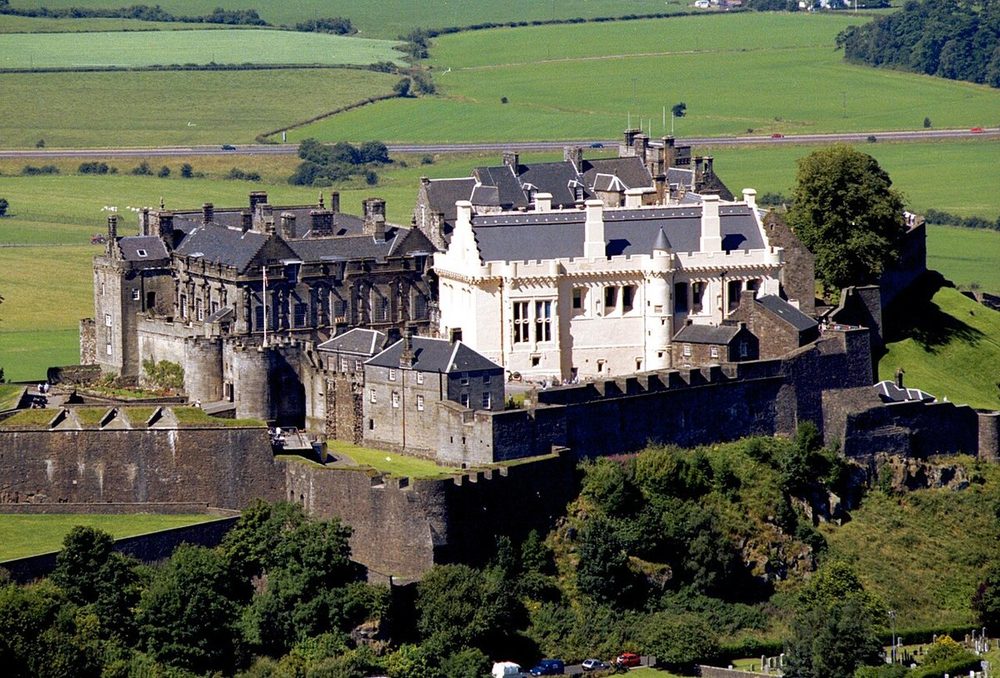
He who holds Stirling holds Scotland
The old saying isn't an exaggeration. Twice in the space of seventeen years, control of this one crossing point produced a battle that decided the course of the Wars of Scottish Independence. In 1297, William Wallace's forces destroyed an English army at the Battle of Stirling Bridge, fought on the flood plain almost directly beneath the castle's walls. In 1314, Robert the Bruce won at Bannockburn a few miles away - a battle whose timing was effectively forced by the terms of a siege then underway at Stirling Castle itself, where an English garrison was due to surrender unless relieved by a set date. Bruce's victory relieved that siege and, for practical purposes, decided the war. Between those two battles and beyond them, the castle changed hands repeatedly, besieged and re-besieged, for exactly the reason its position never stopped mattering.
From siege object to Renaissance palace
Once the wars of independence were settled, Stirling's Stewart kings turned it into something closer to a showpiece than a garrison. James III and James IV built the Great Hall in the late 15th century - the largest secular hall raised anywhere in medieval Scotland, big enough for full state ceremony, and restored today with its striking gold limewash exterior rather than left as bare stone. James V went further still in the 1540s, building a genuinely Renaissance royal palace inside the castle walls, its facades carved with an extraordinary run of decorative figures (the "Stirling Heads") and its state rooms hung with an enormous reproduction of the Hunt of the Unicorn tapestries - recreated over more than a decade by hand, referencing the surviving medieval originals now held in New York, to match what would once have hung in the real rooms.
Mary, Queen of Scots was crowned in the castle's Chapel Royal in 1543, aged just nine months, and spent part of her childhood inside these walls before being sent to France for safety. Her own son, James VI, was baptised in a newly rebuilt Chapel Royal here in 1594 - a Stirling christening was, by then, practically a Stewart family tradition. The castle had gone from the single most fought-over crossing point in Scotland to the backdrop for its royal family's most private moments, without ever really stopping being both at once.
Quick answers
Why was Stirling Castle so important militarily?
Stirling sits on a volcanic crag directly above the lowest crossing point of the River Forth, at the narrow neck of land connecting the Scottish Highlands to the Lowlands. For centuries, an army moving between the two regions had to pass within reach of the castle's guns - which is the origin of the old saying that whoever holds Stirling holds Scotland.
Was Stirling Castle involved in the Battle of Bannockburn?
Yes, directly - the 1314 Battle of Bannockburn, Robert the Bruce's decisive victory over Edward II, was fought a few miles from Stirling Castle specifically to relieve an English garrison under siege there; the terms of that siege effectively forced the battle's timing. The earlier Battle of Stirling Bridge in 1297, where William Wallace defeated an English army, was fought on the flood plain almost directly beneath the castle walls.
What is the Great Hall at Stirling Castle?
The Great Hall, built for James III and James IV in the late 15th century, was the largest secular hall ever built in medieval Scotland and was used for state ceremonies and parliaments. It's been restored with its striking gold-limewashed exterior repainted, close to how it would have appeared when new, rather than left as bare stone.
Was Mary, Queen of Scots crowned at Stirling Castle?
Yes. Mary was crowned in the castle's Chapel Royal in 1543 at just nine months old, and spent much of her early childhood there before being sent to France. Her own son, the future James VI, was later baptised in a newly rebuilt Chapel Royal at Stirling in 1594.