Guide No. 9 · The Castle Rolls
Warwick Castle
A Norman motte on a bend of the Avon that grew into the power base of the man who made and unmade English kings - and, nine centuries later, ended up run by the company behind Madame Tussauds.
Warwick Castle began in 1068 as a wooden motte-and-bailey, one of the first castles William the Conqueror ordered built after Hastings, raised on a defensible bend of the River Avon. Over the next three centuries it grew into full-scale stone fortress, its skyline defined by two soaring towers, Guy's Tower and Caesar's Tower, that still dominate the town below. What makes Warwick unusual isn't the architecture, though - it's the sheer range of what the castle has been used for since, from the headquarters of a medieval kingmaker to a modern theme-park attraction owned by the people behind Madame Tussauds.
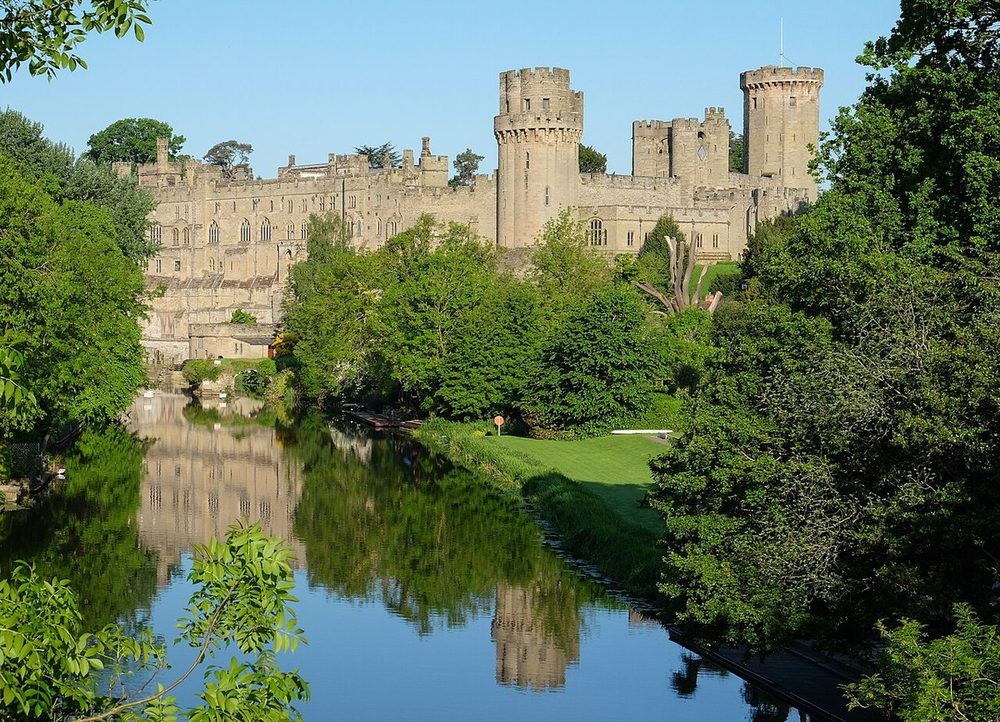
The Kingmaker's castle
Warwick's most famous owner never wore a crown himself, but he decided who did. Richard Neville, 16th Earl of Warwick, held the castle in the mid-15th century during the Wars of the Roses and became powerful enough to help depose Henry VI, install Edward IV, and then switch sides and help depose Edward IV too - a level of kingmaking that earned him exactly that nickname, "Warwick the Kingmaker," and made the castle, for a generation, one of the real centres of power in England rather than simply a fortified residence on its edge.
Fire, restoration, and a very different second act
The castle's working military life eventually gave way to something closer to a grand country estate. The Greville family, who held the earldom for centuries, turned Warwick into a stately home, commissioning Capability Brown to landscape its grounds in the 18th century into the sweeping parkland still visible today. Disaster struck in 1871, when a major fire tore through the castle and gutted the Great Hall and several state rooms - the Great Hall visitors walk through now is, in large part, the result of the careful Victorian restoration that followed.
The castle's most recent transformation is its strangest. In 1978, the Greville family sold Warwick Castle to the Tussauds Group - yes, the waxwork people - who turned it into one of Britain's most visited heritage attractions, adding jousting tournaments, a trebuchet claimed to be the world's largest working siege engine, and a dungeon experience alongside waxwork tableaux of the castle's own history. It's now run by Merlin Entertainments, and it draws crowds today for largely the opposite reason Richard Neville once needed the place: not to hold power, but to be entertained by nine hundred years of it.
Quick answers
Who built Warwick Castle?
William the Conqueror ordered the first castle at Warwick built in 1068, a wooden motte-and-bailey raised on a bend of the River Avon within two years of the Norman Conquest. The stone castle familiar today, including the towering Guy's Tower and Caesar's Tower, developed mostly across the 12th to 14th centuries.
Why is Warwick Castle linked to the 'Kingmaker'?
Richard Neville, 16th Earl of Warwick, held the castle in the mid-15th century and became one of the most powerful men in England during the Wars of the Roses - powerful enough to help depose and install multiple kings, which earned him the nickname 'Warwick the Kingmaker'. He remains the castle's single most famous owner.
Did Warwick Castle burn down?
Not entirely, but seriously - a major fire in 1871 gutted the Great Hall and several state rooms. The castle was restored rather than rebuilt from scratch, and the Great Hall you can walk through today is largely the result of that Victorian-era restoration.
Who owns Warwick Castle now?
The Greville family, Earls of Warwick, owned the castle for centuries and turned it from a working fortress into a stately home, with grounds landscaped by Capability Brown. In 1978 it was sold to the Tussauds Group - the same organisation behind Madame Tussauds - and it's now run by Merlin Entertainments as a major visitor attraction with jousting, a working trebuchet and waxwork displays.