Guide No. 34 · The Castle Rolls
Bishops' Castles: Why the Medieval Church Built Fortresses
One bishop kept his own exchequer, his own courts, his own sheriff and his own mint, and led a division of the English army into battle. Another built six castles in a single year and shocked the people watching. Neither was doing anything his role forbade.
A bishop's castle is a fortified residence built and held by a bishop or an abbot in his own right as a landholder, rather than by a lay baron or by the Crown. This was not a contradiction in the Middle Ages. A bishop held his estates from the king as a tenant-in-chief on the same terms as an earl, which carried the same obligation to supply knights and the same practical need for a defensible seat, and in some cases an explicit duty to hold a frontier. What the churchmen built reflects that double role exactly: these are palaces first and fortresses second, great halls and private chambers with a wall and a gatehouse put round them.
The bishop who governed like a king
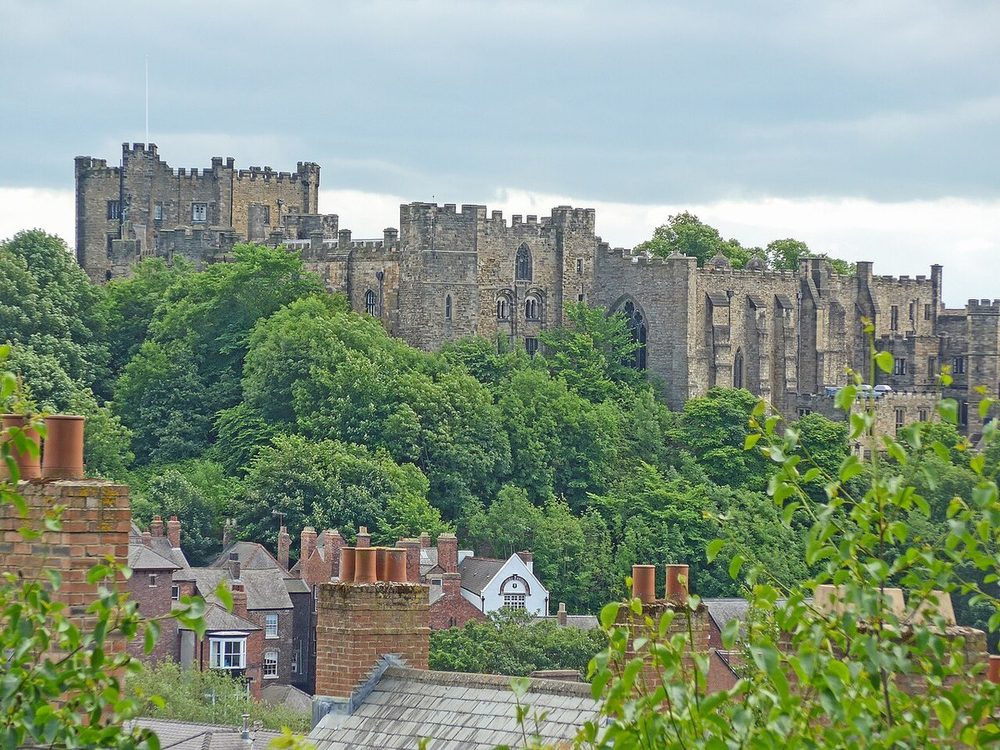
Durham is where the idea goes furthest. The bishops there held a palatinate, a jurisdiction in which royal authority was exercised by the bishop rather than by the king's officers, granted in return for holding the Scottish border. In practice that meant an exchequer of its own, organised in the twelfth century, its own chancery and courts, and a sheriff, coroners and chancellor appointed by the bishop. It meant money: Antony Bek's arms appear on Durham pennies struck under his own authority. And it meant soldiers. Bek led one division of the English army at Falkirk in 1298 and kept a personal retinue of 140 knights, which was a scale of household that most earls could not match.
The powers were chipped away long before they were abolished. An Act of Resumption in 1536 took away the bishop's right to pardon offences or appoint judicial officers, Elizabeth I curbed the palatine chancery in 1596, and Parliament abolished the whole thing outright in 1646 before the Restoration brought it back. What remained went to the Crown under the Durham (County Palatine) Act 1836. Durham Castle stopped being a bishop's house almost immediately afterwards and has housed University College since 1837.
The palatinate's working end was seventy miles north at Norham, founded by Ranulf Flambard, Bishop of Durham from 1099 to 1128, and enlarged by his successor Hugh du Puiset. It is the clearest case anywhere of a church castle doing plainly military work. The Scots besieged it without success in 1318, 1319 and 1322, held it briefly in 1327, and failed again under James IV in 1497 when the garrison sat out a fortnight. In 1513 James came back with a real army and took it, days before he was killed at Flodden; the English had it back within three weeks.
The three building bishops, and what it cost them
The great age of episcopal castle-building is the first half of the twelfth century, and it belongs to three men who were royal administrators as much as churchmen. Roger, Bishop of Salisbury, was Henry I's chief minister and built Sherborne between about 1122 and 1137, along with Devizes and Malmesbury. His nephew Alexander of Lincoln, bishop from 1123 to 1148, raised Newark around 1135 to 1139, having obtained a charter from Henry I to dig a ditch and rampart and to move the Fosse Way where he wanted it. And Henry of Blois, Bishop of Winchester from 1129 to 1171, was King Stephen's younger brother, his chief adviser from 1135, and papal legate from 1139.
Henry is the outlier even in this company. He is credited with six castles built or refortified in 1138 alone, at Wolvesey, Farnham, Taunton, Bishop's Waltham, Merdon and Downton. Contemporaries remarked on it, because building on that scale was what a magnate did in a year of civil war, not what a bishop did.
The reckoning came quickly for all three. In June 1139 Stephen arrested Roger of Salisbury and seized his castles, and Alexander's with them, a move that bought him three fortresses and cost him the support of the Church at the moment he could least afford it. Sherborne did not come back: it stayed a royal fortress for close to two centuries and was not restored to the bishops of Salisbury until 1337. Henry of Blois fared no better under the next king. In 1155 Henry II took his castles, pulled down the tower at Wolvesey, and destroyed Merdon and Bishop's Waltham; Farnham was slighted in the same year and rebuilt afterwards. The lesson the twelfth century taught was that a bishop could build a castle, but he held it at the Crown's pleasure like anybody else.
Palace first, fortress second
Stand in most of these places and the priorities are obvious in the plan. Wolvesey at Winchester is two great halls and their service ranges: the west hall built about 1110 by Bishop William Giffard, the east hall by Henry of Blois. It was only properly fortified with towers after the fighting of 1141, which is to say after somebody had actually tried to attack it. Llawhaden in Pembrokeshire began as a motte and bailey raised by Bishop Bernard in 1115, but almost everything standing there now comes from Adam de Houghton's rebuilding between 1362 and 1389, and that work is a fortified palace with lodgings, not a garrison post.
Farnham is the exception that proves how seriously the twelfth century took it. Its motte was not simply piled up. It was raised around the massive foundations of a Norman great tower, which is still buried inside the mound, and then enclosed by a shell keep. That is an unusual amount of engineering for a bishop's country house, and it belongs to the one decade when bishops were building as though they expected a siege.
North of the border the same balance holds with the vocabulary made explicit. The archbishops of St Andrews called their castle apud Palatium nostrum, at our palace, in their own Latin charters, though the building could clearly fight: the mine and counter-mine dug during the siege that followed Cardinal Beaton's murder in 1546 were rediscovered in 1879 and can still be walked. At Spynie, seat of the bishops of Moray for roughly five centuries, David's Tower is the largest medieval Scottish tower by volume, begun by Bishop David Stewart and completed under Bishop William Tulloch by 1482. Nobody builds that to hide in.
The Dissolution is the wrong ending
The story is usually finished off with the Dissolution, and that is a mistake worth stating plainly. The Dissolution of 1536 to 1541 dissolved monasteries. It did not dissolve bishoprics. The sees came through the Reformation intact and so did most of their castles, which is why Hartlebury was still the home of the bishops of Worcester in 2007, and why Auckland Castle was the principal residence of the bishops of Durham from 1832.
What actually removed these castles from the Church was slower and more varied. Some went to the Crown in the twelfth century and never came back. Some were stripped by the men who held them: Bishop Barlow sold the lead off Llawhaden's roof in the sixteenth century, and the building never recovered from the weather that got in afterwards. Most of the rest went in the 1640s. Sherborne fell to Parliament after an eleven-day siege in 1645. Hartlebury was held for the king in 1646 and surrendered in two days without a shot being fired, then slighted. Auckland was sold to Sir Arthur Haselrig once episcopacy was abolished, and he pulled down much of the medieval fabric to build himself a mansion, which Bishop John Cosin then pulled down in turn between 1661 and 1665, converting the banqueting hall into the chapel that stands there now.
Scotland's ending is later and tidier. Spynie's last resident bishop, William Hay, was expelled in 1689 for refusing the oath to William and Mary. And Durham's ending is not a siege at all but an Act of Parliament and a change of tenant: the bishop moved out, the students moved in, and the largest concentration of secular power ever held by an English churchman finished as a college.
Quick answers
What is a bishop's castle?
A bishop's castle is a fortified residence built and held by a bishop or an abbot in his own right as a landholder, rather than by a lay baron or by the Crown. Medieval bishops held their estates from the king as tenants-in-chief on the same terms as an earl, which meant the same obligation to supply knights and the same practical need for a defensible seat. The buildings that resulted are usually palaces first and fortresses second: great halls and private chambers with a wall and a gatehouse around them.
Why were medieval bishops allowed to build castles?
Because they were landholders, and landholding carried military obligation. A bishop who held a great estate owed the king knight service for it, sat in his councils, and was expected to keep order across it. Some sees carried explicit frontier duties on top: the bishops of Durham held their palatinate in return for holding the Scottish border, and the bishops of St Davids and Moray held theirs in country that was regularly fought over. Building a castle was not a breach of a churchman's role in this period. It was part of the job the land came with.
What powers did the Prince-Bishops of Durham have?
The Bishop of Durham ran what amounted to a small state. The palatinate had its own exchequer, organised in the 12th century, its own chancery and courts, and its own sheriff, coroners and chancellor appointed by the bishop rather than by the king. Bishops struck their own coin: Antony Bek's arms appear on Durham pennies minted under his authority. They also led troops, Bek commanding one division of the English army at Falkirk in 1298. The remaining palatine rights passed to the Crown under the Durham (County Palatine) Act 1836.
Which bishop built the most castles?
Henry of Blois, Bishop of Winchester from 1129 to 1171 and King Stephen's younger brother, is credited with six castles raised in 1138 alone: Wolvesey, Farnham, Taunton, Bishop's Waltham, Merdon and Downton. Contemporaries found the scale of it startling in a churchman. Henry II undid much of it in 1155, pulling down the tower at Wolvesey and destroying Merdon and Bishop's Waltham outright.
Did the Dissolution of the Monasteries end the bishops' castles?
No, and this is the most common mistake made about them. The Dissolution of 1536 to 1541 dissolved monasteries; it did not dissolve bishoprics. The sees survived the Reformation and so did most of their castles. The bishops lost their fortresses by other routes and over a much longer period: royal seizure in the 12th century, asset-stripping by their own occupants, the Civil War sieges and slightings of the 1640s, and finally the quiet administrative unwinding of the palatinate in the 1830s.
Where to stand inside the idea
Twelve castles on the roll that a bishop built, held or lost, from a border fortress to a palace with a students' dining hall in it:
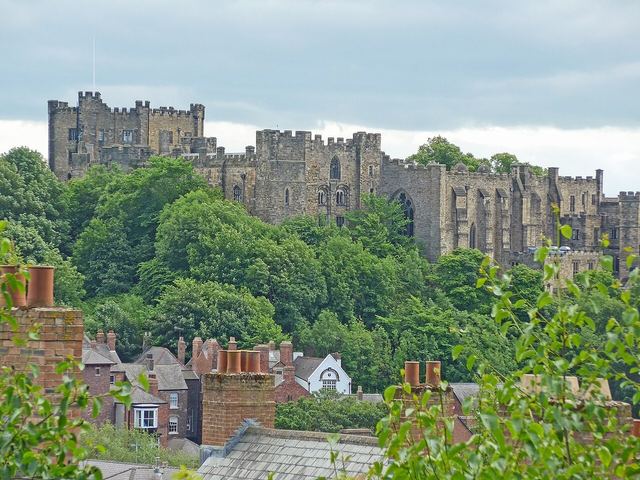
Durham Castle
The seat of the Prince-Bishops from the 1070s until the palatinate ended. It has housed University College since 1837, so the bishop's hall is now a student dining room.
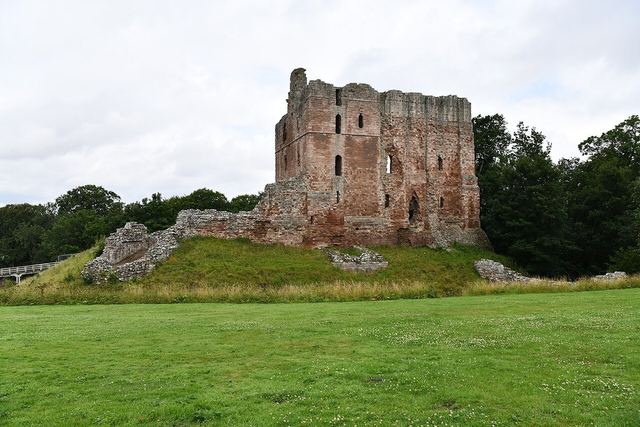
Norham Castle
Founded by Ranulf Flambard, Bishop of Durham, and the palatinate's border fortress. Besieged by the Scots in 1318, 1319 and 1322, and taken by James IV in 1513 days before Flodden.
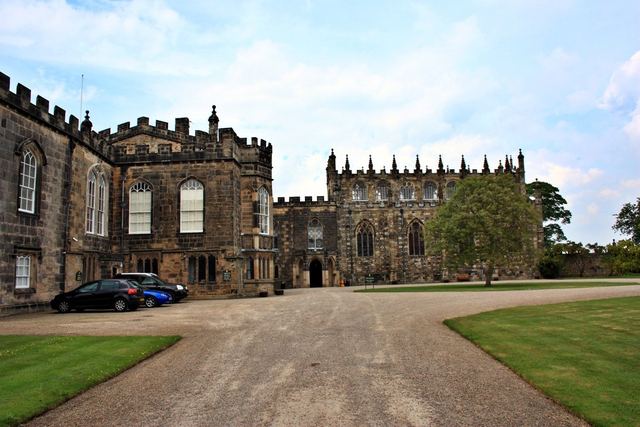
Auckland Castle
A residence of the bishops of Durham from around 1183 and their principal home from 1832. Sold to Sir Arthur Haselrig in 1646, who demolished much of it; Bishop Cosin rebuilt from 1661.
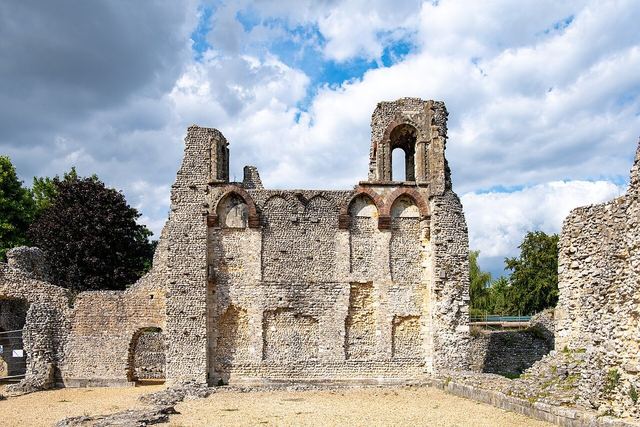
Wolvesey Castle
Winchester's old bishop's palace, and the clearest surviving example of the type. Two great halls, the west built about 1110 by William Giffard, the east by Henry of Blois.
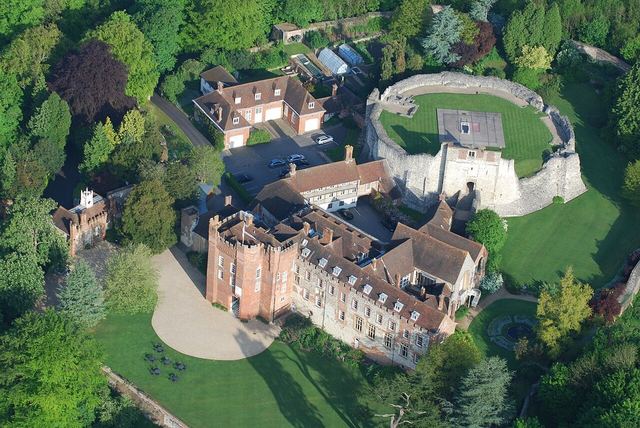
Farnham Castle Keep
One of Henry of Blois's six. Its motte was raised around the foundations of a Norman great tower, which is still buried inside it, then wrapped in a shell keep. The bishops held Farnham for some 800 years.
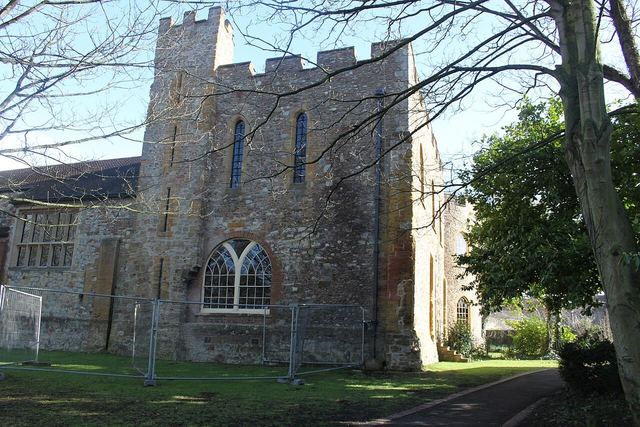
Taunton Castle
A castle of the bishops of Winchester, begun by William Giffard between 1107 and 1129 and refortified by Henry of Blois in 1138. Judge Jeffreys held the Bloody Assizes in its great hall in 1685.
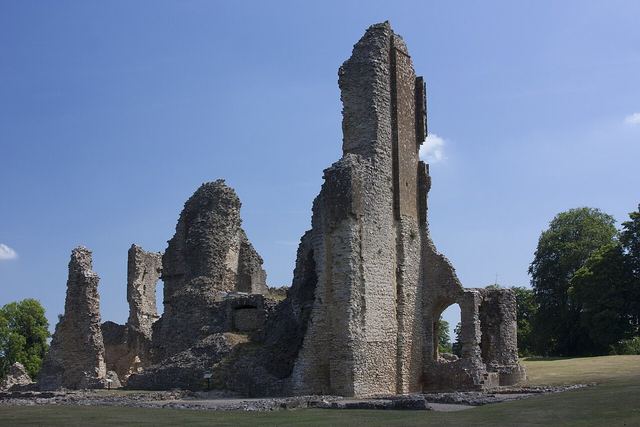
Sherborne Old Castle
Roger of Salisbury's fortified palace, built between about 1122 and 1137. Stephen seized it in 1139 and it stayed a royal fortress for close to two centuries, returning to the bishops only in 1337.
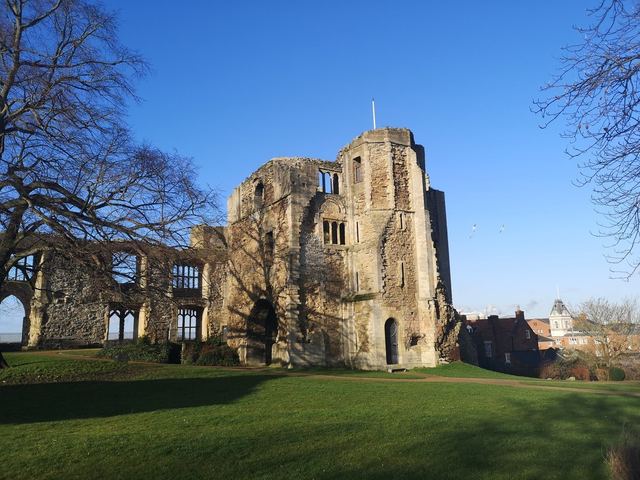
Newark Castle
Built about 1135 to 1139 by Alexander of Lincoln, Roger of Salisbury's nephew. Its gatehouse held the bishop's own apartments, and King John died inside it in October 1216.
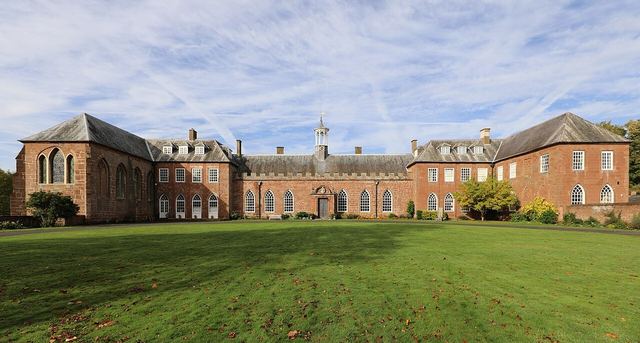
Hartlebury Castle
The residence of the bishops of Worcester from the early 13th century until 2007. Fortified under Godfrey Giffard by 1268, held for the king in 1646, and surrendered in two days without a shot.
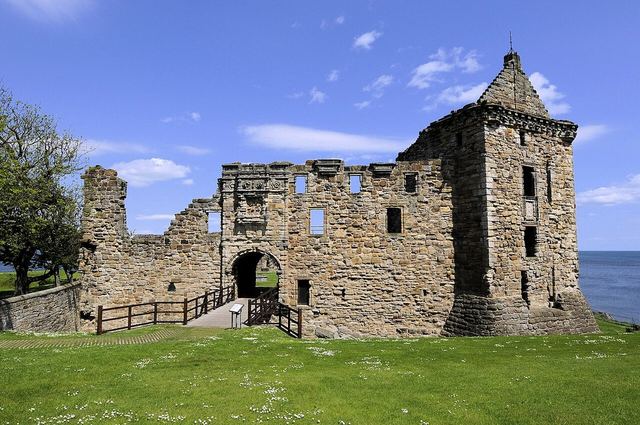
St Andrews Castle
Built around 1200 by Bishop Roger de Beaumont, and called 'our palace' by its archbishops in their own charters. Cardinal Beaton was murdered here in 1546; the siege mine and counter-mine can still be walked.
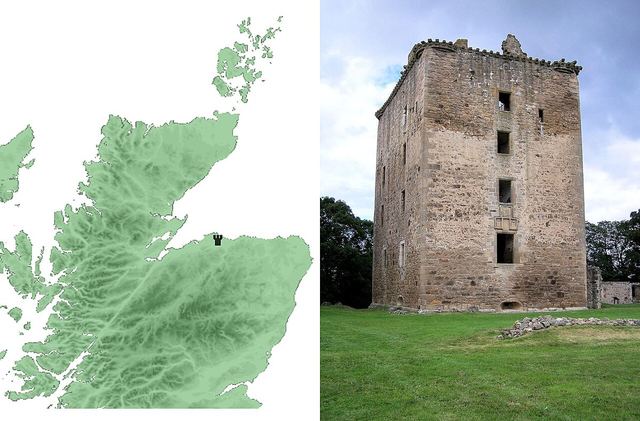
Spynie Palace
The seat of the bishops of Moray for roughly five centuries. David's Tower, begun by Bishop David Stewart and finished by Bishop William Tulloch by 1482, is the largest medieval Scottish tower by volume.
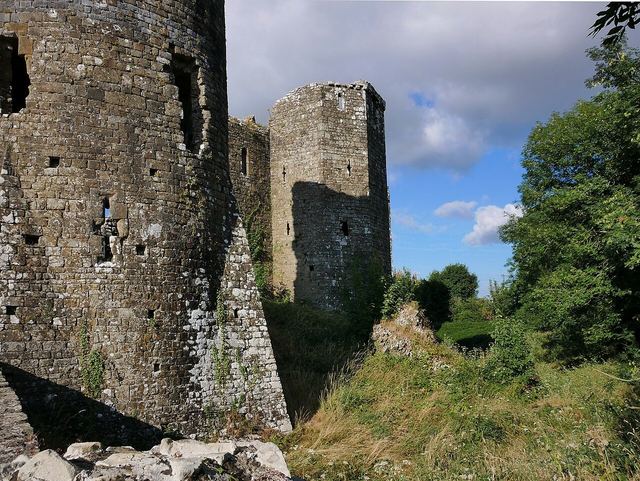
Llawhaden Castle
A castle of the bishops of St Davids from 1115, rebuilt in stone as a fortified palace between 1362 and 1389. Bishop Barlow sold the lead off its roof in the 16th century and it never recovered.