Guide No. 33 · The Castle Rolls
Castles of the Anarchy: Stephen, Matilda and the Adulterine Castles
Nineteen years of civil war are supposed to have covered England in more than a thousand unauthorised castles. The figure comes from one monk, who gave a completely different one himself, and the archaeology has never been able to find them.
The Anarchy was the succession war fought in England and Normandy between roughly 1138 and 1153, between King Stephen and his cousin the Empress Matilda, over which of them should have inherited Henry I's crown. An adulterine castle is one built or rebuilt during that war. The word is usually glossed as unlicensed, and the gloss is wrong: the only precise definition in any medieval document, in the 1217 reissue of Magna Carta, dates these castles rather than licenses them. What the war left on the ground is a scatter of earthworks, many of them never finished and never held for more than a season, and one chronicle number that has been quoted for nine centuries by people who cannot check it.
The number that will not go away
Everything written about this war for a general audience arrives, sooner or later, at the same figure: 1,115 castles. It comes from Robert of Torigni, abbot of Mont Saint-Michel, writing within living memory of the events. It is quoted as though it were the output of a survey. It was not, and the surest evidence for that is Robert himself, who elsewhere in his own work gives the number as 126. A writer with a count does not carry two of them nearly a thousand apart.
What Robert was doing is what the Anglo-Saxon Chronicle was doing in its entry for 1137, when it described the land as filled with castles and closed with the line that "Christ and his saints slept". These are statements about how the war felt to live through. They are worth reading, and they are not worth counting.
The archaeology has been strikingly reluctant to supply a replacement number. Oliver Creighton and Duncan Wright, whose project remains the main archaeological investigation of the period, chose not to publish a distribution map of Stephen-period castles, on the grounds that the evidence is so ambiguous that any such map would mislead more than it showed. Creighton has separately noted that 56 per cent of the castles known to have been built in Stephen's reign have vanished from the landscape altogether. That is the honest position: a great many castles went up, a great many are gone, and the gap between those two statements is where the thousand came from.
What adulterine actually meant
The word is Latin and it means, roughly, illegitimate, in the sense a child could be. It is not a planning term. The habit of translating it as unlicensed belongs to a Victorian and early twentieth-century reading of castle-building in which the crown controlled fortification through a permit system, and that reading has been taken apart over the last forty years. Our guide to the licence to crenellate sets out why: no medieval source treats a licence as a legal requirement, roughly three fortified manor houses in five have no surviving grant, and nobody appears to have been prosecuted for going without one.
What made a castle adulterine was the war. The 1217 reissue of Magna Carta defines them by date, as castles built or rebuilt since the conflict began, and it is rebellion that the definition is reaching for. A castle raised while the succession was in dispute was a castle raised by somebody choosing a side, or choosing neither and preying on his neighbours. Stephen's own castles and Matilda's were built in exactly the same years, out of the same turf and timber, by the same methods. The label is about whose authority stood behind the spade.
The counter-castle, the real signature of the war
If you want to see the Anarchy in the ground rather than in a chronicle, look for the siege castles. A counter-castle is a fortification thrown up by the besieger, within sight of the gate he wants, so that a blockade can be maintained by a small garrison for months or years while the army goes elsewhere. They are quick, they are earth and timber, and they were abandoned the moment they had done their job, which is why so many of them survive as earthworks and so few as buildings.
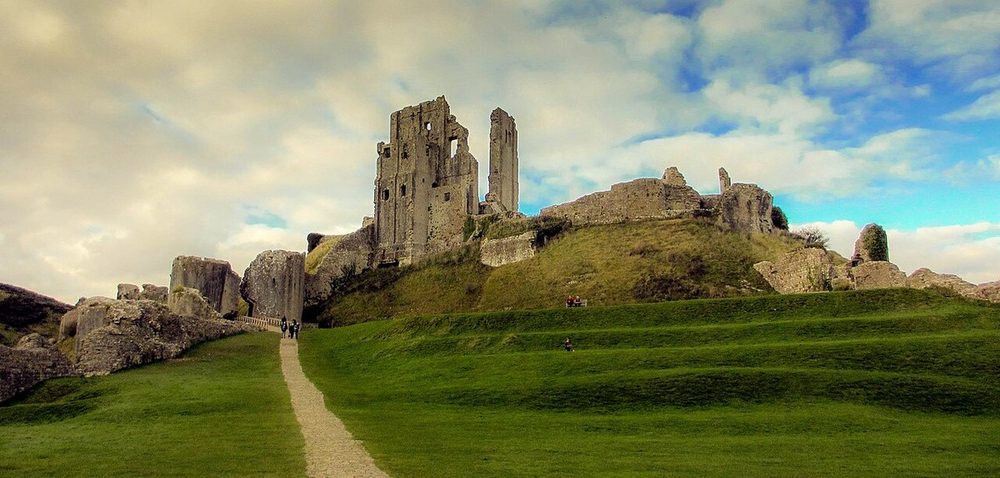
Wallingford is the clearest case. Brian FitzCount held it for Matilda from the beginning of the war to the end and Stephen never took it, so between 1145 and 1146 he built a castle at Crowmarsh Gifford on the far bank of the Thames and settled in to wait. At Corfe in 1139, faced with Baldwin de Redvers, he did the same thing on a ridge nearby; the earthwork is still legible and is recorded as The Rings. In 1144 he ran a whole chain of them along the Cambridgeshire fen edge, at Burwell and Rampton and elsewhere, to pen in Geoffrey de Mandeville, who was raiding out of the Isle of Ely. Burwell was still unfinished when Mandeville attacked it and took a crossbow bolt that killed him. The castle was never completed, which tells you exactly what these things were for.
Where the fighting actually happened
For a war remembered as lawless chaos, the Anarchy was mostly a war of sieges, and the sieges were mostly about supply. Stephen's first was at Exeter in 1136, against Baldwin de Redvers: three months, the wells inside failing, the garrison reduced to using its wine for drinking, baking and putting out fires, and a surrender on terms that contemporaries thought far too generous. At Ludlow in 1139 the garrison caught Prince Henry of Scotland with a grappling iron and Stephen cut him loose himself, which is the sort of detail that survives when the strategy does not.
The turning points are compressed into eighteen months. In June 1139 Stephen arrested Roger, Bishop of Salisbury, Henry I's chief minister, and seized his castles at Devizes, Malmesbury and Sherborne, gaining three fortresses and losing the support of the Church. In September Matilda landed and was received at Arundel, and Stephen let her leave for Bristol rather than take her. On 2 February 1141 he was captured outside Lincoln and imprisoned at Bristol. In September his brother Bishop Henry of Blois held Wolvesey while Winchester burned, and the Angevin withdrawal collapsed into a rout in which Robert of Gloucester was taken. The two men were exchanged for one another in November, and the war went back to where it had started, with both sides in possession of everything they had begun with and nothing settled.
The demolition that may not have happened
The Treaty of Wallingford, sealed in November 1153, is unusually specific about castles. Every castle raised since Henry I's death was to be destroyed, estates were to go back to whoever held them in Henry's day, and the mercenaries were to go home. When Henry II came to the throne the following year he announced that he would enforce it, and the destruction of the adulterine castles has been part of the standard account of his reign ever since.
The evidence for it is thinner than the story. Robert of Torigni, the same chronicler, records 375 destroyed and does not say how he knows. Regional studies have repeatedly found fewer signs of deliberate slighting than the narrative predicts, and rather more signs of ordinary abandonment. That is not surprising once you picture the buildings involved. A counter-castle built to blockade a gate for one season had no purpose the day the war ended, no hall worth keeping and no lord who wanted to live in it. It did not need a demolition order. It needed one wet winter and nobody to repair the palisade.
Which leaves the Anarchy's real legacy looking less like a bonfire and more like a slow disappearance. The castles that mattered afterwards, at Lincoln and Carlisle and Ludlow, were mostly the ones that had already existed before the war and went on being useful after it. The ones the chroniclers were counting were the ones nobody was ever going to keep.
Quick answers
What was the Anarchy?
The Anarchy was the succession war fought in England and Normandy between King Stephen and his cousin the Empress Matilda, usually dated 1138 to 1153. Henry I died in December 1135 having made his barons swear to accept Matilda, his only surviving legitimate child, as his heir. Stephen, Henry's nephew, reached England first and was crowned instead. The fighting ended with the Treaty of Wallingford in November 1153, which left Stephen on the throne for life and made Matilda's son Henry his heir. Stephen died the following October.
What is an adulterine castle?
An adulterine castle is one built or rebuilt during the Anarchy. The word is almost always glossed as unlicensed, and that gloss is not supported by the medieval evidence. The only precise definition in a medieval document, in the 1217 reissue of Magna Carta, dates them rather than licenses them: castles built or rebuilt since the war began. The offence was raising a fortification during a rebellion, not skipping a piece of royal paperwork.
How many castles were built during the Anarchy?
Nobody knows, and the famous number is not a count. The chronicler Robert of Torigni gives a figure of 1,115 castles raised during the war, and elsewhere in his own writing gives 126 instead. Modern castle studies treat the larger number as a rhetorical figure for a great many rather than a survey. Oliver Creighton and Duncan Wright, who ran the main archaeological project on the period, declined to publish a distribution map of Stephen-period castles at all, on the grounds that the evidence is too ambiguous for one to be anything but misleading.
Did Henry II destroy the adulterine castles?
He announced that he would, and the Treaty of Wallingford of November 1153 required the destruction of every castle raised since Henry I's death. How much of that actually happened is unclear. Robert of Torigni recorded 375 destroyed, without saying how he arrived at the number. Regional studies since have suggested that fewer were deliberately slighted than was once assumed, and that a great many were simply walked away from when the fighting stopped. Oliver Creighton has noted that 56 per cent of the castles known to have been built in Stephen's reign have vanished entirely.
What is a counter-castle?
A counter-castle, or siege castle, is a fortification thrown up by a besieger within sight of the castle he is trying to take, so that a blockade can be held by a small garrison for months or years without keeping a whole army in the field. They are the most distinctive earthworks of the Anarchy. Stephen built one at Crowmarsh Gifford across the Thames from Wallingford, another at Corfe now recorded as The Rings, and a chain of them along the Cambridgeshire fen edge in 1144 to pen in Geoffrey de Mandeville.
Where to stand inside the idea
Eleven castles on the roll that the war ran through, from the one that was never taken to the one built in the middle of it all by a man with no intention of fighting:
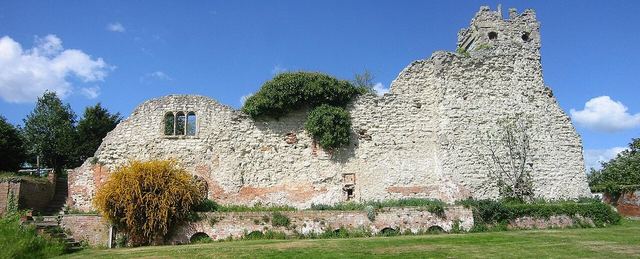
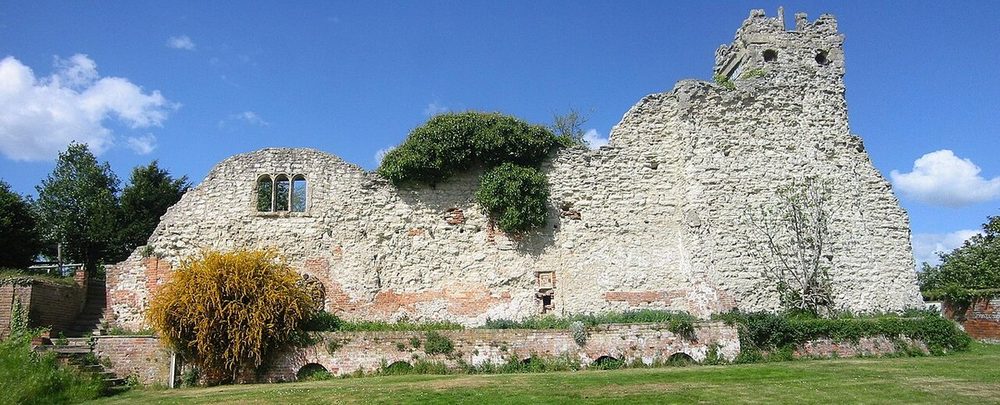
Wallingford Castle
Held for Matilda by Brian FitzCount for the whole of the war and never taken. Stephen besieged it repeatedly and built a counter-castle across the Thames at Crowmarsh Gifford. The peace of 1153 is named after the town.
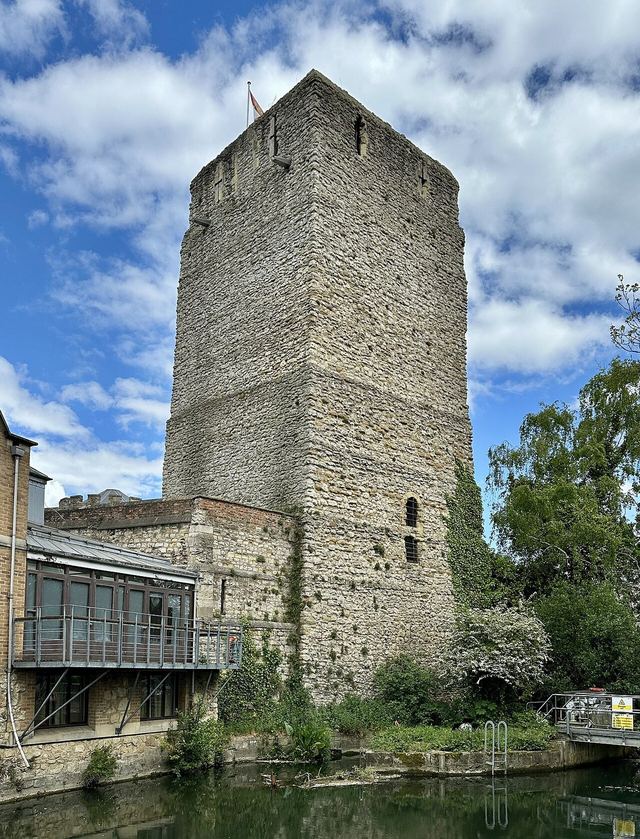
Oxford Castle
Matilda was besieged here from September 1142 and got out in December, crossing the frozen river at night and reaching Wallingford on foot. The motte and St George's Tower still stand.
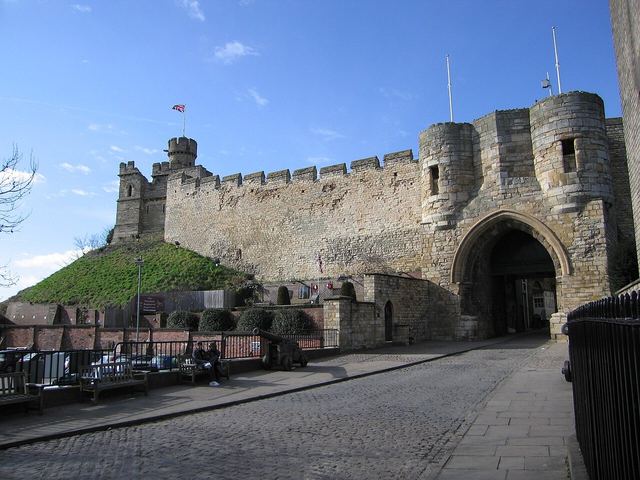
Lincoln Castle
The battle outside these walls on 2 February 1141 ended with Stephen a prisoner. It is the single day on which the war came closest to being decided.
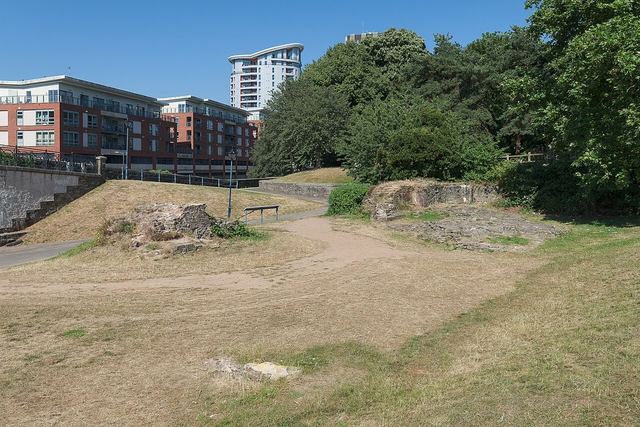
Bristol Castle
Robert of Gloucester's stronghold and the Angevin capital in all but name. Stephen was held here after Lincoln until he was exchanged for Robert himself in November 1141. Fragments survive in Castle Park.
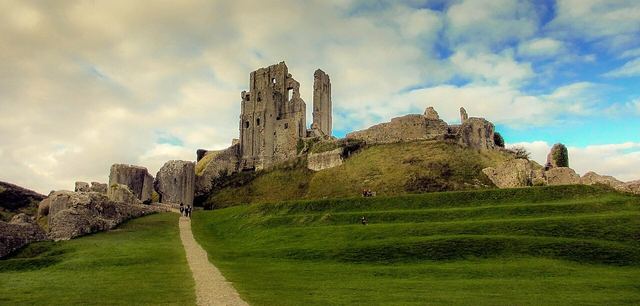
Corfe Castle
Held against Stephen by Baldwin de Redvers in 1139. Stephen's answer was a ringwork siege castle nearby, still traceable on the ground and recorded as The Rings. The blockade did not work.
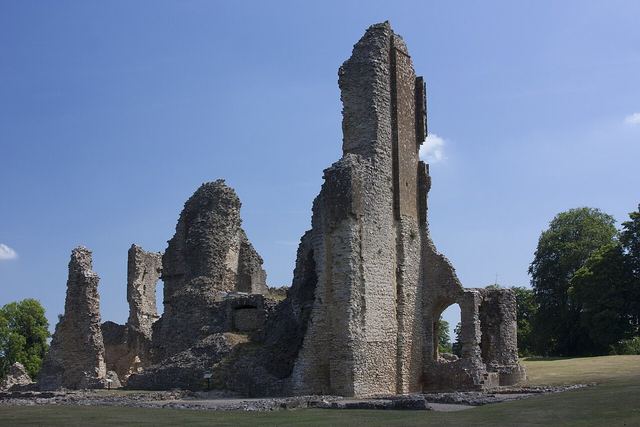
Sherborne Old Castle
One of the great fortified palaces of Roger, Bishop of Salisbury, Henry I's chief minister. Stephen arrested Roger in June 1139 and took his castles, a move that cost him the Church.
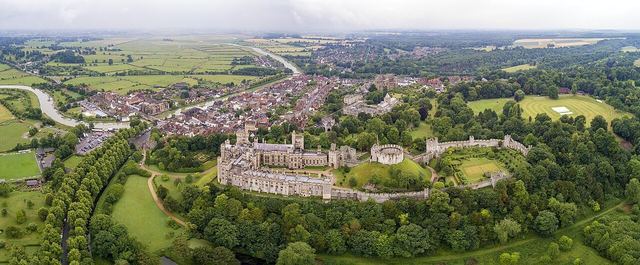
Arundel Castle
Matilda landed in England in September 1139 and was received here by Adeliza, Henry I's widow. Stephen came, besieged it, and then let his rival go on to Bristol under safe conduct.
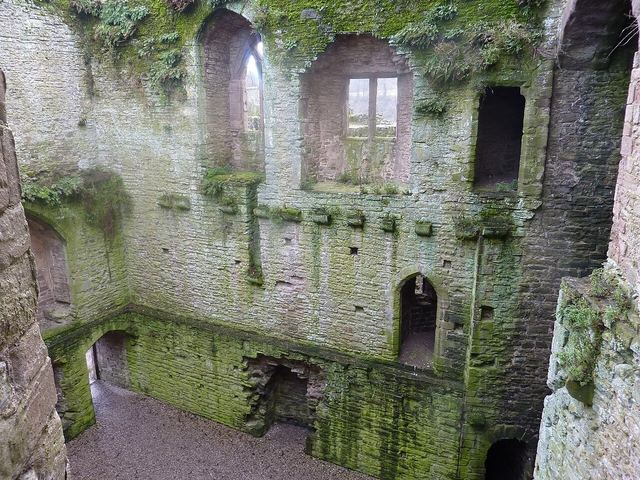
Ludlow Castle
Besieged unsuccessfully by Stephen in 1139. The garrison hooked Prince Henry of Scotland with a grappling iron during the fighting and Stephen cut him free himself.
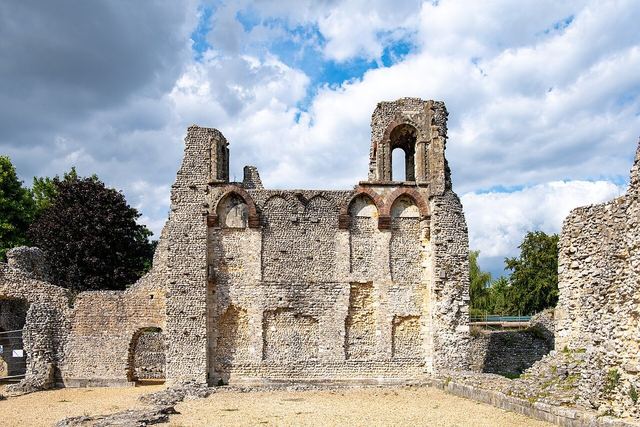
Wolvesey Castle
The Winchester palace of Bishop Henry of Blois, Stephen's brother. His men held out here in September 1141 while the city burned around them, and the Angevin retreat became the Rout of Winchester.
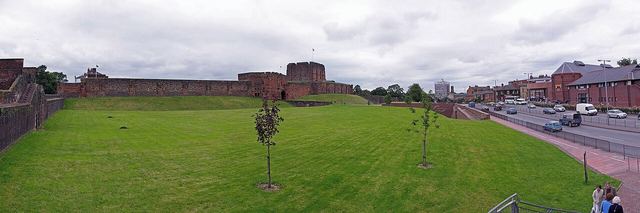
Carlisle Castle
Held by David I of Scotland for most of the war, taken while Stephen's grip on the north was weakest. David died inside it in May 1153.
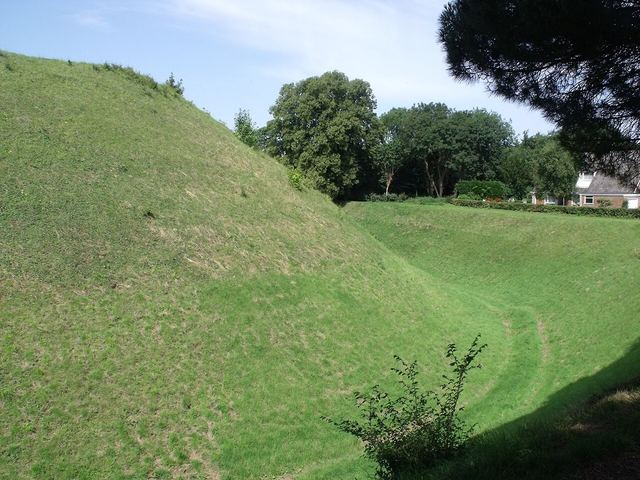
Castle Rising Castle
Built in 1138 by William d'Aubigny, who had married Henry I's widow and gained an earldom. A very grand hall-keep raised in the middle of a civil war, and not by a man expecting a siege.