Guide No. 30 · The Castle Rolls
Licence to Crenellate: Who Was Allowed to Build a Castle?
Every guidebook in the country says the same thing: you needed the king's permission to fortify your house. Four hundred and forty-eight documents survive to prove it. The trouble is what the other thousand-odd fortified houses were doing without one.
A licence to crenellate was a written permission from the crown allowing a named person to fortify a named building. Most were letters patent, issued under the privy seal and enrolled on the Patent Rolls, and most run to a single line: licence for so-and-so to strengthen his dwelling place with a wall of stone and lime, and to crenellate it. To crenellate is to top a wall with battlements, the alternating raised merlons and lowered embrasures that a defender stands behind and shoots through. Philip Davis, whose catalogue is the standard list, counted 448 certain licences for England, Wales and the Islands between 1199 and the late sixteenth century. What historians no longer agree on is whether those documents were permission, or a compliment.
What the document actually said
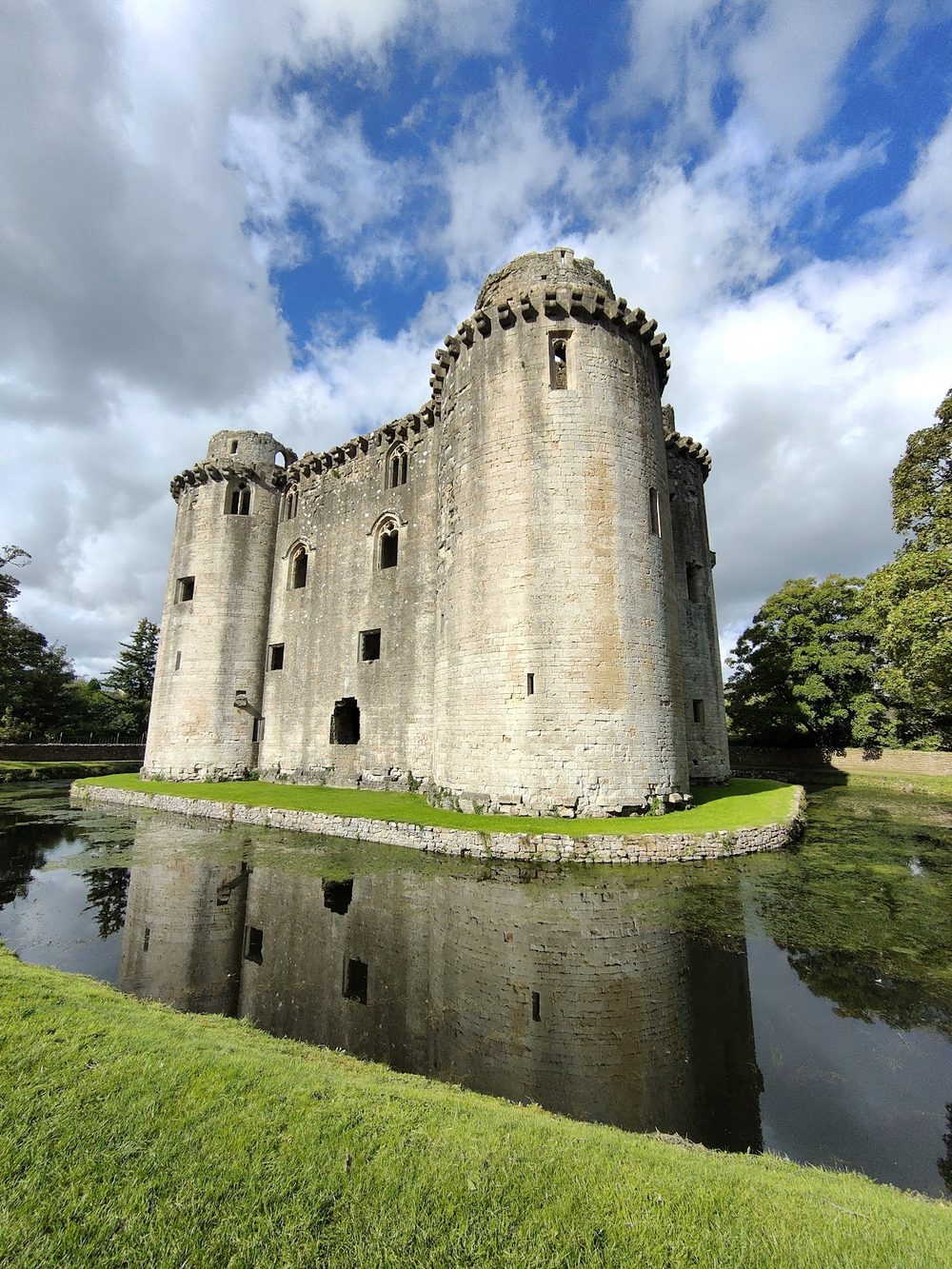
The striking thing about a licence to crenellate, if you have only ever read about them, is how small they are. The grant for Nunney in November 1373 is complete in one sentence: licence for John de la Mare, chivaler, to crenellate his dwelling-place at Nonny, county Somerset. That is the whole document.
The vocabulary matters, because it is not the vocabulary of castle-building. The word used in the overwhelming majority of grants is mansum, a dwelling place. Only 31 of the 448 use castrum, a castle, and seven of those are for castles that already existed. Twelve use fortalicium, a fortalice. A licence was normally free: a fee or fine is mentioned in just seven of the whole corpus. Nor was the crown the only grantor. In the palatinates, where a magnate held royal powers in his own territory, the Bishop of Durham, the Earl of Chester and, after 1351, the Duke of Lancaster issued their own. Lumley was licensed by Bishop Walter Skirlaw of Durham in November 1389 and then confirmed by the king three years later in the same terms, which is a useful thing to know before assuming every grant came from Westminster.
Who asked, and who never bothered
Follow the names and a pattern appears fast. Acton Burnell was licensed in 1284 to Robert Burnell, Bishop of Bath and Wells and the king's chancellor. Bolton went to Richard le Scrope in 1379, also a chancellor. Ninety-six licences went to churchmen, among them three archbishops, thirty-one bishops and twenty-six abbots, and a great many of those men were serving royal ministers. Twenty-eight grants covered town defences and forty-four went to abbeys, cathedral closes and churches. Eleven named women, four of them in their own right. Stokesay, licensed in 1291, belonged to a wool merchant.
Then look at who did not ask. Roughly three fortified manor houses in five have no surviving licence at all. In 1415 the crown listed 114 fortifications in Northumberland for Henry V; 23 of them had licences, and the king knew it. Warkworth has none. Neither does Hylton, under either spelling of its name and under no Durham grant either. Neither does Raglan. At Tattershall the licence of 1231 belongs to Robert de Tattershall; the enormous brick tower that everyone goes to see, built by Ralph, Lord Cromwell two centuries later, has no licence of its own. No one appears to have been prosecuted for any of this. Four licences were revoked across the whole series, and that is the extent of the enforcement anyone has found.
Control, or compliment
The older reading, which is the one still printed on most interpretation boards, is that licensing was how the crown kept private fortification in check. Ella Armitage stated it as law in 1912: the feudal system William introduced forbade the building of any castle without the king's licence, and by the reign of Henry III, she wrote, it was evidently illegal even to fortify an ordinary house with a ditch and a stockade without royal permission. A. Hamilton Thompson, publishing the same year, put it as ownership instead: the king was the owner of the castles of his realm, whatever the practice on the ground. The doctrine was still being taught as law in 1988, when D. J. Cathcart King wrote that anyone who fortified in defiance of the royal right built an adulterine, or unlawful, stronghold.
That reading has been dismantled from two directions. Richard Eales, working on the Norman period, found that one searches twelfth-century royal charters in vain for anything resembling a licence to build a castle, and argued that the sheer scale of building after the Conquest is likelier to have created customary rights to fortify than a system for refusing them. Charles Coulson, working on the later documents, put it more bluntly: the king's right as overlord was a right to grant, not to refuse. In his reading a licence carried the cachet of royal recognition and compliment, cost nothing, and was sought exactly as eagerly as a privilege that paid. Castellation, he wrote, was the architectural expression of noble rank.
One popular casualty of this argument is worth flagging. The adulterine castles of Stephen's reign are often glossed as unlicensed castles. They were not. The only precise medieval definition, in the 1217 reissue of Magna Carta, describes them as castles built or rebuilt since the war began. The taint was rebellion, not paperwork.
The revision has not gone unopposed. Colin Platt argued in 2007 that castle studies had swung too far, and that defence remained the first consideration of nearly every castle-builder. Oliver Creighton and Robert Liddiard replied the following year under a title that says most of it: fighting yesterday's battle, and time to get past war-or-status as the only two available answers.
Bodiam, where the argument lives
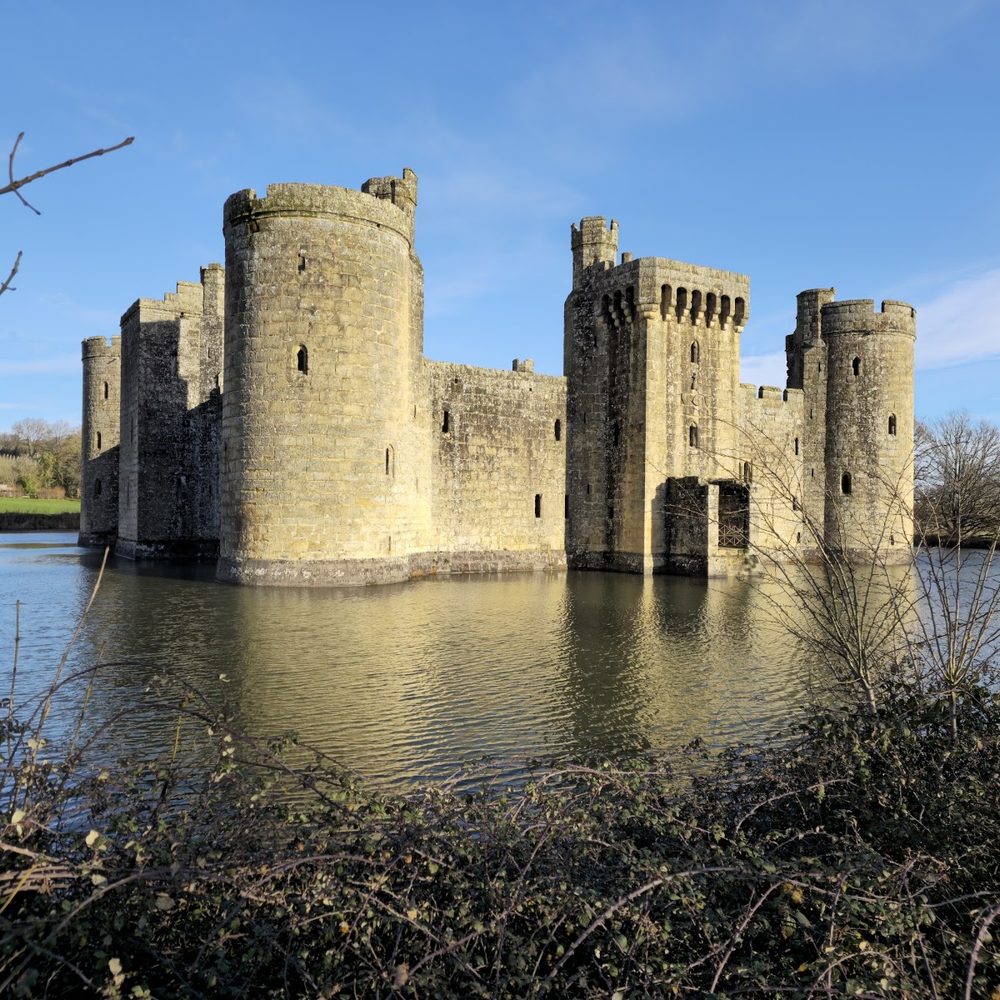
Bodiam is the case everyone fights over, and its licence is why. In October 1385 Richard II granted Sir Edward Dallingridge permission to strengthen with a wall of stone and lime, and crenellate, and make into a castle his manor house of Bodiam near the sea in the county of Sussex, for the defence of the adjacent country and the resistance of the king's enemies. Read cold, that is an unambiguous statement of military purpose, and for most of a century it was read exactly that way, against the background of French raids on the Sussex coast.
Two things complicate it. Bodiam is about ten miles from the sea, on a river going nowhere strategically important. And Dallingridge did not do what the licence describes: he left the manor house where it was and built a new castle on a different site. Charles Coulson's 1992 analysis picked over the moat that could be drained from below, the gunports that point at nothing useful and the walls that are thinner than they look. Matthew Johnson read the martial features as unusable and the whole building as a piece of staging. Colin Platt looked at the same gunports and called them genuinely defensive. The evidence has not changed since 1385; the verdict tracks the observer, which is roughly where the subject now sits.
Reading a licence honestly
None of this makes the documents worthless. They are dated, they name people, and they are often the only firm date attached to a building. What they will not carry is the weight the guidebooks put on them. A licence is evidence that somebody wanted the crown's blessing on a set of battlements, and that the crown gave it, usually for nothing, usually in one line. It is not evidence that the building was needed, nor that the neighbour without one was breaking the law.
The pattern of the grants makes the point better than any argument. They multiply under Edward III, in a long reign with plenty of peace at home. They go to chancellors and bishops and wool merchants. Baconsthorpe was licensed by Elizabeth I in 1561, roughly a century after the Heydons began building it, which is a permission for something already standing. And at Cooling in Kent, John de Cobham, licensed in 1381, had a poem set in enamelled copper on the gatehouse wall telling passers-by that the castle was made in help of the country. A man who felt no need to be believed would not have bothered.
Quick answers
What was a licence to crenellate?
A licence to crenellate was a written permission from the crown allowing a named person to fortify a named building. Most were letters patent issued under the privy seal and enrolled on the Patent Rolls, and most are a single line long. The usual formula granted licence to strengthen a dwelling place with a wall of stone and lime and to crenellate it, meaning to top the wall with the alternating raised and lowered sections that give a battlement its shape.
How many licences to crenellate are known?
Philip Davis, whose catalogue English Licences to Crenellate 1199 to 1567 is the standard list, counted 448 licences he regarded as certain for England, Wales and the Islands. Of those, 433 were royal, 8 were granted by the palatinate of Durham, 5 by the palatinate of Cheshire and 2 by the Duchy of Lancaster. Edward III's reign accounts for 152 of the royal grants, far more than any other.
Did you need a licence to build a castle in medieval England?
Probably not, and that is the heart of the modern argument. Davis found no evidence that a licence was a legal requirement, and roughly three in five fortified manor houses have no surviving grant. The sharpest single figure comes from Northumberland in 1415, when 114 fortifications were listed for Henry V and only 23 of them had licences. No prosecution for crenellating without one has been identified.
Who could grant a licence to crenellate?
The king, in almost every case. The exceptions are the palatinates, the semi-independent lordships where a magnate held royal powers: the Bishop of Durham, the Earl of Chester and, after 1351, the Duke of Lancaster all issued their own. Lumley Castle is the clearest example, licensed by Bishop Walter Skirlaw of Durham in 1389 and then confirmed in the same terms by the king in 1392.
Why is Bodiam Castle's licence so famous?
Because of the gap between what it authorised and what was built. In October 1385 Richard II gave Sir Edward Dallingridge licence to strengthen and crenellate his manor house at Bodiam and make a castle of it, for the defence of the surrounding country against the king's enemies. Dallingridge left the manor house alone and built a brand new castle on a different site, which is difficult to square with the idea that the document worked like a building permit.
Where to stand inside the idea
Ten castles and fortified houses on the roll whose licences survive, from a chancellor's house in 1284 to a permission granted a century late:
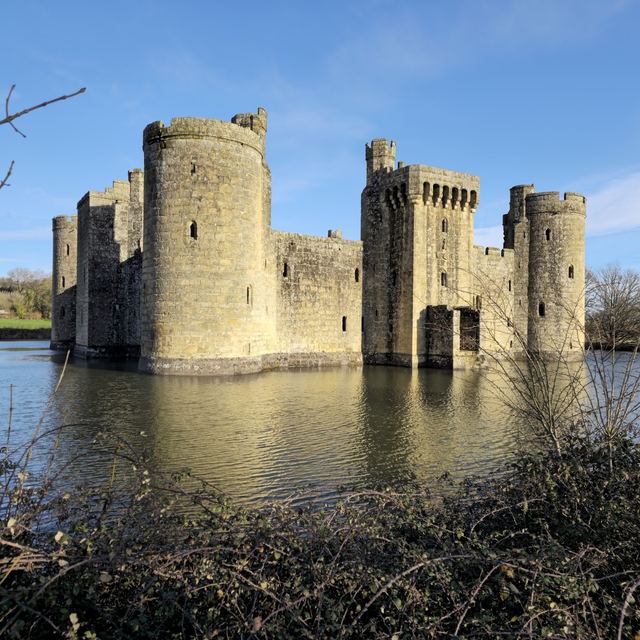
Bodiam Castle
Licensed to Sir Edward Dallingridge in October 1385 to fortify his manor house. He built a new castle on a fresh site instead, which is why this one document has swallowed so much of the argument.
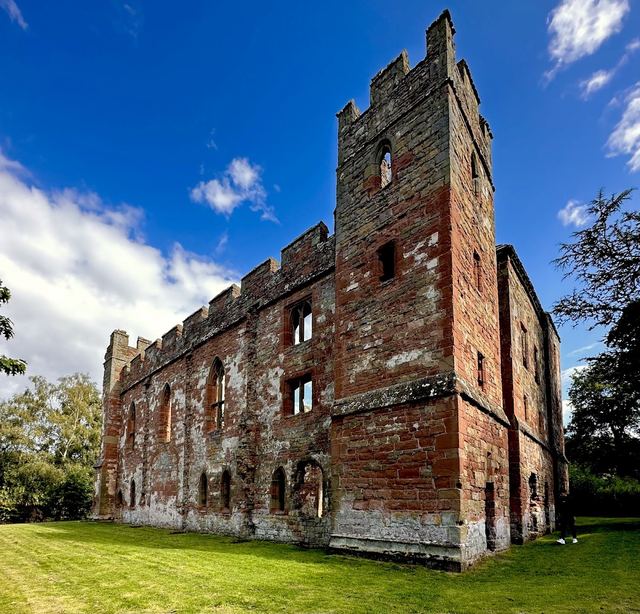
Acton Burnell Castle
Licensed in January 1284 to Robert Burnell, Bishop of Bath and Wells and the king's chancellor. A fortified house by a royal minister, and the model case for who was actually asking.
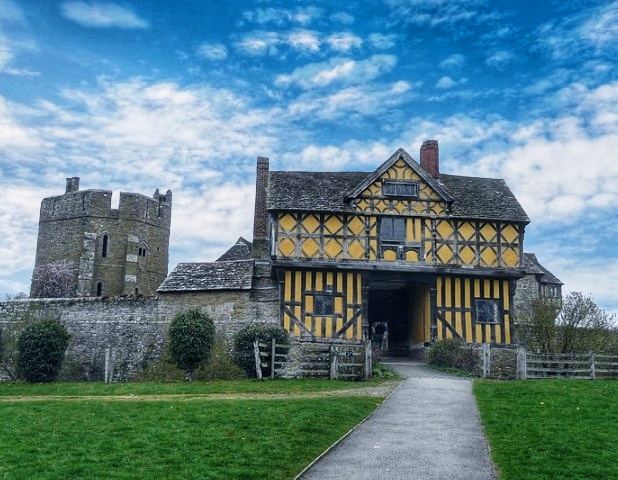
Stokesay Castle
Licensed in October 1291 to Lawrence of Ludlow, a wool merchant rather than a soldier. The result is one of the best-preserved fortified manor houses in England.
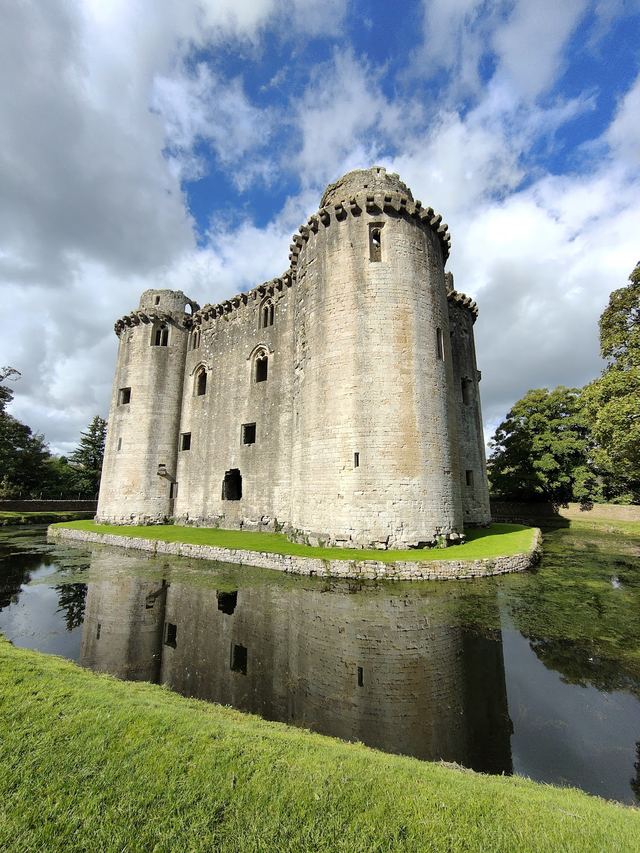
Nunney Castle
The whole grant of November 1373 reads: licence for John de la Mare, chivaler, to crenellate his dwelling-place at Nonny, county Somerset. That single line is the standard form.
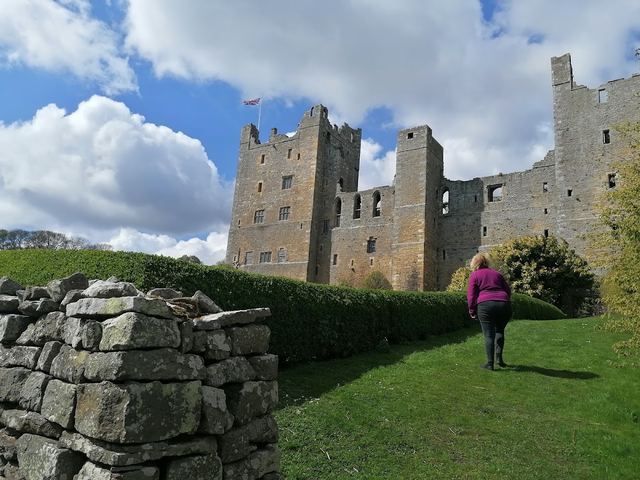
Bolton Castle
Licensed in July 1379 to Richard le Scrope, then chancellor. Still roofed in part, still in the family, and one of the clearest surviving late-medieval castle interiors.
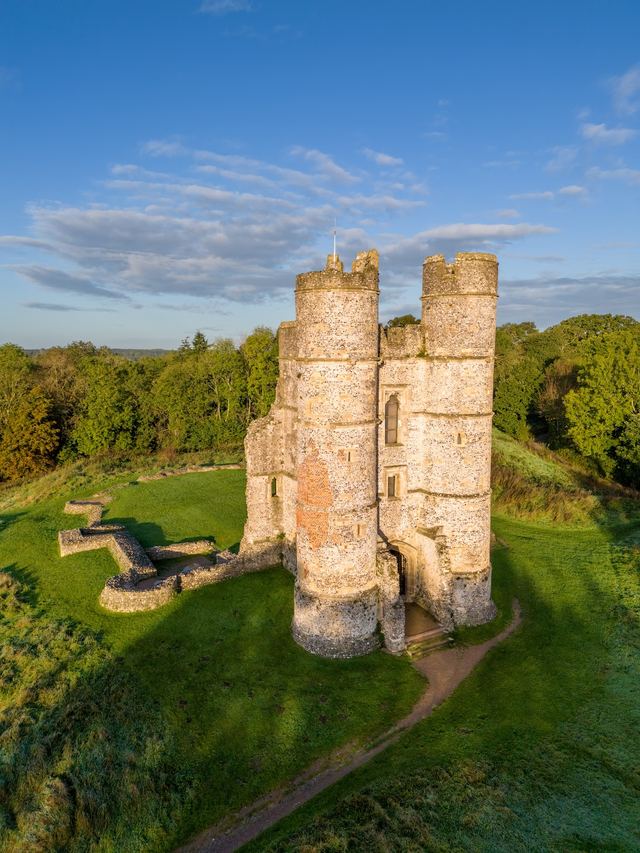
Donnington Castle
Licensed in June 1386 to Richard Abberbury the elder. Everything but the gatehouse was demolished after the Civil War siege.
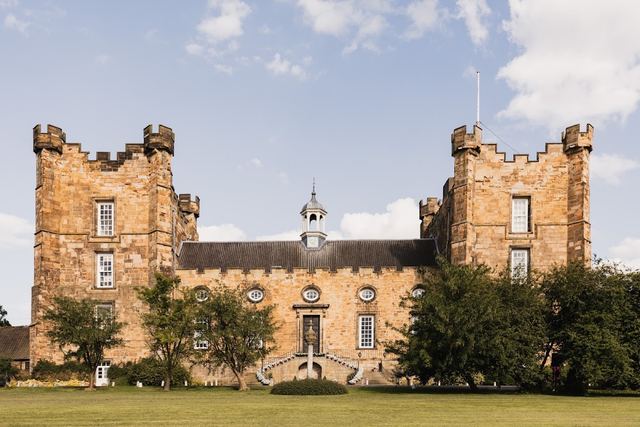
Lumley Castle
Licensed twice: by the Bishop of Durham in 1389 under his palatinate powers, then confirmed by the crown in 1392. The best illustration that the king was not the only source.
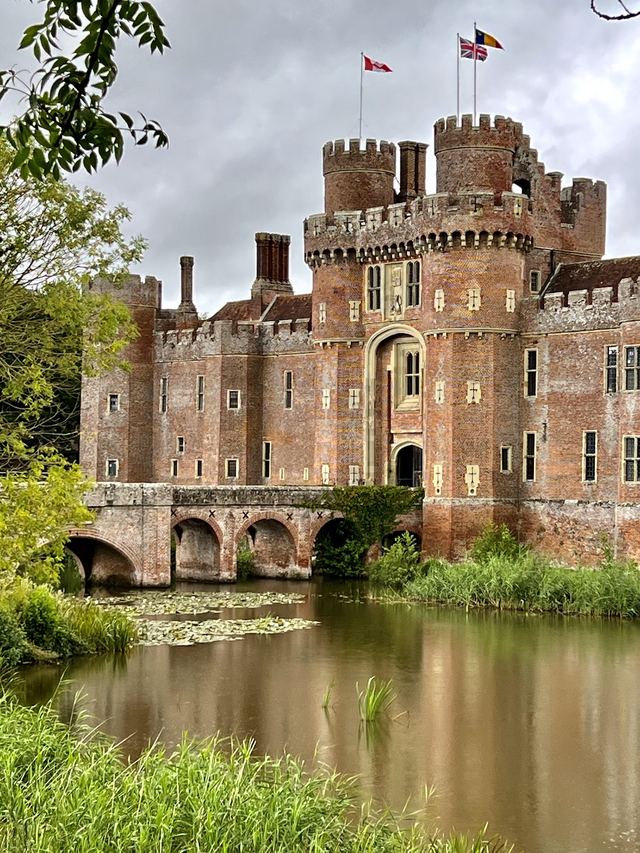
Herstmonceux Castle
Licensed to Sir Roger Fiennes in February 1441, and recorded on the Charter Rolls rather than the Patent Rolls. A brick palace with a moat and very little to fear.
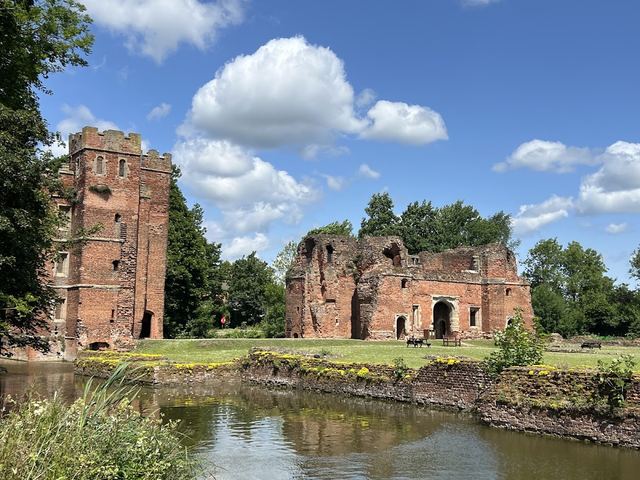
Kirby Muxloe Castle
Licensed to William, Lord Hastings in April 1474, also by charter. Abandoned half-built when he was executed in 1483, with the gunports and the diapered brickwork left mid-sentence.
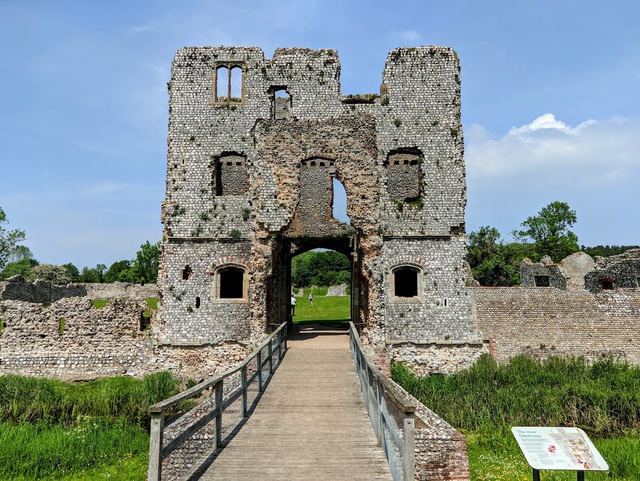
Baconsthorpe Castle
Licensed by Elizabeth I in November 1561 to Sir Christopher Heydon, roughly a century after his family began building the house. A licence for a building that was already there.