Guide No. 22 · The Castle Rolls
Castle Gardens: From Medieval Pleasance to Modern Revival
Every other guide on this roll is about stone. This one is about the part of a castle that was never meant to last - the garden. It is the first thing to vanish when a castle is abandoned, and at several places on this roll it is now the only reason anybody comes.
A castle garden is the designed ground attached to a castle, laid out for pleasure and display rather than for defence: a walled herber or privy garden inside or beside the walls, an orchard, a moated pleasance, and from the 16th century onward terraces and parterres arranged to be looked down on from the building itself. Castles had them from early in their history, and the documents prove it even where nothing survives. Almost none of the medieval planting has come through - soil is the least durable material a castle ever held - so what you can actually walk round today is either a rare early survival, a careful modern recreation, or a garden made long after the castle stopped working.
The medieval garden was real, and it had a name
The idea that a castle was all portcullis and no planting is a modern one. Castle accounts put gardeners on the payroll, pay for walls and gates around herbers, and record vineyards, orchards, fishponds and turf seats. The vocabulary is specific: a herber was a small enclosed pleasure garden, usually walled or hedged, with a lawn, an arbour and raised beds; a privy garden was the one reserved for the lord's own household, reached from the private apartments rather than the courtyard; a pleasance was the whole designed pleasure ground, and it could be very large indeed.
The most extravagant on record in Britain belonged to Henry V. In the 1410s he had a retreat built at Kenilworth on the far side of the castle's great mere, a moated banqueting house in its own double-ditched enclosure, reached by boat across the water. Its name in the records is le Plesans en Marys - the pleasure house in the marsh. Nothing of it stands, and the mere itself was drained after the Civil War, but the earthworks were traced by excavation and the point survives with them: the water in front of a castle like this was landscape design, not just a wet obstacle. The same is true of the flooded lakes at Caerphilly, which are as much a setting as a defence.
What almost never survives is the garden itself. A wall lasts eight hundred years; a flower bed lasts a season, and a lawn lasts only as long as somebody mows it. So the medieval castle garden is known mostly from written accounts, from excavated soil marks and post holes, and from a handful of pictures - which is why the one place in Britain where you can walk through a fully realised Elizabethan castle garden is a reconstruction rather than a survival.
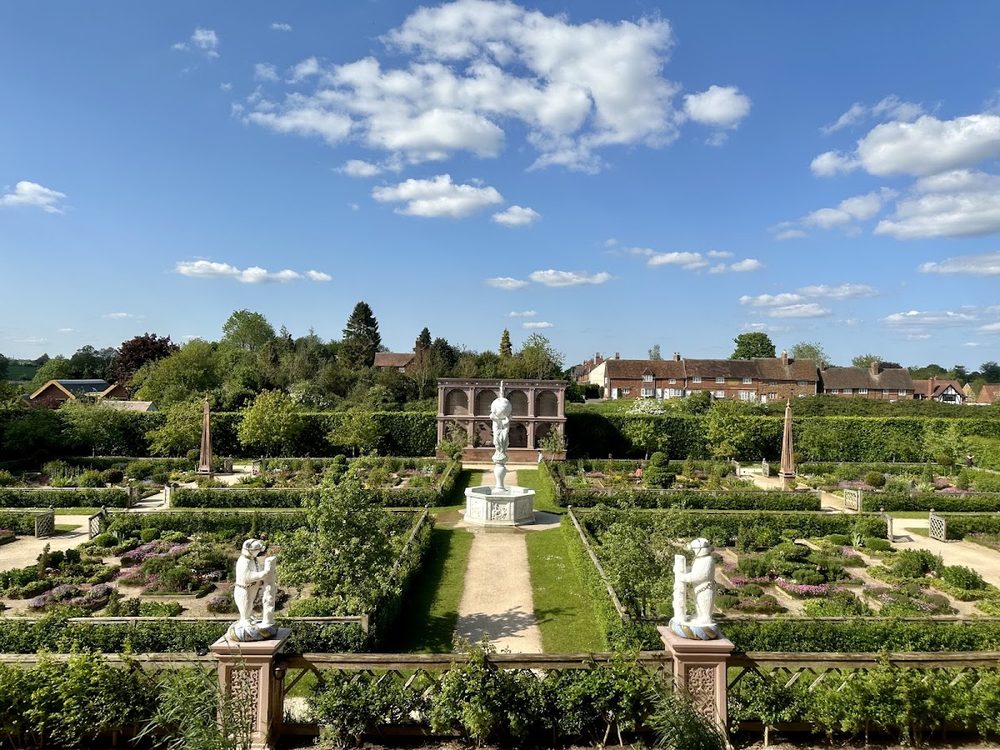
Kenilworth 1575: a garden rebuilt from a letter
Robert Dudley, Earl of Leicester, held Kenilworth and spent a fortune on it in the hope of marrying his queen. In the summer of 1575 Elizabeth I came to stay for nineteen days, the longest she spent anywhere on any of her progresses, and Dudley laid on the entertainments that became famous as the Princely Pleasures. Part of the display was a new privy garden on the north side of the keep, made for her to walk in.
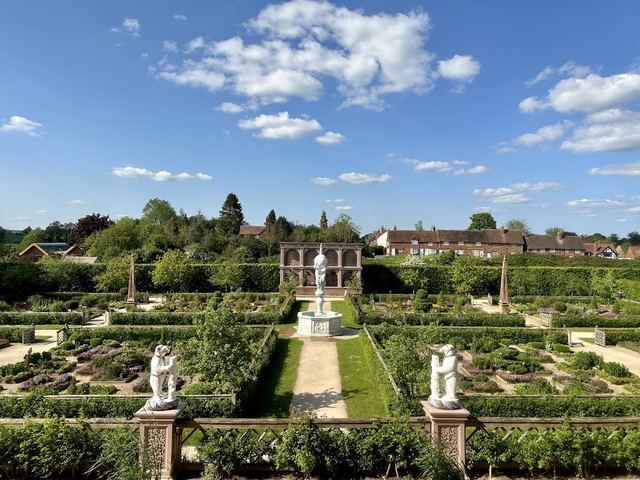
It survives because a member of the household wrote it down. A letter attributed to Robert Langham describes the garden in unusual detail - a raised terrace to walk along and view it from, quartered beds, wooden obelisks, an aviary of live birds, and at the centre an eighteen-foot marble fountain. That description, read against archaeological excavation on the site, was enough for English Heritage to rebuild the garden where it had been. It opened in 2009. It is worth being plain about what it is: a scholarly reconstruction, not original fabric. But it is the closest anyone in Britain can get to standing in the garden a great Elizabethan courtier built to impress a queen, and it makes an argument no wall label could - that the garden was as much a part of the display as the building.
Walls, terraces and the Renaissance garden
From the later 16th century the castle garden became architecture. It was walled, levelled into terraces, divided into geometric compartments, and above all arranged to be seen from above - which suited a castle better than it suited a house, because a castle already had the high vantage point built in.
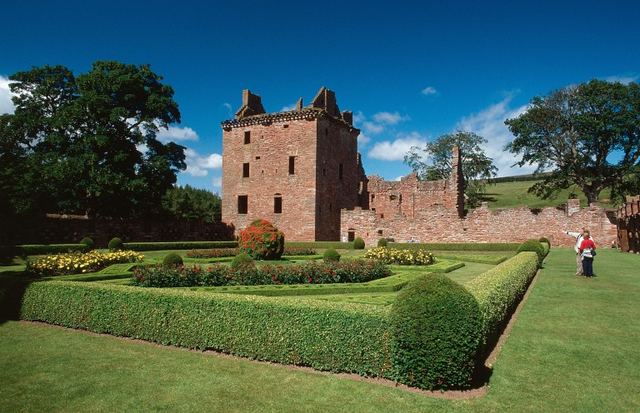
Edzell in Angus has the oldest datable example on this roll, and it is unlike anything else in Britain. Sir David Lindsay built a walled garden here in 1604 and had the walls themselves carved: the planetary deities on one range, the cardinal virtues on another, the liberal arts on a third, with rows of recesses cut into the stone that once held flowers, and the chequered pattern of the Lindsay arms worked into the fabric. The walls are original. The neat box parterre inside them was laid out in the 20th century, which is worth knowing before you look at it and assume you are seeing 1604 planting.
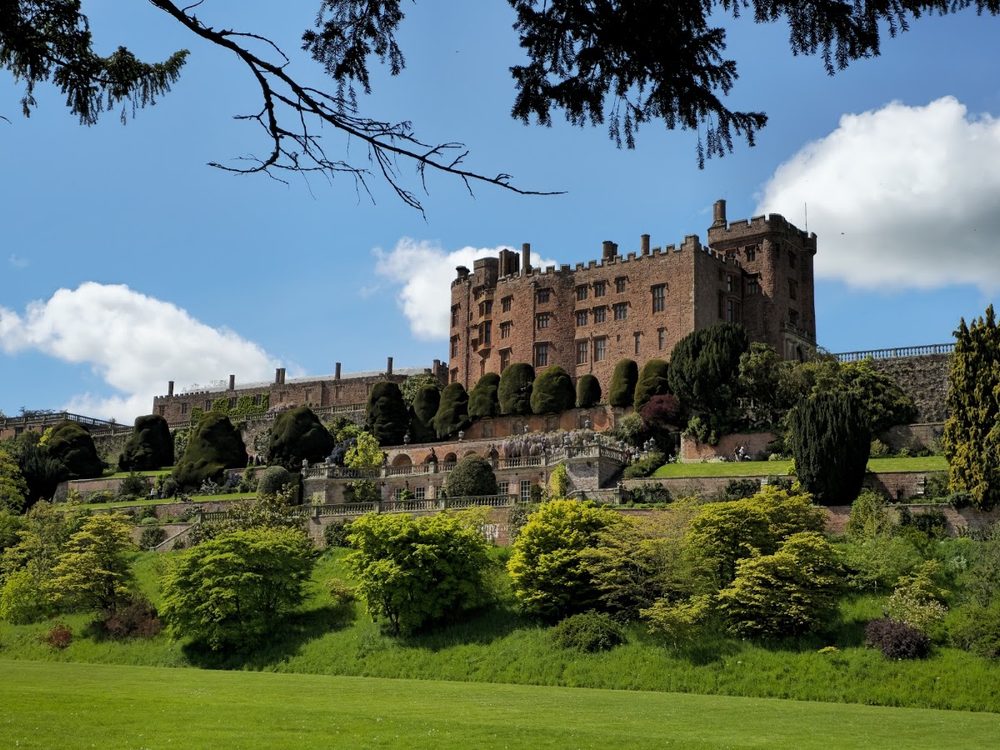
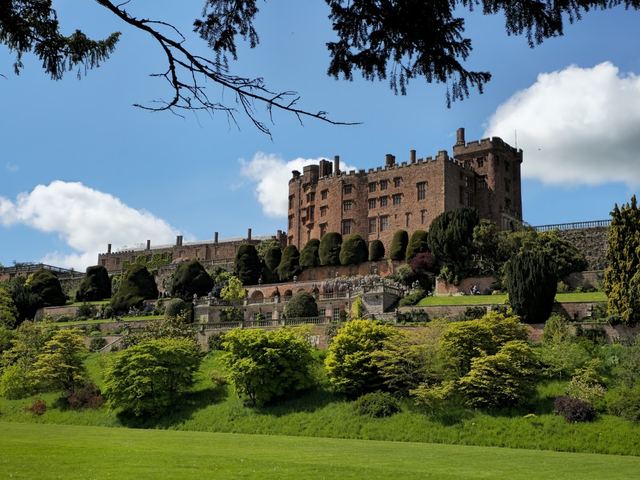
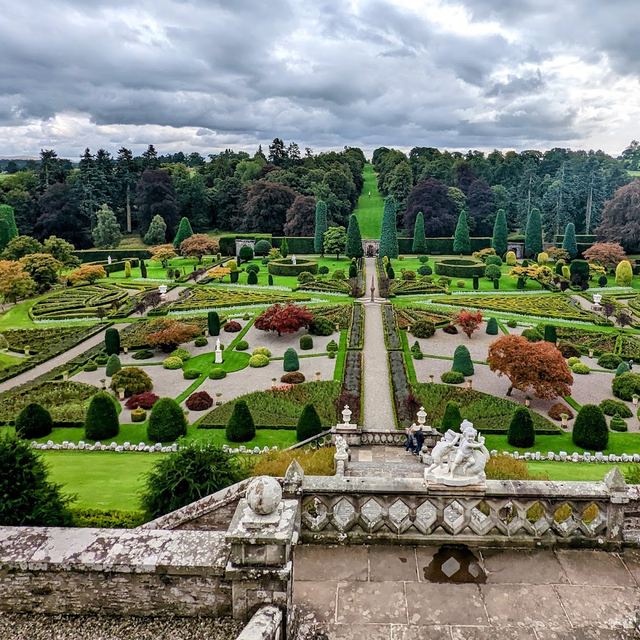
Powis is the survivor. In the years around the end of the 17th century its owners cut four Italianate terraces into the rock below the castle, in the baroque manner then arriving from the continent, and then - crucially - never got round to destroying them. The clipped yews on those terraces have grown into vast soft billowing shapes quite unlike anything their planters intended, and the whole thing is one of very few formal gardens in Britain to come through the 18th century intact. Drummond in Perthshire is the other great terrace view: a huge parterre laid out as a St Andrew's Cross, arranged around a many-faced sundial of 1630 by John Mylne, and best understood by walking out of the castle and looking straight down on it. Its planting, like Edzell's, is far younger than its bones. At Crathes the yew hedges are dated to 1702 and are now enormous, and at Bolsover the Cavendishes set a walled fountain garden with a statue of Venus at its centre right against their compact pleasure-house keep.
The park, the ruin, and the garden that outlives the castle
Then the fashion turned, hard. From the middle of the 18th century the English landscape park replaced the formal garden almost everywhere: grass, water, belts and clumps of trees, running right up to the walls with nothing geometric in between. Thousands of terraces and parterres were deliberately dug out to make one, which is the single largest reason so few early castle gardens survive. Where the castle was already a ruin, the new taste found a use for it - as a picturesque eye-catcher in the middle of the view, the same impulse that produced the sham towers and manufactured ruins in the follies guide. Castle Kennedy shows the scale of ambition involved: from the 1730s the 2nd Earl of Stair, a field marshal, shaped banks, terraces and avenues between two lochs, by tradition using the soldiers under his command as the labour force.
The last chapter is the one that keeps several places on this roll open. When a castle is destroyed or reduced to a shell, the garden can become the whole point of the site. Antrim burned in 1922 and only a tower stands, but its long 17th-century formal canals are still there and free to walk. Lowther is a stabilised shell in Cumbria where Dan Pearson has been working since 2008 to a 20-year masterplan, weaving roses and clematis through the ruined walls and planting a parterre outside them. Next to Alnwick, the present Duchess of Northumberland began an entirely new garden in 1997, designed by the Belgian father-and-son practice of Jacques and Peter Wirtz, which opened in 2001 with its Grand Cascade and added the walled Poison Garden in 2005; it is a separate charity with its own admission, and for a good many visitors it is the reason they come to Alnwick at all. And at Sissinghurst, where Vita Sackville-West and Harold Nicolson took on a wrecked Elizabethan house in 1930, the garden has comprehensively won: almost nobody comes for the building.
Quick answers
What is a castle pleasance?
A pleasance was a walled or moated pleasure ground attached to a castle, laid out for enjoyment rather than for food or defence - lawns, arbours, walks, water, and somewhere to sit and be seen. The word covers a range of sizes. A small enclosed pleasure garden was more often called a herber, and the private garden reserved for the lord's own household was the privy garden. The grandest example in Britain was built by Henry V at Kenilworth in the 1410s: a moated banqueting retreat set on the far side of the castle's great mere, reached by boat.
Did medieval castles really have gardens?
Yes, and the documents are clear about it. Castle accounts record gardeners on the payroll, walled herbers, vineyards, orchards, fishponds and turf seats, and the great water features - the mere at Kenilworth, the flooded lakes at Caerphilly - were designed landscape as much as defence. What is missing is the planting itself. A garden is the least durable thing a castle ever contained: soil is turned over, beds are replanted, and almost nothing survives above ground. Most medieval castle gardens are known from written accounts and excavation rather than from anything you can see.
Which UK castle has the oldest surviving garden?
There is no clean answer, because "surviving" does most of the work in the question. The oldest datable garden structure on this roll is the walled Pleasance at Edzell Castle in Angus, built in 1604, whose sculptured walls are original - though the box parterre inside them was laid out in the 20th century. The oldest surviving planting is probably the great yew hedges at Crathes Castle in Aberdeenshire, dated to 1702. Powis Castle's terraces are late 17th century and are among the very few British formal gardens to escape the 18th-century fashion for sweeping such things away.
Why did so many castle gardens disappear?
Fashion, mostly, and then neglect. From the middle of the 18th century the formal terrace-and-parterre garden fell violently out of favour in Britain, replaced by the landscape park: grass, water and scattered trees running right up to the walls of the house. Thousands of formal gardens were deliberately destroyed to make one. Where a castle had already fallen into ruin, its garden had usually gone long before, and the ruin itself was often kept as a picturesque eye-catcher in the new park - the same taste that produced the sham castles and fake ruins covered in the follies guide.
Which castle gardens are worth visiting today?
Ten are listed with photographs at the foot of this guide, and they divide into three kinds. Genuine early survivals: Edzell's 1604 Pleasance, Powis's baroque terraces, Crathes's 1702 yews, Drummond's cross-shaped parterre. Careful recreations: the Elizabethan garden at Kenilworth, rebuilt from a 1575 eyewitness letter and opened in 2009. And modern gardens made where the castle itself has gone or been reduced to a shell: Lowther, Antrim and Sissinghurst. For a wider list of castles whose gardens visitors single out, see the castles-with-gardens page.
Where to stand inside the idea
Ten castle gardens on the roll, from a walled Pleasance of 1604 to a garden planted inside a ruin in our own century:
Kenilworth Castle and Elizabethan Garden
The emblem of the whole idea. Robert Dudley's privy garden of 1575, described in detail by an eyewitness and rebuilt from that letter by English Heritage, opened in 2009 - an aviary, an eighteen-foot marble fountain, and a terrace to walk it all from.
Edzell Castle and Garden
The oldest datable garden structure on the roll. Sir David Lindsay's walled Pleasance of 1604, its walls carved with the planetary deities, the cardinal virtues and the liberal arts, and pierced with recesses that once held flowers. The box parterre inside is a 20th-century restoration.
Powis Castle
The great escape. Four Italianate terraces cut into the rock below the castle in the late 17th century, with clipped yews now grown into vast soft shapes - one of very few British formal gardens the 18th century did not sweep away.
Drummond Castle
The best garden in Britain to look down on rather than walk into first. A huge parterre laid out as a St Andrew's Cross, seen from the terrace above, arranged around a multi-faced sundial of 1630 by John Mylne. The planting is largely a 19th-century remodelling.
Crathes Castle
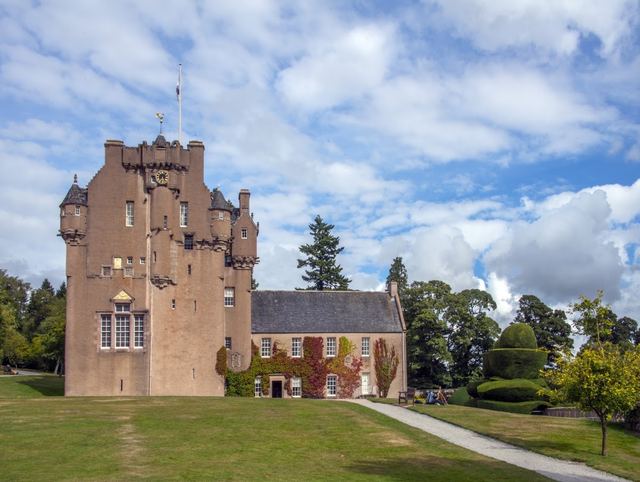
The oldest surviving planting here: yew hedges dated to 1702, now enormous, dividing a walled garden into eight compartments that were replanted in the 20th century by Sir James and Lady Sybil Burnett.
Dirleton Castle
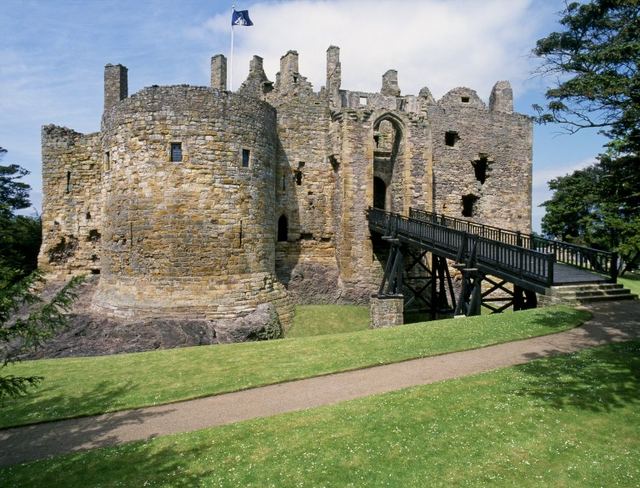
A ruined medieval castle with an Arts and Crafts garden beside it and a herbaceous border reputedly among the longest in the world. The 16th-century bowling green under its yews is the older survival and the quieter pleasure.
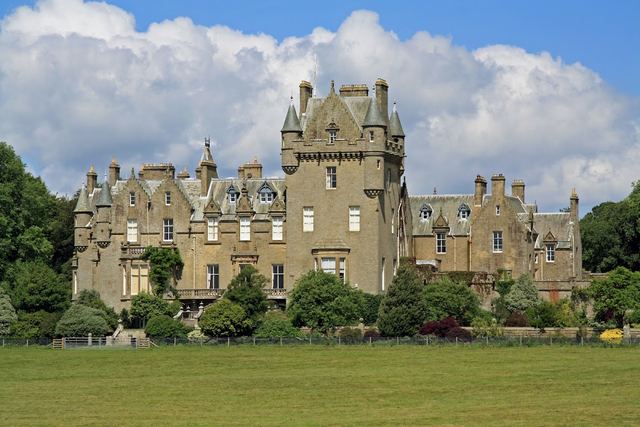
Castle Kennedy
Earth-moving on a military scale. The 2nd Earl of Stair, a field marshal, laid out banks, terraces and avenues between two lochs from the 1730s, by tradition using the soldiers under his command. The gardens are the attraction; the castle is a roofless shell.
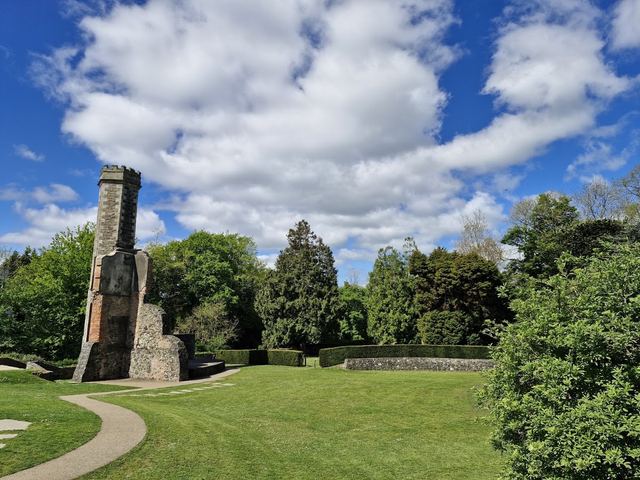
Antrim Castle Gardens
A rare survival of the long formal canals of the later 17th century, still holding their lines. The castle burned in 1922 and only a tower remains, so the garden is now the whole visit - and it is free.
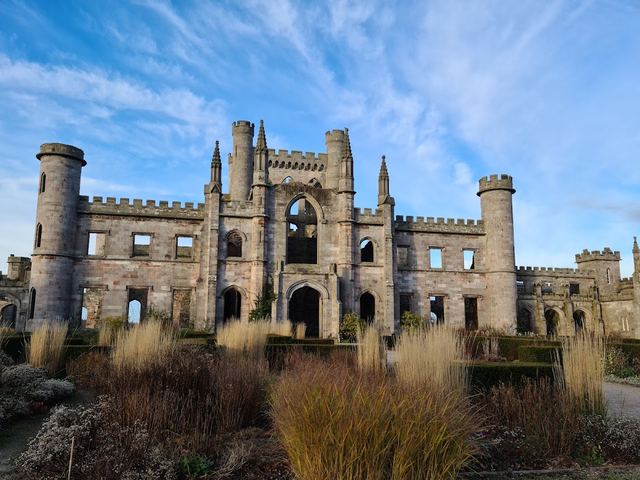
Lowther Castle
The most ambitious modern answer to a ruin. The castle is a stabilised shell, and Dan Pearson has been planting a garden inside and around it since 2008 under a 20-year masterplan, with roses and clematis woven through the walls and a threadbare-tapestry parterre outside.
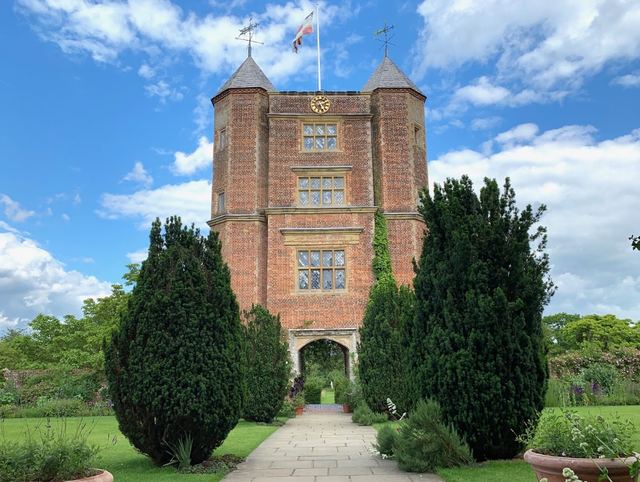
Sissinghurst Castle Garden
The building that lost its own argument. Vita Sackville-West and Harold Nicolson bought a wrecked Elizabethan house in 1930 and made a garden around its tower that is now far better known than any part of the structure - the White Garden most of all.