Guide No. 14 · The Castle Rolls
Follies and Fake Castles
Every other guide on this roll is about a building meant to be defended. This one is about the opposite tradition: castles built purely to be looked at. Sham towers, fake ruins, and whole country houses dressed up in battlements they never needed - the youngest castles here, and the only dishonest ones.
A folly or fake castle is a building made to look like a castle without ever being meant to work as one. No garrison, no siege to survive, sometimes no roof and no usable rooms at all - just the outline of a fortress, put up for effect. Some are small: a sham tower or a deliberately built "ruin" set in a park to improve the view. Others are enormous: entire Georgian and Victorian country houses given battlements, turrets and a fake keep, comfortable homes wearing the costume of a stronghold. They are the last castles built in Britain, and the only ones on this roll where the whole point was the picture rather than the protection.
The idea, and the honest way to tell the difference
The line between a real castle and a fake one is not about age or beauty - it is about purpose. A genuine castle, however grand a home it also was, was built to be defended: walls thick enough to matter, arrow loops set where they could cover an attacker, a gatehouse designed to stop people getting in. A folly borrows every bit of that look and quietly drops the function. Where the real thing has an arrow slit, the fake has a broad drawing-room window. Where the real thing has a wall-walk built to be fought from, the fake has a decorative parapet too thin to stand a defender behind. The plan is arranged for comfort, entertaining and the view, not for holding out.
This matters on the ground because the fakes are genuinely easy to mistake, and many were built precisely to be. A good number stand on, or right beside, real medieval fabric - which lends the whole thing a borrowed authenticity the stone alone never earned. The trick to reading one is to stop looking at the silhouette and start looking at the details: the size of the windows, the thickness of the walls, whether the "defences" could ever actually have worked.
Why the Georgians and Victorians built them
Two things came together. The first was taste. From the mid-18th century onward, British fashion swung hard toward the Gothic, the medieval and the "picturesque" - the idea that a landscape or a building was most beautiful when it looked wild, ancient and romantically irregular. A castle, real or fake, was the most picturesque thing a family could possibly own. The second was money. The industrial age produced enormous new fortunes - slate and coal, shipping and docks, sugar - and a self-made magnate who built himself a castle bought something no amount of cash could otherwise supply: the look of ancient lineage. From a distance, a brand-new castle made a brand-new family appear to have held the hill since the Conquest.
So the sham castle did two jobs at once. It satisfied a real and sincere love of the medieval - many of these buildings were designed by serious scholars of Gothic architecture - and it laundered new money into the appearance of old blood. The results range from small garden follies to some of the largest and most expensive houses of the entire Victorian age.
Castell Coch: the perfect fake
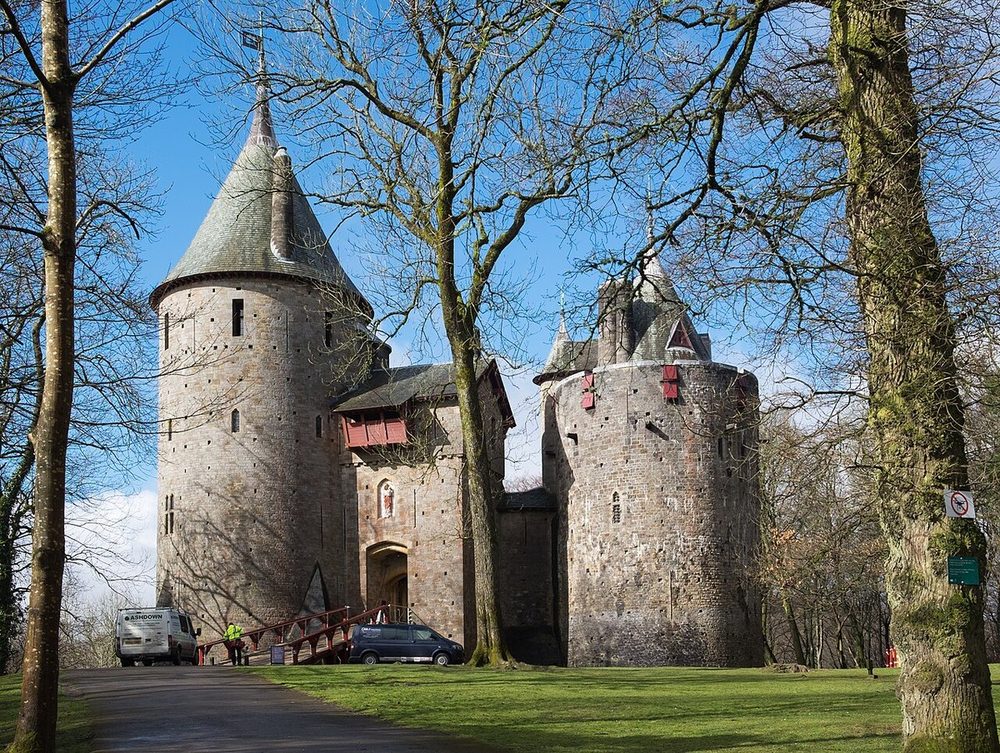
No building states the whole idea better than Castell Coch, the "Red Castle" in the woods north of Cardiff. There was a genuine castle here once - a stone stronghold raised in the 13th century by Gilbert de Clare, the same over-mighty Marcher earl who built Caerphilly - but it had collapsed into an overgrown ruin centuries before anyone thought to rebuild it. In the 1870s the 3rd Marquess of Bute, reputedly the richest man in Britain on the strength of Cardiff's coal and docks, set his favourite architect, the brilliant and eccentric William Burges, to raise a fantasy castle on the old footings.
What Burges produced is a Victorian dream of the Middle Ages rather than a reconstruction of one. The steep conical roofs that make Castell Coch look like something from a fairy tale are his own invention - there is no firm evidence the medieval castle ever carried anything like them - and the interiors are a riot of painted vaults, gilded birds and storybook detail owing far more to the 1870s than the 1270s. The final joke is that, for all the money and imagination poured into it, the Butes scarcely ever stayed there. It was a fake castle built as an occasional retreat, and then barely even used as that. It is, in the best sense, the most complete folly on the roll.
The fortress-houses and the manufactured ruins
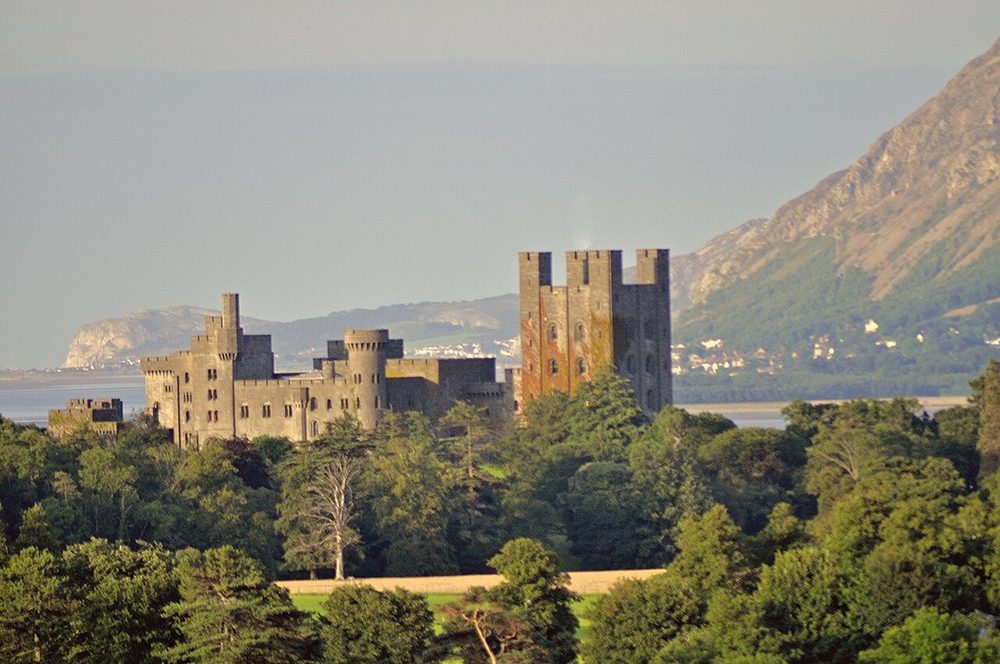
Castell Coch is the fantasy end of the tradition. At the other end sit the great fake fortresses - real, permanently lived-in country houses built new, at colossal expense, in convincing castle form. Penrhyn, near Bangor, is the most overwhelming: a vast neo-Norman pile thrown up in the 1820s and 1830s by Thomas Hopper, its brand-new keep built at the scale of a genuine one, paid for by North Wales slate and Caribbean sugar. Peckforton in Cheshire is the most convincing: Anthony Salvin's 1840s castle for John Tollemache was so carefully studied that it stares across its valley at the genuine medieval ruin of Beeston almost as an equal. Gwrych on the North Wales coast and Wray on the shore of Windermere are the same impulse at slightly smaller scale - theatrical runs of towers and battlements with no defensive purpose whatsoever.
Stranger still is the folly that works by subtraction. At Scotney in Kent, the Hussey family owned a genuine 14th-century moated castle - and in the 1840s, having built themselves a comfortable new mansion up the hill, they deliberately part-demolished the old one so that its remains would read as a romantic ruin in the view from their drawing-room windows. It is a real castle turned into a fake ruin on purpose: the picturesque taste taken to its logical, slightly ruthless conclusion. Not every example wore its purpose so seriously. Watermouth in Devon, a castellated mansion of the 1820s, is now a children's theme park - probably the most honest any of these buildings has ever been about being, at heart, an entertainment.
Quick answers
What is a folly castle?
A folly castle is a building put up to look like a castle without ever being meant to work as one - no garrison, no serious defences, sometimes not even a roof or usable rooms. Georgian and Victorian landowners built them for effect: a sham tower or a fake ruin set in a park to improve the view, or a whole comfortable country house dressed up in battlements and turrets. The point was the picture, not protection.
What's the difference between a folly and a real castle?
Purpose and honesty. A real castle was built to be defended - thick walls, arrow loops, a gatehouse meant to stop people getting in - even if it was also a grand home. A folly or fake castle borrows the look of all that and drops the function: broad windows where there should be arrow slits, battlements too thin to fight from, a plan arranged for comfort and show. Many fakes stand on or beside genuine medieval fabric, which is exactly what makes them easy to mistake.
Why did the Victorians build fake castles?
Romance and money, mostly. The late-Georgian and Victorian taste for the Gothic and the picturesque made a medieval-looking castle the most fashionable thing a wealthy family could live in, and the new fortunes of the industrial age - slate, coal, docks, sugar - could pay for one from scratch. A castle also borrowed instant ancestry: a brand-new industrialist could look, from a distance, as though his family had held the hill since the Conquest.
Is Castell Coch a real castle?
Both, and that is the interest of it. There was a genuine 13th-century castle on the site, built in stone by Gilbert de Clare, the same Marcher earl who raised Caerphilly - but it had been a ruin for centuries. What stands today is an almost entirely Victorian fantasy, designed by William Burges for the 3rd Marquess of Bute in the 1870s and 1880s and raised on the medieval footings. The conical fairy-tale roofs are Burges's invention; there is no firm evidence the medieval castle ever looked like that.
Can you visit fake castles in the UK?
Yes - a great many are open, and several are among the most visited castles on the roll. Castell Coch and neo-Norman Penrhyn are in state and National Trust care; Scotney's deliberately half-ruined old castle sits below its Victorian mansion as a designed view; and Peckforton, Gwrych, Wray and Watermouth have all found second lives as hotels, restoration projects or family attractions. They are listed at the foot of this guide.
Where to stand inside the idea
Eight follies and fake castles on the roll, from Burges's fairy-tale fantasy to a genuine castle deliberately ruined for the view:
Castell Coch
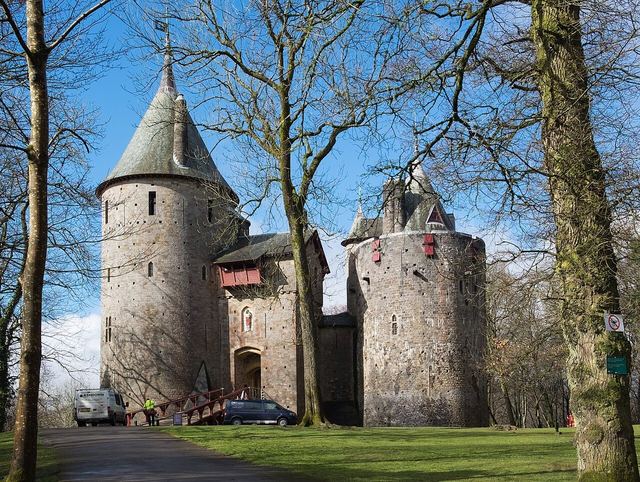
The perfect fake - a Victorian fairy tale by William Burges for the Marquess of Bute, raised on the footings of a genuine but long-ruined 13th-century castle. Fully roofed, lavishly decorated, and barely ever lived in.
Penrhyn Castle
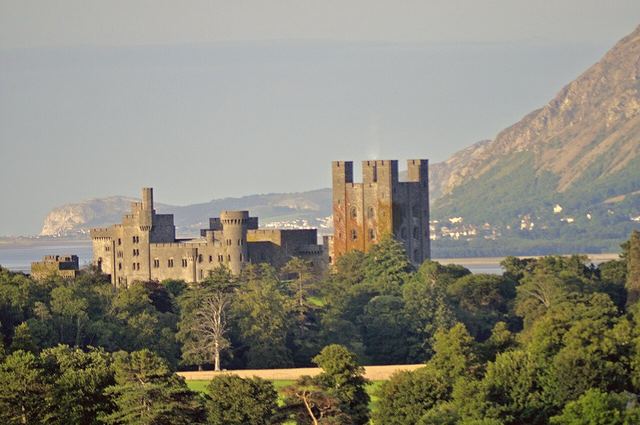
A vast neo-Norman fantasy of the 1820s and 1830s by Thomas Hopper, paid for by North Wales slate and Caribbean sugar. A brand-new fake keep built at the scale of a real one, now in National Trust care.
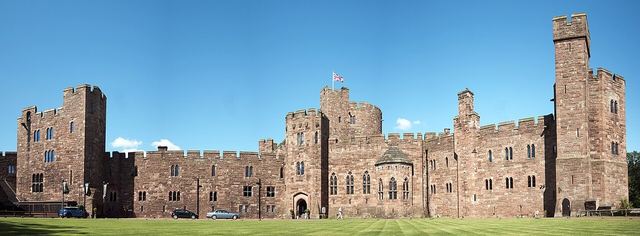
Peckforton Castle
The most convincing imitation of them all - Anthony Salvin's archaeologically careful 1840s medieval castle for John Tollemache, staring across the valley at the genuine ruin of Beeston. Now a hotel.
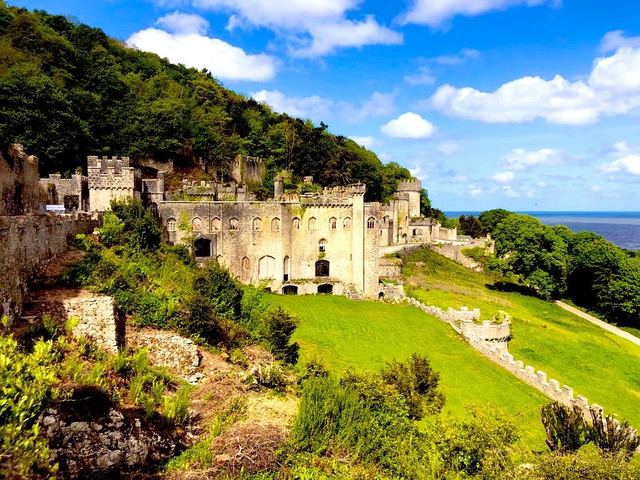
Gwrych Castle
An early Gothic Revival sham of around 1819, a long theatrical run of towers and battlements above the North Wales coast, under active restoration since 2018 and familiar to millions as an I'm A Celebrity location.
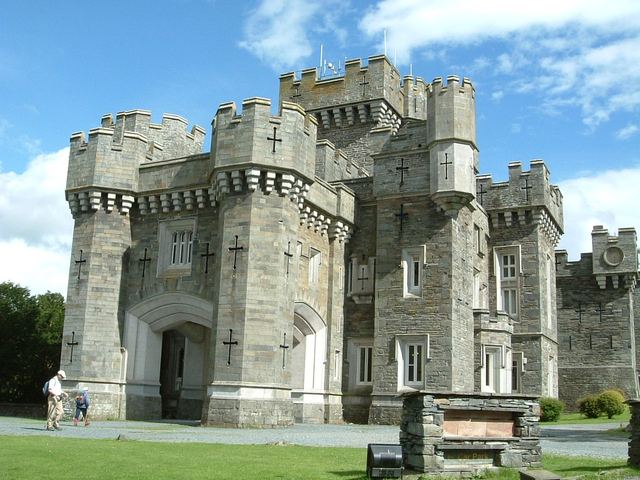
Wray Castle
A mock-Gothic castle of the 1840s on the shore of Windermere, where a young Beatrix Potter's family once holidayed - all the battlements of a fortress with none of the history. In National Trust care.
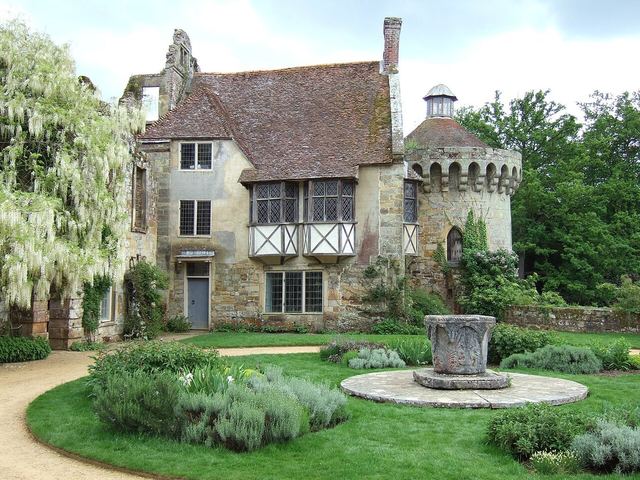
Scotney Castle
The manufactured ruin - the Hussey family deliberately part-demolished their genuine medieval moated castle in the 1840s so it would read as a romantic ruin in the view from the new Victorian mansion above it.
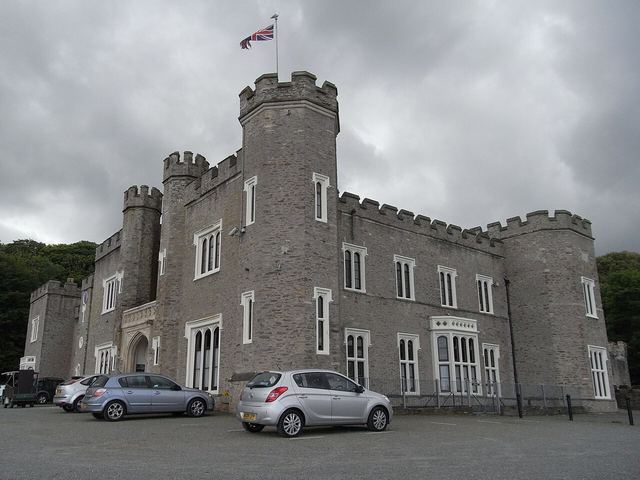
Watermouth Castle
A castellated Devon mansion of the 1820s that has become perhaps the most honest fake of all about what it now is - a family theme park behind the battlements.
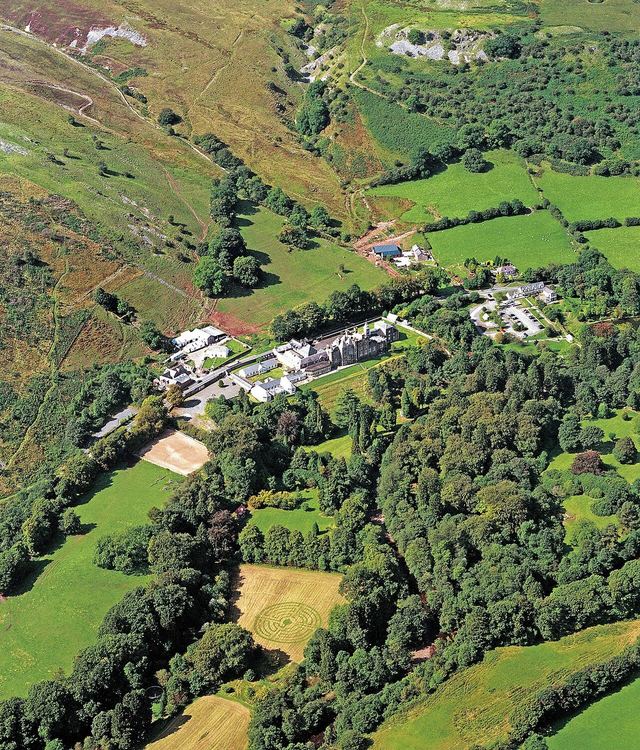
Craig-y-Nos Castle
The Victorian castle home of the opera superstar Adelina Patti, high in the Swansea valley - a fashionable castellated retreat rather than any kind of fortress, and now a hotel and venue.