Guide No. 43 · The Castle Rolls
Bastions and Star Forts: What Replaced the Castle
A tall stone wall was the best defence in Europe for about four hundred years, and then iron cannon made it the worst. What the engineers built instead was low, thick, angled and full of guns, and it ended the castle as a building meant to be fought over.
A bastion is an angled, arrowhead-shaped platform projecting from the corner of a fortress wall, set so that guns on it can fire along the face of the next bastion and leave no ground where an attacker can hide. A fortress laid out this way is called a bastioned fortress, or a trace italienne, and many of them have a star-shaped plan, so they're popularly called star forts. They developed in Italy from the mid-fifteenth century as an answer to heavy cannon and spread fast after the French invasion of 1494, and they replaced the tall medieval curtain wall as the standard way to defend a town or a coast. In Britain they're rarer than on the Continent, but the roll holds some of the best surviving examples, including the Elizabethan-era walls of Berwick-upon-Tweed.
Why the high wall failed
A medieval castle was designed to defeat men with ladders, rams and miners. Height kept scaling parties off the wall, and thickness at the base made undermining slow. Cannon changed which of those mattered. Iron shot fired from a distance cracked tall masonry, and a tall, relatively thin wall falls in large sections once the lower courses give way. By the late fifteenth century the largest guns could be dragged to a siege and used to batter walls that were never built to absorb shot.
The turning point is usually put in 1494, when a French army invaded Italy with a mobile siege train and took strongholds that had been thought secure in days rather than months. The Italian states had the money, the engineers and every reason to find a better answer, and they did. The medieval tower had a second weakness: it stuck out, but the ground at its foot was a blind spot, because the defenders on top couldn't fire straight down at men already against the wall.
What the bastion did
The Italian solution was to lower the wall and thicken it, bury it behind a bank of earth that absorbed shot instead of shattering, and surround it with a deep ditch. Then the corners were turned into arrowheads. Guns on the flank of each bastion covered the face of the neighbouring one, so an attacking party working at the foot of any wall was under fire from two directions. The whole outline became a zigzag, and on a regular plan it looked like a star.
The effect on warfare was to make sieges slow again. An attacker now had to dig approach trenches toward the ditch, build batteries and work forward step by step, and a well-garrisoned bastioned town could hold out for months. Historians still argue about how far this drove the growth of early modern armies, since a besieger needed far more men to surround such a place. The argument doesn't change what the walls looked like, and it doesn't change what happened to the castle.
England's version
England was slow to take it up and didn't build it everywhere, for the simple reason that there was no land frontier to defend except the Scottish border. Henry VIII's coastal forts of the late 1530s and 1540s were the first response, and they were still rounded and clover-leaf shaped, as at Deal and St Mawes. The pointed bastion came later. Yarmouth Castle on the Isle of Wight (about 1547) had an early single arrowhead bastion, and the first large bastioned circuit was at Berwick, where the Crown began replacing the medieval town walls in 1558 with a bastioned circuit, first under the English engineer Sir Richard Lee and later with advice from Italian engineers such as Giovanni Portinari. The garrison town on the Scottish border was rebuilt as a modern fortress while the old castle beside it was left to decay.
The Spanish Armada scare of the late 1580s and 1590s produced more. Star Castle on the Isles of Scilly was built in the 1590s with a star-shaped plan. Carisbrooke on the Isle of Wight had a ring of angled artillery bastions begun round its Norman defences in 1597, and Pendennis in Cornwall gained bastioned Elizabethan ramparts around its Henrician core. In each case the old castle survived as a core, and the new work was a modern gun-proof shell around it.
The Civil War and the end of the castle
The English Civil War was the real test of what remained. Several medieval castles were held for the King and besieged by Parliament's artillery, and the ones that lasted had been given modern earthwork defences. Donnington Castle in Berkshire kept its twin-towered gatehouse, but it held out because the Royalist garrison surrounded it with a star-shaped earthwork gun platform. Pendennis surrendered in August 1646 after a siege of around five months, among the last Royalist strongholds to fall.
Later, the Dutch raid on the Medway in June 1667 showed the cost of getting it wrong. Upnor, an Elizabethan artillery fort built to guard the warships moored in the Medway, couldn't stop the Dutch fleet sailing past it to burn warships moored upriver. It's still worth the visit for exactly that reason: a fort that failed.
After the war, Parliament ordered many castles slighted, one by one, between 1646 and about 1650 so they couldn't be held again. The castle stopped being a place to live and a place to fight in the same building. From then on, a defended place was a fortress, and a home was a country house. Corfe Castle shows plainly what that looked like on the ground.
Quick answers
What is a bastion?
A bastion is a projecting, usually arrowhead-shaped platform built out from the corner of a fortress wall. Guns on its flanks can fire along the face of the next bastion along, so no stretch of wall is left where an attacker can shelter. It replaced the tall round or square tower of the medieval castle, which stuck out but couldn't cover the ground at its own foot.
What is a trace italienne?
The trace italienne, French for 'Italian layout', is the angled bastion system that Italian engineers developed in the late fifteenth and early sixteenth centuries in response to gunpowder artillery. Walls were kept low and very thick, backed with earth to soak up cannon shot, and set out in a zigzag so that every stretch could be covered by flanking fire. The English called the results bastioned fortifications, and the star shape that many produced gave them the popular name star forts.
Why did cannon make medieval castles obsolete?
Because the old design depended on height. A tall, thin curtain wall was hard to climb and hard to undermine, but it was poor protection against iron shot, which shattered masonry from a distance. Once armies could bring heavy guns to a siege, the high wall became the easiest part of the castle to knock down. Engineers responded by making walls lower, thicker and backed with earth, and by spreading the defence outward into ditches and angled outworks.
Are there star forts in Britain?
Yes, though fewer than in the Netherlands, France or Italy. Berwick-upon-Tweed has the best-preserved Elizabethan bastioned town defences in England. The Isles of Scilly have the star-shaped Star Castle, built in the 1590s. Carisbrooke on the Isle of Wight and Pendennis in Cornwall both had bastioned artillery defences added in the 1590s, and Donnington Castle in Berkshire was ringed with a Civil War star-shaped earthwork. England didn't build a country-wide network because it faced no land invasion.
Did castles stop being built because of gunpowder?
Not suddenly, and not only because of it. Historians still argue about how far the new fortresses drove the changes in early modern warfare. What is clear is that by the 1600s the private castle was no longer a sensible way to defend anything serious, and the English Civil War confirmed it. Parliament, which won it, ordered many castles slighted between 1646 and about 1650. See Slighted Castles for what that left behind.
Where to stand inside the idea
Nine places on the roll that show the step from the Tudor gun fort to the bastion, and what happened when those defences were tested:
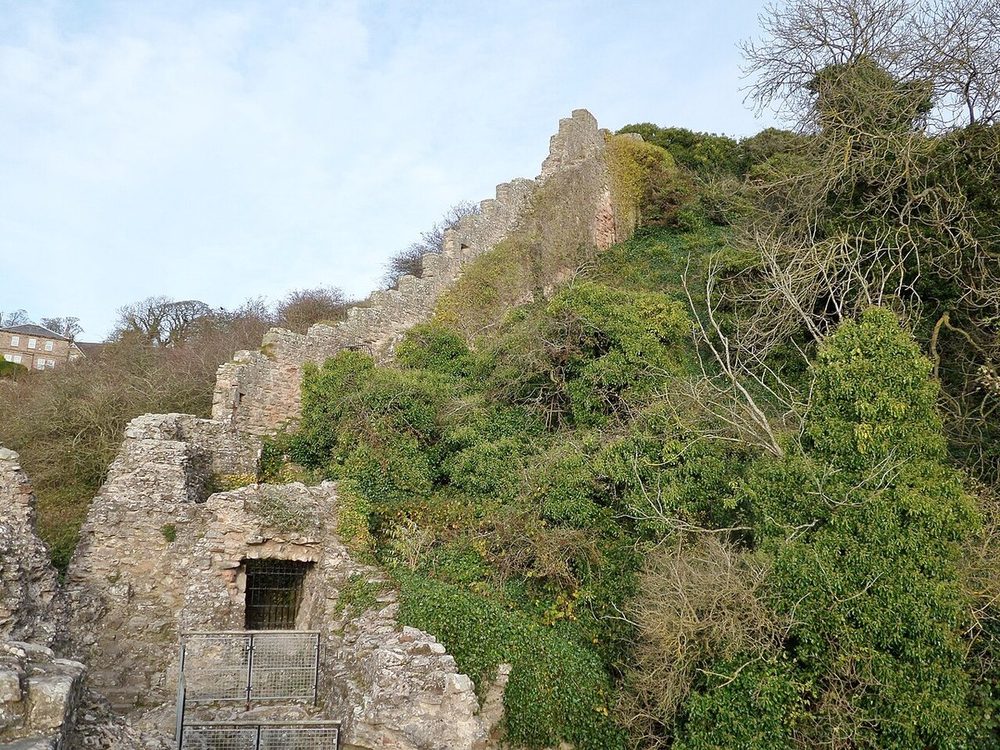
Berwick-upon-Tweed Castle and Ramparts
The one to start with. The medieval castle is mostly gone, but the Elizabethan bastioned walls built from 1558 round the border town survive as a near-continuous circuit, though part of the line was never finished, and a full walk takes under an hour.
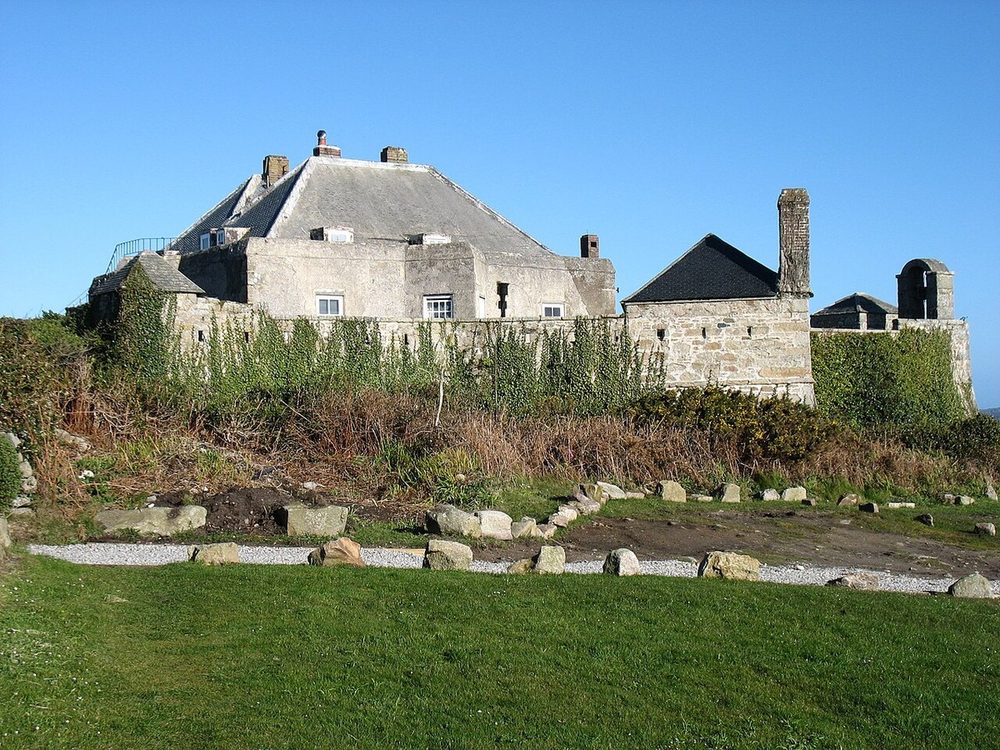
Star Castle
A star-shaped artillery fort on St Mary's in the Isles of Scilly, built in the 1590s and now a hotel. The star plan is the point: the ramparts are still laid out for flanking fire.
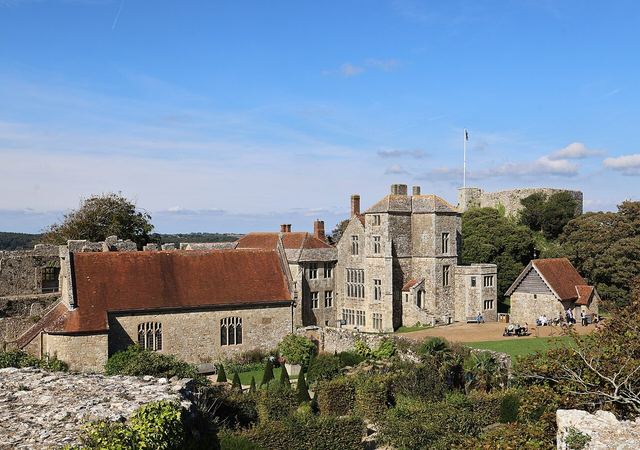
Carisbrooke Castle
A Norman castle on the Isle of Wight that was wrapped in angled artillery bastions from 1597, during the Spanish invasion scare. The medieval keep sits inside an outer ring built for guns.
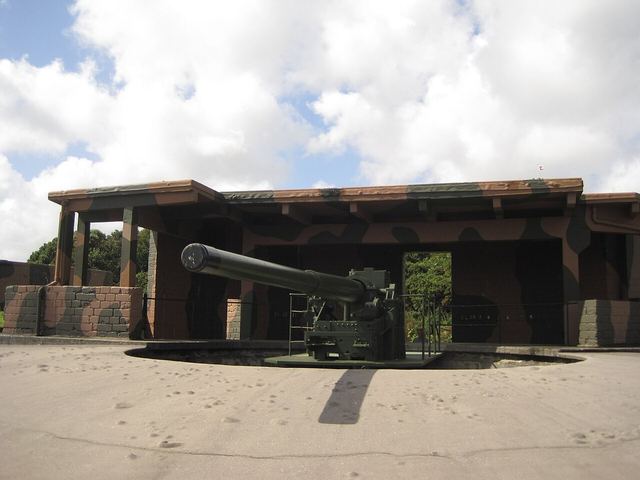
Pendennis Castle
A Henrician gun fort on the Cornish coast with Elizabethan bastioned ramparts added round it. It held out for the King through a long siege in the Civil War before surrendering in August 1646.
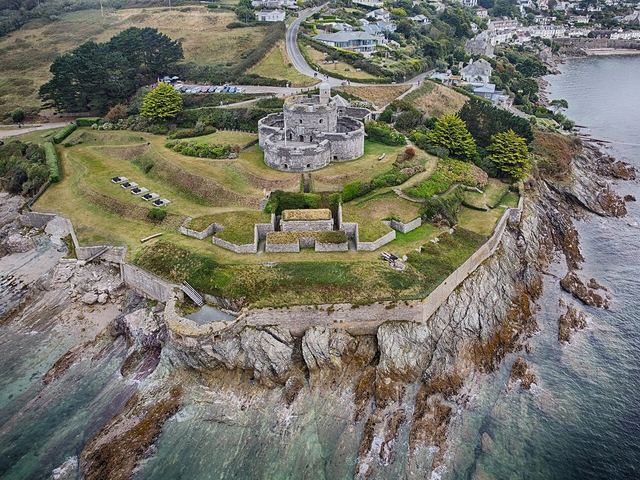
St Mawes Castle
Pendennis's twin across the Fal estuary, built in the 1540s. It's the earlier answer to guns that bastions later replaced, and a useful comparison.
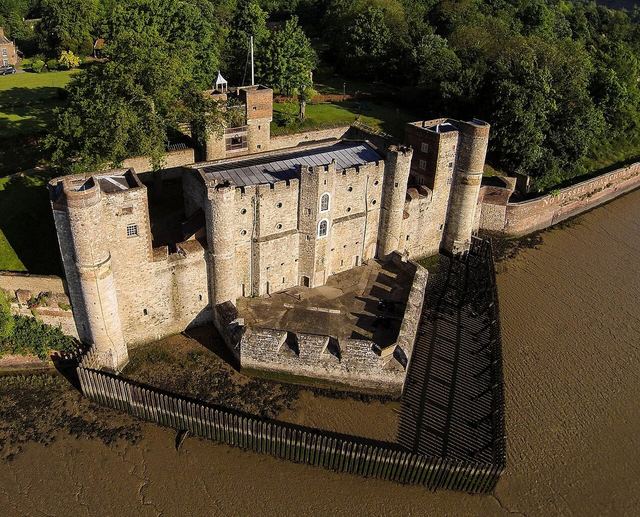
Upnor Castle
An Elizabethan artillery fort on the Medway that failed its one real test, when the Dutch fleet broke through in 1667 and burned warships moored upriver.
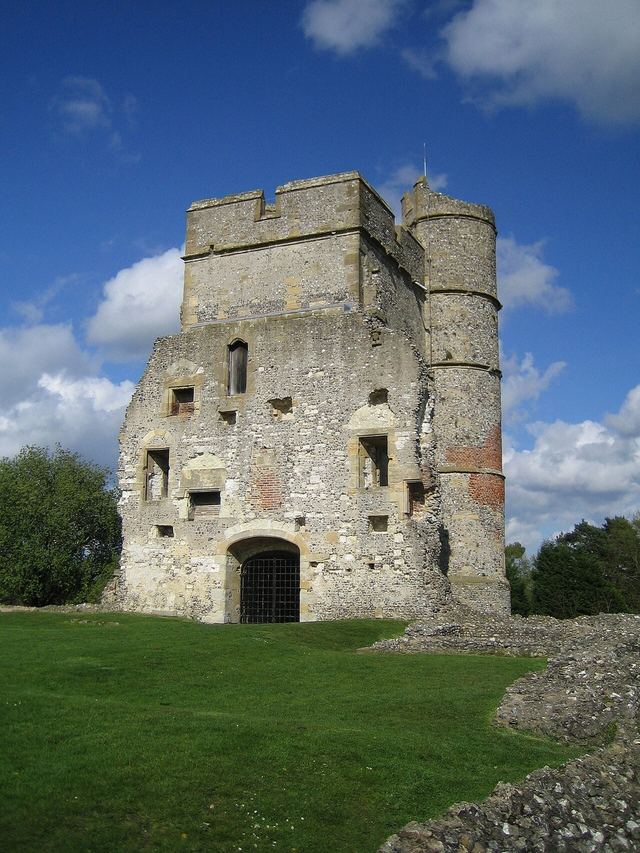
Donnington Castle
A medieval gatehouse castle that was ringed with a star-shaped earthwork gun platform in the Civil War and held for the King through repeated sieges. The gatehouse is the part still standing.
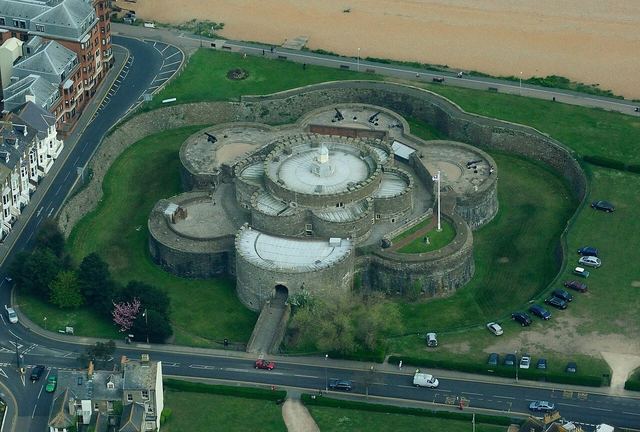
Deal Castle
Henry VIII's rounded gun fort of 1539 to 1540, the stage before the angled bastion. The lobes are curved where a bastion is pointed, which left blind spots at the base of the wall.
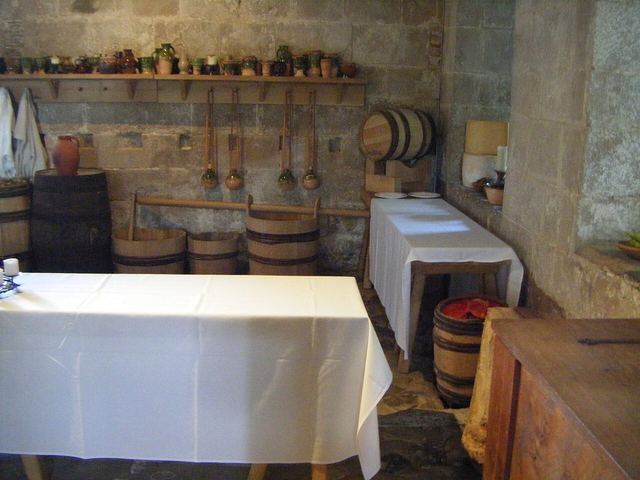
Portland Castle
Another of Henry VIII's coastal artillery forts, low and thick-walled and built for guns rather than for living in.