Guide No. 20 · The Castle Rolls
What Is a Martello Tower?
Squat, round, and dropped along the coast at regular intervals like fence posts. A hundred and three of them went up in seven years because one small tower in Corsica had humiliated the Royal Navy - and not one ever fired at the invasion it was built to stop.
A Martello tower is a small circular coastal gun tower, built by the British government against the threat of a French invasion. 103 of them were raised along the coast of England between 1805 and about 1812: 74 along the Channel shore of Kent and Sussex, numbered from Folkestone in the east round to Seaford in the west, and 29 more up the east coast through Essex and Suffolk, lettered rather than numbered. Each carried a single heavy gun on its roof and an officer with roughly two dozen men inside. They are the direct descendants of Henry VIII's Device Forts, built two and a half centuries later against a different enemy - and they are the last chapter in the long British habit of answering a fright from across the Channel by putting guns on the shoreline.
The tower that would not fall
On 7 February 1794, two British warships - the 74-gun Fortitude and the 32-gun Juno - stood in against a small round tower on Mortella Point, on the coast of Corsica. They bombarded it for two and a half hours and then hauled off, having achieved nothing. The tower was finally taken by troops attacking overland after two days of fighting, and its garrison of 33 men had suffered two mortal wounds in the whole affair.
That was the lesson, and the officers present did not forget it: a single gun tower, cheap to build and held by a few dozen men, had stopped two ships of the Royal Navy. Ten years later Britain was facing an invasion army camped at Boulogne and needed something it could build fast, in quantity, by men who were not military engineers. It already had the answer, and even a name for it. Mortella was garbled into Martello, and the misspelling stuck.
What the design actually was
The point of a Martello tower is that there is nothing to it. It stands about 40 feet high, brick built, slightly tapered from bottom to top, with walls around 8 feet thick - and, in many of them, deliberately thicker on the seaward face than the landward one, because nobody expected to be shot at from behind. There are three levels: a basement holding the magazine, water and stores; one room above it where the garrison of an officer and about two dozen men lived; and a flat roof.
The roof is the whole reason for the building. On it sat a 24-pounder gun on a traversing platform - a carriage running on a circular rail so that one gun could be swung to bear on any point of the compass, firing over a high parapet at anything within about a mile. Two carronades of the same calibre usually went up there with it. The only door is set roughly 10 feet above the ground and was reached by a ladder that could be pulled up behind you.
It is exactly the same argument the Device Forts had made in the 1540s - low, round, thick, built to keep guns in rather than to keep men out - reduced to the smallest unit that still works, and then repeated. The towers were sited within supporting distance of one another so that the ground between any two of them was covered by both.
The chain, and the canal behind it
The officer charged with getting them built was William Twiss, the Royal Engineer commanding in the southern district, who had spent the 1790s remodelling the outer defences of Dover Castle and cutting barracks into the cliff beneath it. The generic design was handed down to him by government rather than invented by him, and that was the point: one standard tower, built over and over, with no room for an ambitious engineer to improve on it.
The towers were never meant to work alone. Behind the Kent and Sussex chain ran the Royal Military Canal, 28 miles of defensive waterway cut across the back of Romney Marsh from Hythe to Cliff End, begun on 30 October 1804 and finished in April 1809 at a cost of about £234,000. Larger circular redoubts at Eastbourne, Dymchurch and Harwich anchored the line and held the powder and stores the towers drew on. And the man doing much of the political pushing was living in a Tudor artillery castle a few miles up the same coast: William Pitt the Younger, Lord Warden of the Cinque Ports, kept his residence at Walmer Castle, drilled volunteers from it, and backed both the towers and the canal.
What the old castles were doing meanwhile
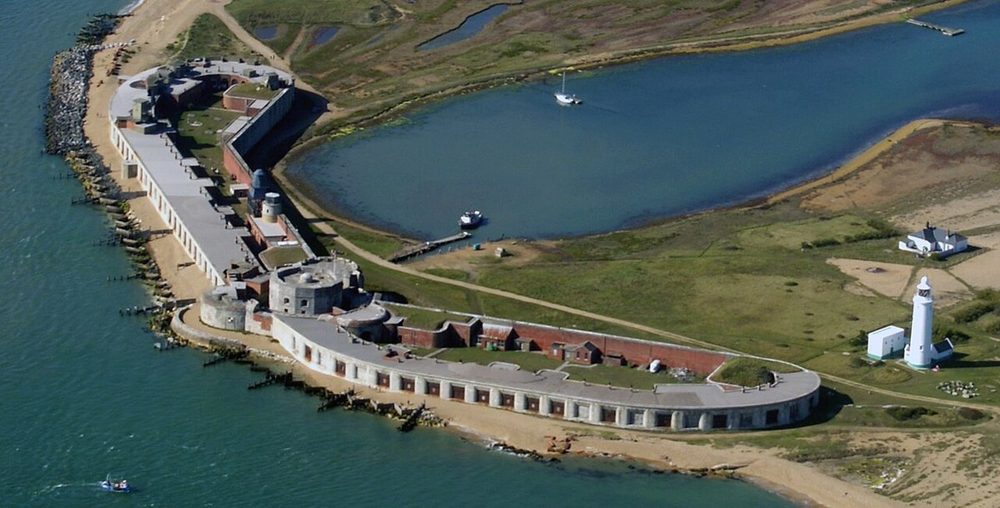
The Martello towers get the attention, but the same emergency ran straight through the castles already standing on the coast, and most of them were pressed back into service. Hurst was patched up in 1794 and armed with eighteen captured French guns, with two five-gun batteries built on the shingle either side of it and furnaces installed for heating shot red hot to set enemy ships alight; in 1803 its Tudor keep was gutted and strengthened so six 24-pounders could stand on the roof. Pendennis got a permanent garrison, five new raised batteries facing inland, a fresh sea battery outside the walls, barracks and a hospital. Southsea was half rebuilt from 1813 to hold 200 men. On the North Sea coast, Tynemouth took gun batteries along its cliff walls and an ordnance depot inside them.
Two castles found themselves holding the war's prisoners rather than shooting at it. Portchester, inside its Roman walls, became one of the main prisoner-of-war depots in the country, with up to 8,000 men held at once; the French prisoners who arrived there in September 1810 built a fully working theatre in the ground floor of the Norman keep, complete with trap door and orchestra. And in the vaults beneath Edinburgh Castle, on 12 April 1811, forty-nine French prisoners cut a hole through a wall and went down the rock on ropes - the largest mass escape of the entire war. All but one were caught.
A shot never fired
The awkward fact about the whole programme is that the threat had gone before the work was done. Nelson destroyed the combined French and Spanish fleets at Trafalgar in October 1805, within months of the first towers being started, and a cross-Channel invasion stopped being a realistic proposition from that day. The chain was built out anyway, all the way to Suffolk, and not one gun in it was ever fired at a French landing.
What the towers did have was a long and slightly comic afterlife. The garrisons were disbanded after 1815 and the guns came out - Dymchurch's tower number 24, now the most complete survivor, was disarmed by 1817. From 1819 the Coast Blockade used the towers along the Kent coast against smugglers, which turned out to be the only enemy they ever caught, and many spent the rest of the century as coastguard stations. Since then they have become homes, museums, a bird observatory and, at Aldeburgh in Suffolk, a Landmark Trust holiday let: the northernmost tower of them all, and the odd one out, built as four overlapping lobes in a quatrefoil rather than a single circle. The sea has taken some of the others, which is a fair ending for buildings put up at the edge of the tide in a hurry.
No Martello tower appears on this roll, because a tower for one gun and twenty-five men is not a castle by any reading. But the emergency that built them is written all over the castles that were already there, and that is where you can still stand inside it.
Quick answers
What is a Martello tower?
A Martello tower is a small circular coastal gun tower built by the British government during the Napoleonic Wars. It stands about 40 feet high, has walls roughly 8 feet thick, and carried a single heavy 24-pounder gun on its roof, mounted so it could swing right round to any point of the compass. Inside, a basement held the magazine and stores and a single first-floor room housed the garrison of an officer and around two dozen men. The only door sits about 10 feet above the ground and was reached by a ladder.
Why are they called Martello towers?
After Mortella Point in Corsica. On 7 February 1794 two British warships bombarded a small round tower there for two and a half hours and were beaten off; it took a land attack over two days to finally take it, from a garrison of 33 men. British officers were impressed enough to copy the design when invasion threatened at home a decade later, and the place name was garbled into 'Martello' along the way.
How many Martello towers were built in Britain?
103 in England. 74 ran along the Channel coast of Kent and Sussex, numbered from Folkestone in the east round to Seaford in the west, and a further 29 went up the east coast through Essex and Suffolk, lettered rather than numbered. The Channel chain was begun in 1805 and largely finished by 1808; the east coast chain followed and was complete by about 1812. More were built in Ireland, the Channel Islands and across the wider British Empire.
Did Martello towers ever fire on an enemy?
Not on the invasion they were built for. Trafalgar in October 1805 had ended the realistic threat before most of the chain was even finished, and the guns were never used against a French landing. Their one genuinely active career came afterwards, when the Coast Blockade used the towers against smugglers from 1819, and several later became coastguard stations.
What is the difference between a Martello tower and a Device Fort?
About 260 years and a great deal of money. Henry VIII's Device Forts of the 1540s are large, multi-lobed artillery fortresses carrying dozens of guns and a substantial garrison. A Martello tower is the same reasoning shrunk to its smallest useful unit: one tower, one gun, two dozen men, repeated over and over along the coast at musket-shot intervals. See Henry VIII's Device Forts for the earlier answer to the same problem.
Where to stand inside the idea
Nine castles on the roll that were caught up in the same invasion emergency, from rearmed Tudor gun forts to the prisons that held the men taken in the fighting:
Hurst Castle
The clearest case of an old fort dragged into the new war. Repaired in 1794 with eighteen captured French guns, flanked by beach batteries with furnaces for heating shot, then gutted in 1803 so six 24-pounders could stand on the keep roof.
Dover Castle
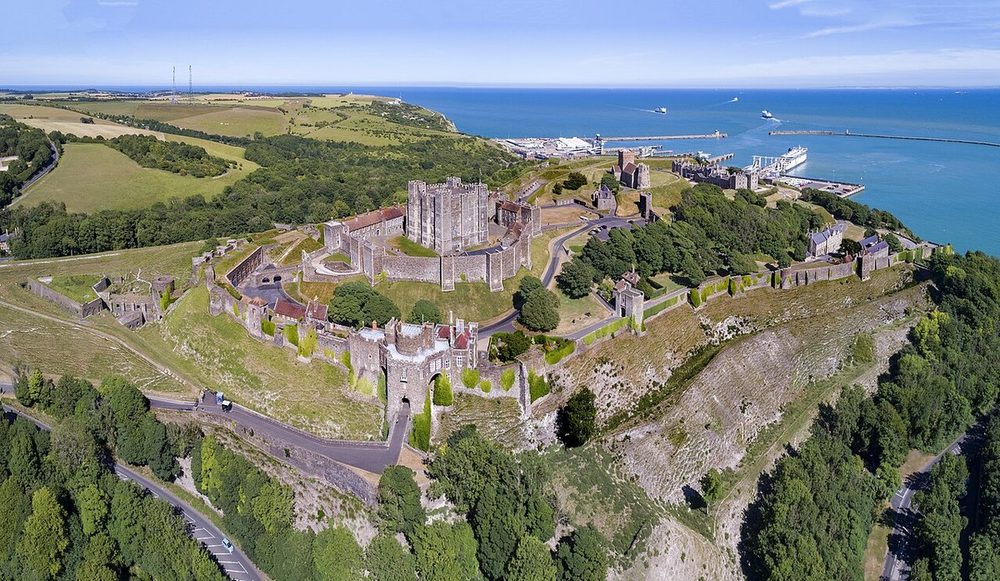
Where the emergency went underground. New bastions were thrown up on the medieval defences, and from 1797 engineers cut a set of casemated barracks into the cliff below - first occupied in 1803, holding over 2,000 men, and the only underground barracks ever built in Britain.
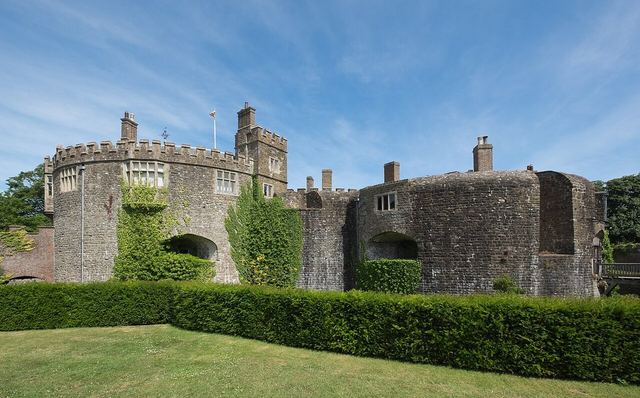
Walmer Castle and Gardens
William Pitt the Younger lived here as Lord Warden of the Cinque Ports through the invasion scare, drilling local volunteers and pressing the case for both the Martello chain and the Royal Military Canal that ran behind it.
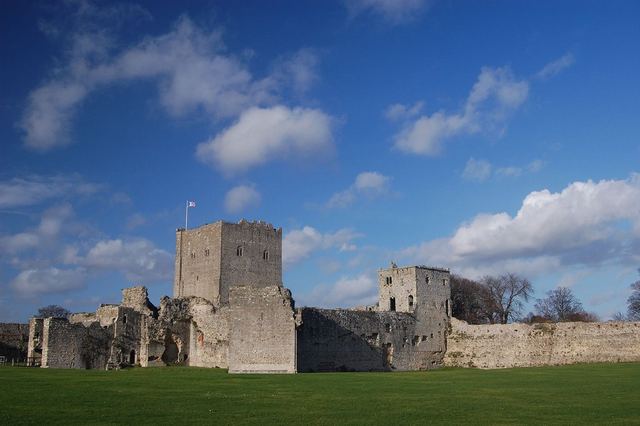
Portchester Castle
The other side of the war. The Roman walls held one of the country's main prisoner-of-war depots, with up to 8,000 prisoners at a time, and French captives built a full working theatre inside the Norman keep from 1810.
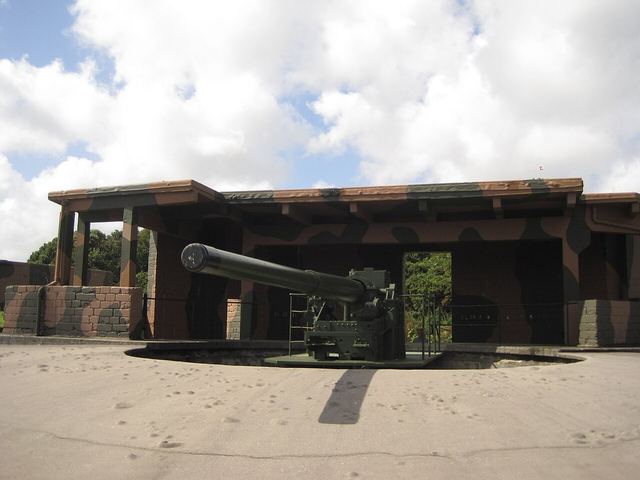
Pendennis Castle
The Tudor fort on a permanent war footing: the garrison made permanent, five raised gun batteries added along the landward rampart, the Half Moon Battery built outside the walls, and barracks and a hospital squeezed in around them.
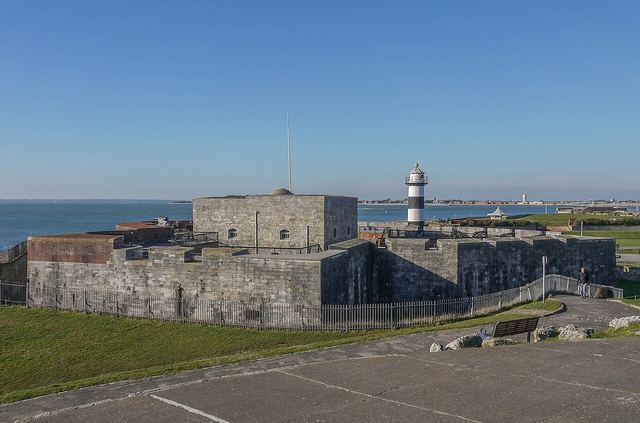
Southsea Castle
Rebuilt rather than merely rearmed. From 1813, under Major-General Benjamin Fisher, the landward half of Henry VIII's fort was reconstructed in brick with gun platforms over barrack rooms for a garrison of 200.
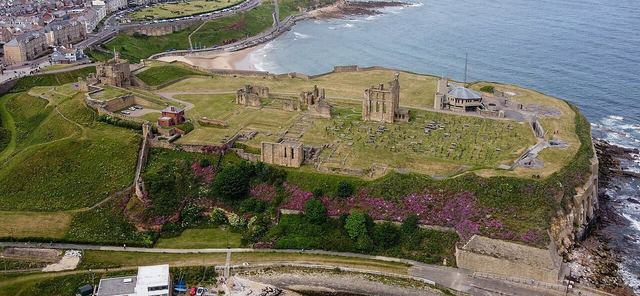
Tynemouth Priory and Castle
The same emergency on the North Sea coast. The medieval walls above the cliffs carried gun batteries, an ordnance depot inside them supplied the troops of Durham and Northumberland, and new barracks went up beside the gatehouse.
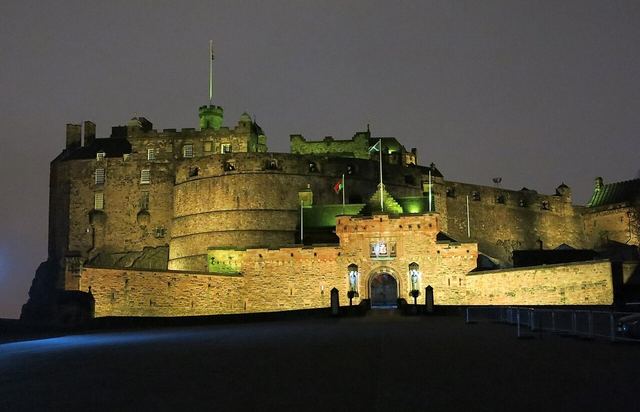
Edinburgh Castle
The vaults under the Great Hall held French prisoners of war. On 12 April 1811 forty-nine of them got out through a hole cut in the wall and down the rock on ropes - the largest mass escape of the war, and all but one were retaken.
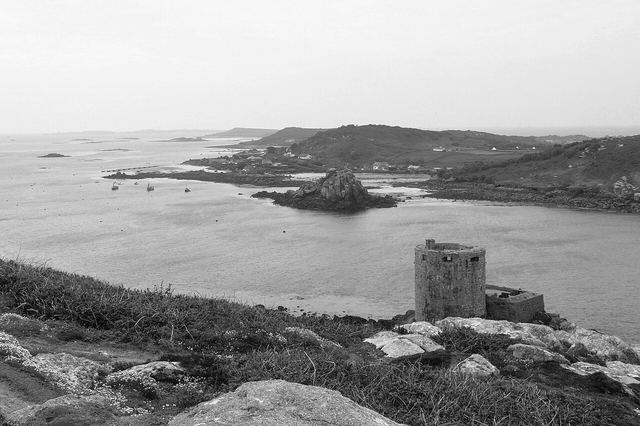
Cromwell's Castle
Not Napoleonic at all, but the idea a century and a half early: a tall round gun tower built on Tresco in 1651-52 to stop ships entering the harbour below. The shape had already been proved long before anyone in Whitehall said the word Martello.