Guide No. 35 · The Castle Rolls
Feeding a Castle
A castle is remembered for the walls. It was run from the kitchen, the well and the store, and when one of those three failed the walls made no difference at all.
A castle was fed by a permanent domestic operation built into its fabric: a kitchen large enough to cook for a household of dozens or hundreds, a well or cistern inside the defences, a brewhouse, a bakehouse, and a chain of stores holding salted meat, grain, cheese, ale and wine. None of it was emergency provision. A great castle was a working estate centre that happened to be defensible, and its siege supply was simply that household's ordinary stock, counted. The engineering effort went into water, because a well could be solved once and for good. Food could not, and that is why far more castles fell to an empty larder than to a breach.
The kitchen as a building
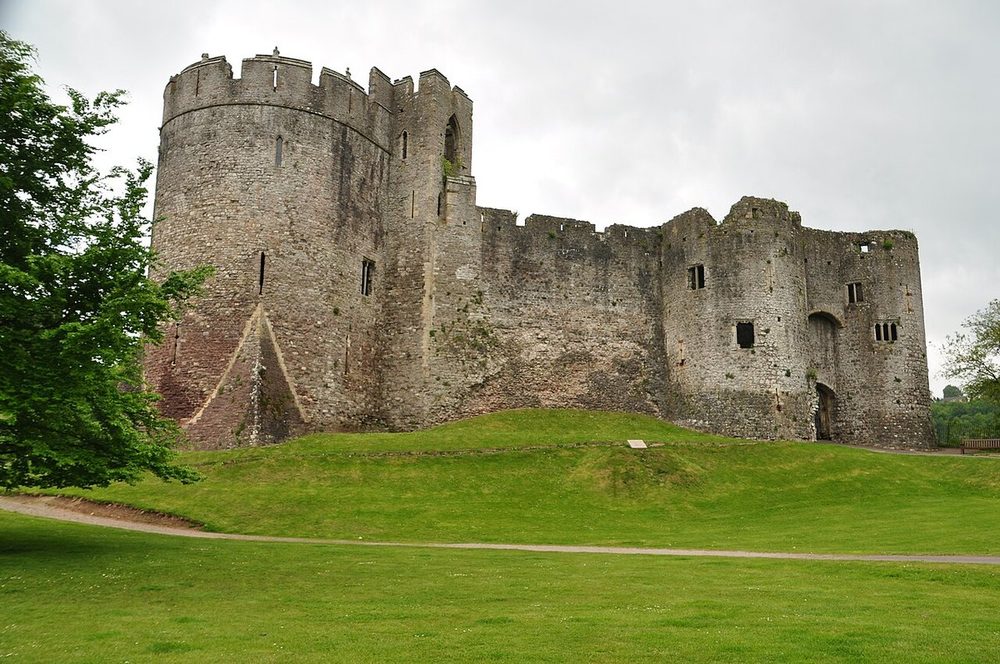
The first thing to understand about a medieval kitchen is that it was usually kept away from everything else on purpose. Cooking meant open hearths burning all day, spits turning over dripping fat, and stacked fuel under a timber roof, and a kitchen fire that reached the lord's chamber could destroy in an afternoon what had taken a decade to build. Early kitchens were often detached timber structures standing clear of the hall for exactly that reason. As castles were rebuilt in stone the kitchen kept its distance in a new way: it became its own tower or its own wing, joined to the hall by a covered passage or a servery rather than a shared wall.
Chepstow shows how far that could go. Roger Bigod's rebuilding of the lower bailey between roughly 1270 and 1300 gave the castle a new hall range and, alongside it, a great kitchen with windows unusually fine for a room that only ever made dinner. That is not an accident of survival. Hospitality was the point of the hall, and the kitchen was the machine that made hospitality possible, so it was worth building properly. Below it runs a rib-vaulted cellar where the earl's wine and ale were kept, stocked by boat: the barrels came up the Wye and were winched into the castle from the water.
Raglan did the same thing a century and a half later and left more of it standing. Its hexagonal kitchen tower holds two large fireplaces, each with an oven built beside it, and a wet larder in the basement below for meat, cheese and dairy that needed to be kept cool. Doune is the clearest surviving example in Scotland, and the one most worth walking into: a vaulted kitchen tower with a fireplace about five and a half metres across, an oven, drains, and two big arched hatches opening directly through the wall into the screened end of the great hall so that food went from fire to table without crossing a courtyard.
Water, and what it was worth
Water was the one supply problem a castle could actually solve permanently, and the sums spent on solving it are the best evidence of how seriously it was taken. A well inside the walls that an enemy could neither reach nor foul was worth cutting for years to obtain.
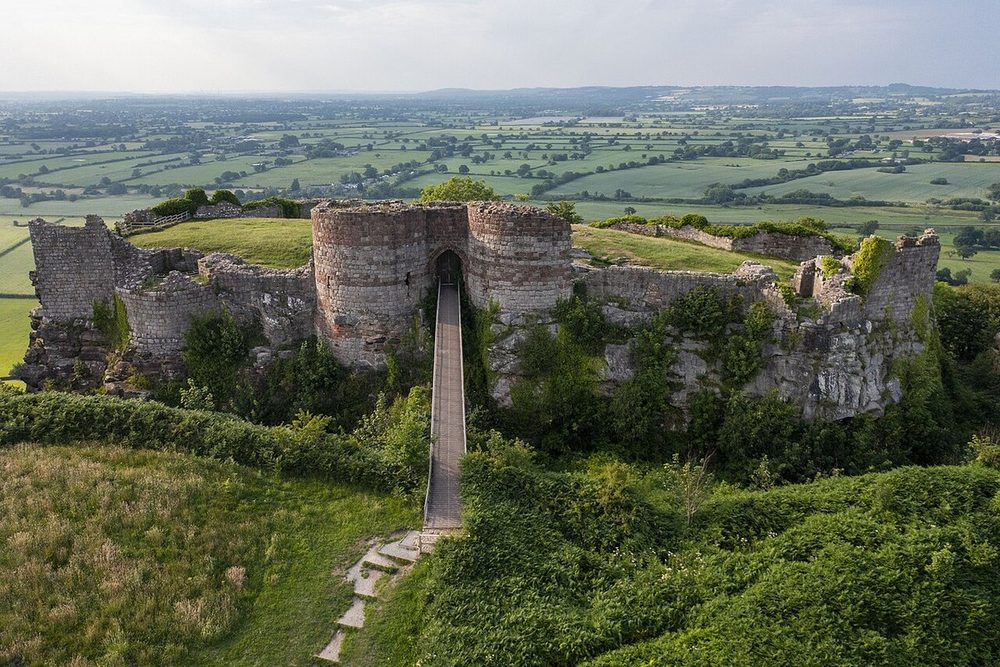
Beeston is the extreme case. Two wells were sunk into the sandstone crag, the deeper of them running about 370 feet down, which puts it among the deepest at any castle in England, and it was hand-cut in the thirteenth century. Conwy took the easier road available to it and sank a spring-fed well of about 91 feet beside the inner gate. Dover did something cleverer still: the well in the great tower descends through a length of Caen stone lining into raw chalk beneath, and from it an unusually early network of lead pipes carried water round the royal apartments, fed also by a cistern collecting rainwater from the roofs. Published depths for the Dover well vary widely between about 289 and 400 feet depending on the source, so the honest statement is that it is very deep and that nobody agrees on the figure.
Bodiam is the useful corrective. It sits in one of the largest sheets of ornamental water in England, and none of that was drinkable. The castle still needed a small stone-lined well, about 2.75 metres across and spring-fed, sunk in the basement of the south-west tower, with the kitchens and their two great fireplaces immediately beside it. A moat is defence and display. Drinking water is a separate problem, solved separately.
Goodrich shows the long arc. The medieval castle drew from a courtyard well; by the early seventeenth century water was being piped in from a spring across the valley and the kitchens had running water, which is roughly three centuries ahead of most farmhouses in the county.
The larder, the buttery and the brewhouse
A castle's stores were organised by how food behaved rather than by what it was. Anything that would keep went into the dry larder or the granary. Anything that needed cool went below ground. The word larder comes from lard, the fat that preserved things, and the bulk of a great household's meat and fish spent its time in salt or smoke rather than in the open.
Ale was the other half of the operation and the one modern readers misjudge. A gallon a day was a normal institutional allowance in monastic and great households, and much of that was weak small ale drunk by everybody, children included. It was not a licence for permanent drunkenness. Ale was brewed from grain and drunk as food, and it was made on the premises because it could not be bought in and stored. It soured within days: a court at Elmley Castle in Worcestershire in 1446 went so far as to forbid brewers selling ale more than four days old. A household of two hundred therefore needed its own brewhouse running more or less continuously, and a bakehouse beside it turning out bread on the same relentless cycle.
This is why the ovens are so often the best-surviving thing in a ruined service range. At Goodrich the thirteenth-century bread ovens still sit at the ends of the kitchen fireplaces, serving a household that could run to over two hundred people. Ovens were built thick, low and into the wall, and thick low masonry is what outlives a roof.
Counting down
A siege turned all of this into arithmetic, and the arithmetic was rarely in the garrison's favour unless supplies could still get in. Harlech held for the Lancastrians from 1461 until August 1468, the longest siege in British history, and the reason is not heroism but the stair running down to the water: ships kept arriving. Kenilworth in 1266 lasted about 172 days, the longest sustained siege in English medieval history, and ended in December with disease and an empty store rather than a breach.
Even a king could find himself on the wrong side of the count. In December 1294 Edward I reached Conwy during Madog ap Llywelyn's revolt, lost his baggage train, and spent Christmas and January shut in his own new castle, resupplied only by sea until relief arrived. The chronicler Walter of Guisborough tells the story that Edward refused to drink his private wine while the garrison went without, and had it shared out instead. Whether or not that happened as told, the situation behind it is real enough: the greatest castle-builder in Britain sat inside his best work waiting for a boat.
The ending that says it plainest belongs to Beeston, the castle with one of the deepest wells in England. Sir William Brereton blockaded it from November 1644, and after the royalist defeat at Rowton Heath it surrendered on 15 November 1645. Captain Vallet and his fifty-six men marched out starved. When the besiegers came in they recorded finding neither meat, ale nor beer in the castle, save a piece of turkey pie, two biscuits, a live peacock and a peahen. Nobody had touched the wall, and nobody needed to.
Quick answers
How did a castle get its water?
From a well sunk inside the walls wherever the geology allowed it, backed up by rainwater cisterns and, later, piped springs. A well that an enemy could not reach or poison was the single most valuable service a castle had, which is why builders were willing to cut hundreds of feet through solid rock to reach one. Beeston Castle in Cheshire has two rock-cut wells, the deeper of them about 370 feet, which is among the deepest at any castle in England. Conwy's spring-fed well beside the gate is about 91 feet. Where a well was impossible, cisterns collected roof water instead.
Why were castle kitchens separate buildings?
Fire. Cooking meant an open hearth burning all day under timber roofs, spits, fat and stored fuel, and a kitchen fire that spread into the lord's apartments could gut a castle without an enemy ever arriving. Early kitchens were often detached timber structures set apart from the hall. Later ones were built in stone as their own tower or wing, linked to the hall by a covered passage or a servery, which kept the smoke, the smell and the risk at arm's length while still getting food to the table hot.
What did people in a castle actually drink?
Ale, in quantities that read as implausible now. A gallon a day was a common institutional allowance in monastic and great households, and much of it was weak small ale drunk by everyone including children. The reason is not that water was universally unsafe, but that ale was food: brewed from grain, calorific, and made on site. It also went off fast. A borough court at Elmley Castle in Worcestershire in 1446 forbade alebrewers from selling ale more than four days old, which is why a household of any size needed its own brewhouse rather than a supplier.
How long could a besieged castle hold out?
As long as the food lasted, which depended almost entirely on whether the place could be resupplied. Harlech held for the Lancastrians from 1461 to 1468 because ships could still reach it. Kenilworth lasted about 172 days in 1266, the longest sustained siege in English medieval history, and ended in disease and hunger. Beeston, which had one of the deepest wells in England, surrendered in November 1645 after a year of blockade with nothing left to eat. Water was an engineering problem with a solution. Food was arithmetic, and arithmetic always won eventually.
What was in a castle's larder?
Mostly things that would keep. Meat and fish salted or dried, grain in the granary, cheese and butter in a cool undercroft, ale in the buttery and wine in a vaulted cellar, with fresh supplies coming in constantly from the estate, the fishponds, the dovecote and the market. The word larder itself comes from lard, the fat that preserved things. A castle was not stocked for a siege as a matter of routine; it was stocked as a large household, and the siege store was that household running down.
Where to stand inside the idea
Ten castles on the roll where the kitchen, the well or the store is still the thing worth finding:
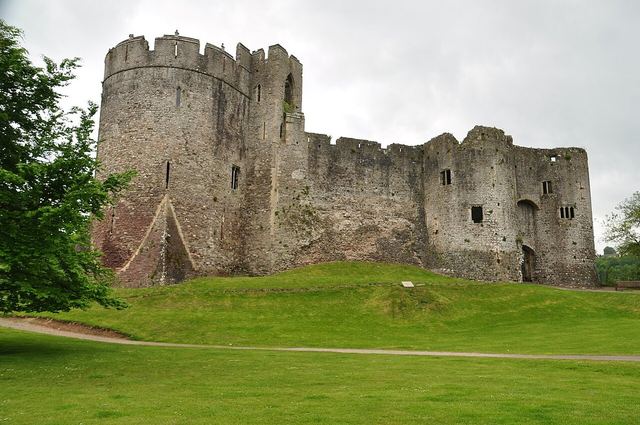
Chepstow Castle
Roger Bigod's great kitchen of the 1270s and 80s, built with windows finer than a service room needs, next to a rib-vaulted cellar where barrels came up from the Wye on a winch.
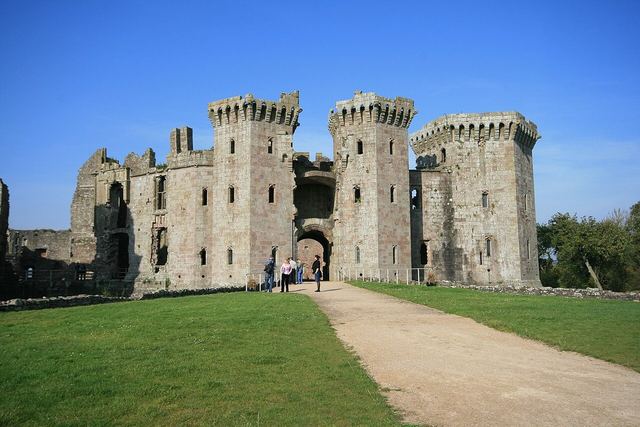
Raglan Castle
A hexagonal kitchen tower with two great fireplaces, each with its own oven, and a wet larder in the basement below for meat, cheese and dairy.
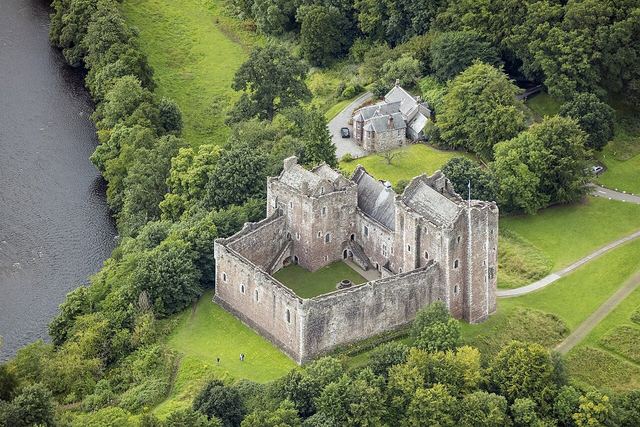
Doune Castle
One of the best-preserved kitchens in Scotland: a vaulted tower with a fireplace about five and a half metres wide, an oven, and two arched serving hatches straight through into the great hall.
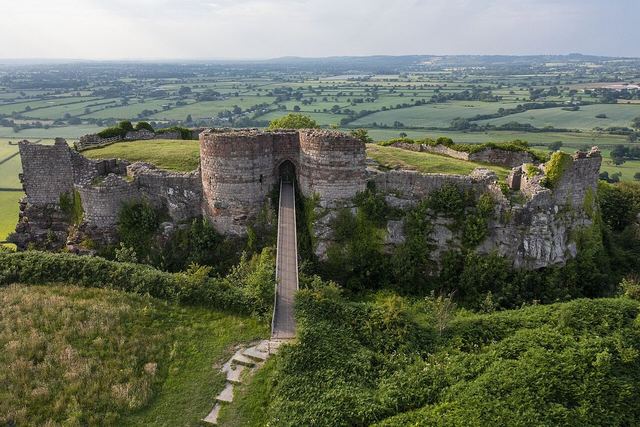
Beeston Castle
Two wells cut into the crag, the deeper about 370 feet, among the deepest at any English castle. It still starved in 1645, which is the whole argument of this guide in one place.
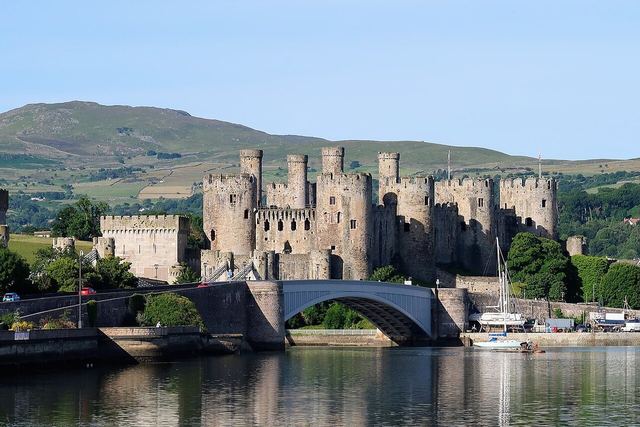
Conwy Castle
The spring-fed well beside the inner gate, about 91 feet deep, and the castle where Edward I himself spent Christmas 1294 cut off and supplied only by sea.
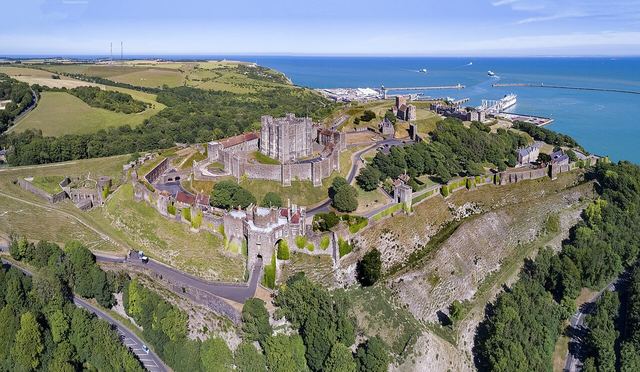
Dover Castle
A well sunk from inside the great tower down through Caen stone lining into raw chalk, feeding an unusually early system of lead pipes that carried water round the royal apartments.
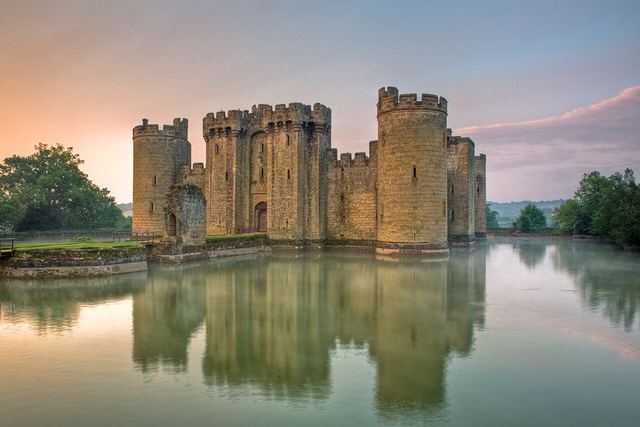
Bodiam Castle
The counter-example. A castle sitting in an enormous sheet of water still needed a small spring-fed well in the basement of the south-west tower, with the kitchens and their two great fireplaces alongside it.
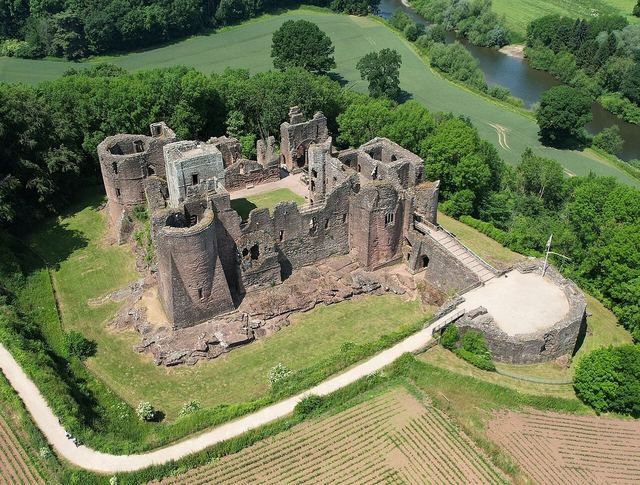
Goodrich Castle
Bread ovens of the thirteenth century flanking the kitchen fireplaces, a courtyard well for the early castle, and piped spring water from across the valley by the seventeenth.
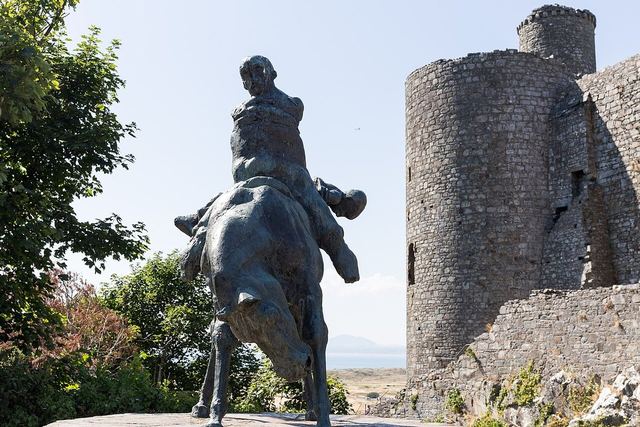
Harlech Castle
The stair down to the water, and the reason a garrison could hold here from 1461 to 1468. Nothing about the larder mattered while the ships kept coming.
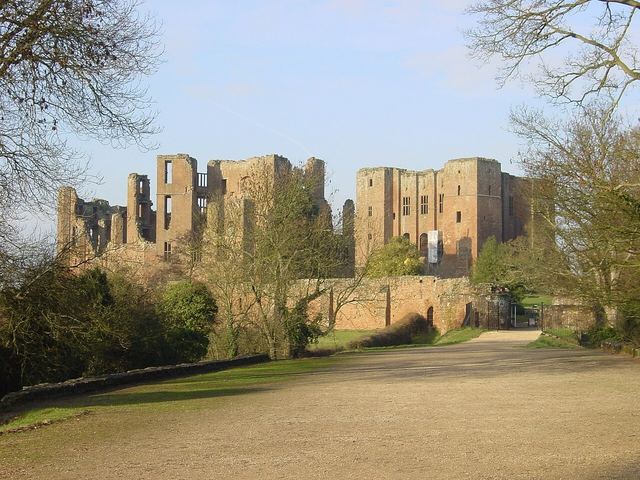
Kenilworth Castle
About 172 days under siege in 1266 and never breached. What finally ended it was disease and an empty store, not the nine engines parked outside.