Guide No. 32 · The Castle Rolls
What a Castle Moat Was Actually For
Not drowning attackers. Not crocodiles. A moat's main job was to sit between the enemy and the ground under your wall, and the castles that spent most on water were the ones that had watched a mine bring a tower down.
A castle moat is a defensive ditch around a fortification, wet or dry, and its chief military purpose was to stop attackers reaching or tunnelling under the wall. Before gunpowder, the most reliable way to break masonry was to mine beneath it, and a mine cannot be driven through waterlogged ground. Water also held siege engines, ladders and rams at a fixed distance, and forced every approach onto a bridge the garrison already covered. Drowning swimmers came a long way down the list, and in Britain the crocodiles never existed at all.
The mine, not the swimmer
Start with what a besieger actually did. Storming a wall was the option a commander reached for last, and the reliable alternative to waiting was to go underneath. Miners dug a gallery in under the foundation, propped the excavated space with heavy timber, packed it with brushwood and fat, and set it alight; when the props burned through, the wall dropped into the hole. That is how King John took the corner of the great tower at Rochester in 1215, and it is set out in full in our guide to how a castle was actually taken.
Now put water in the way. A gallery driven towards a wet ditch floods before it arrives, the spoil turns to slurry, and the props will not hold. Wet ground defeats mining as completely as living rock does, which is why a castle on a crag needed no moat and a castle on a flood plain needed one badly. Everything else water did was a bonus on top of that.
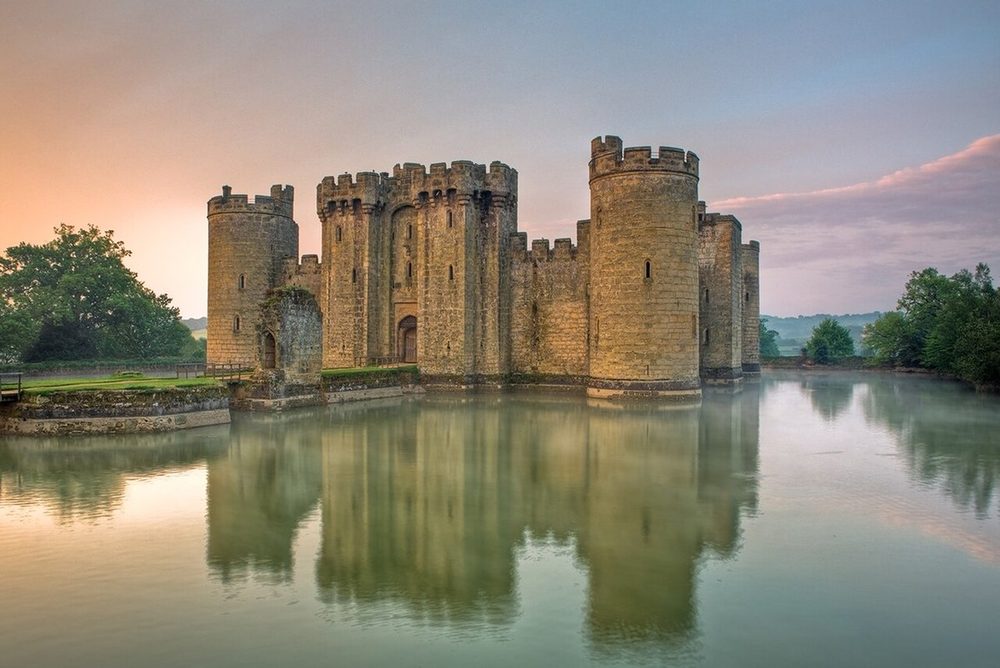
The bonuses were real, though. A ditch keeps a belfry, a ram and a stone-throwing engine at a distance the defenders have measured; it removes the ladder attack almost entirely, because a ladder has to stand on something; and it funnels the whole approach onto a causeway or a bridge, which the gatehouse is built to dominate. That last effect is the one you can still walk. At Bodiam the route to the door crosses the water at an angle rather than head-on, which means an approaching party spends the crossing with its unshielded side towards the walls.
Damming a valley
Water on this scale was not a ditch, it was civil engineering. King John dammed the Finham and Inchford brooks at Kenilworth to raise the Great Mere, roughly 100 acres of standing water held back by the causeway that later carried the tiltyard. In 1266 Henry III put nine engines and an army against the castle for 172 days, from 25 June to 13 December, tried the weaker north wall, and at one point brought barges up from Chester for a night attack across the water. None of it worked. The mere held, and hunger and disease ended the siege instead.
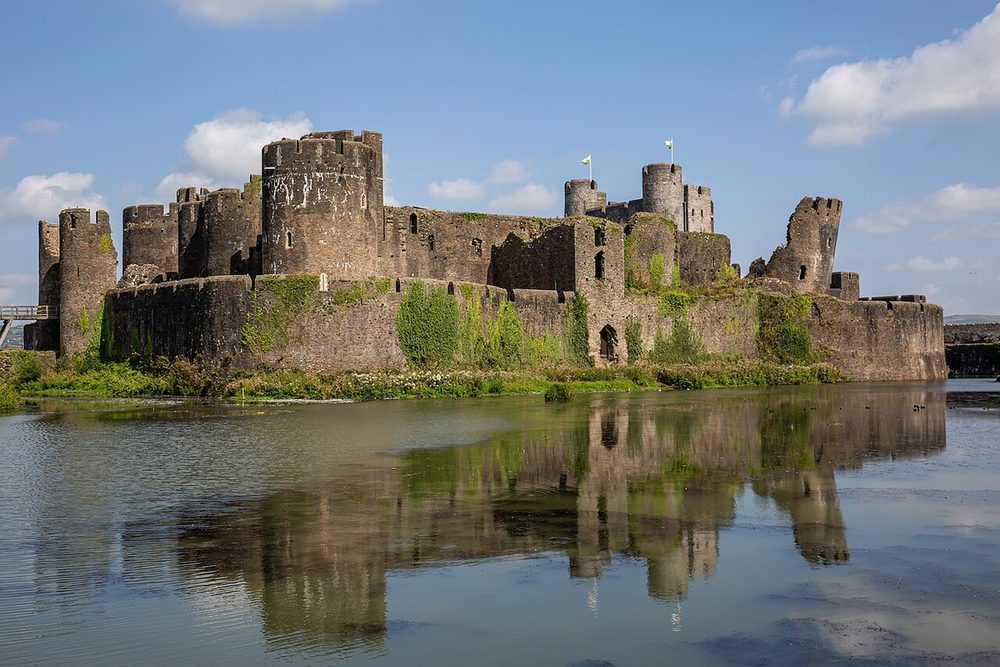
Among the men who watched that happen was Gilbert de Clare. Two years later he began Caerphilly, damming the Nant y Castell and the Nant yr Aber to flood the valley floor around a central island of about 30 acres, with the dams themselves fortified and an island to the west added for good measure. Allen Brown called the result the most elaborate water defences in all Britain. The lakes drained away by the sixteenth century as the castle declined, the walls were robbed for stone, and the water was only put back after the site passed to the state in 1950. Caerphilly is also where the concentric plan arrives in Britain, and the two ideas belong together: rings of wall and rings of water are the same instinct, which is to make an attacker solve the same problem repeatedly.
The engineering has a maintenance bill attached, and that is a large part of why so few moats survive wet. A dam silts and slumps, sluices rot, a mere fills in, and the moment nobody is paying for it the water starts leaving. Kenilworth's mere was drained after the castle was slighted in the 1650s, which is why visitors now walk across the middle of what used to be the strongest thing about the place.
Water you were meant to look at
By the fourteenth century a sheet of water in front of a castle was doing two jobs at once, and historians have spent thirty years arguing about the ratio. Bodiam is where the argument lives. Sir Edward Dallingridge, a veteran of the French wars, was licensed in 1385 to fortify his manor, and the traditional reading is a defence against French raiding on the Sussex coast. From the 1990s Charles Coulson and others pressed the other case: the moat is easy to drain, the gun-ports are awkwardly placed, the walls are thin for the date, and landscape survey by Paul Everson and others found the water set within a designed approach, with ponds and a staged route arranged so that a visitor met the castle at its best angle.
The honest position is that the two readings are not opposites. A moat that photographs well can still flood a mine, and a lord who wanted both is not being caught out in a lie. What the landscape work did establish is that the water at Bodiam was arranged for an audience as well as an enemy, and once you know that, the same reading opens up at Leeds, where the River Len was dammed to set the buildings on two islands with the bridges between them, and across the whole tradition of the moated manor house. Our guide to castle gardens and designed landscapes follows that thread further.
Water also earned its keep. Moats were stocked as fishponds and managed for it, they drove mills, and they gave a household a reserve of water in a country where fire was the constant domestic danger. A wet ditch was an asset on the estate accounts, not only a line on a defence plan.
Tides, lochs and the water that left
Not all of it was dammed. Beaumaris, begun in 1295 as the last of Edward I's Welsh castles and built under James of St George, took its moat straight from the sea, and added a dock on the south side where ships of about 40 tons could come to the castle gate. That is water working as a supply line: a garrison that can be fed by sea is a garrison a blockade cannot starve. At Carew in Pembrokeshire the tidal creek that gave the castle its site was later dammed by a causeway into a 23-acre millpond, and the mill at its end, rebuilt around 1801, is the only restored tidal mill in Wales.
In Scotland the pattern is usually a loch rather than a ditch. Threave, built for Archibald the Grim from the 1370s, sits on an island in the River Dee and is still reached by boat. Lochleven held Mary, Queen of Scots from June 1567 until her escape in May 1568, and at that date the loch came up to the walls. A drainage scheme completed in December 1830 dropped the level by several feet and shrank the loch by close to a quarter, and the castle's island grew to roughly four times its old size. The building has not changed; the defence around it has.
That is the useful thing to carry round a ruin. When a moated castle looks oddly small, or oddly easy to walk up to, the missing piece is often the one that was made of water, and it left quietly, without a siege.
Quick answers
Why did castles have moats?
Mainly to stop mining. Before gunpowder the most reliable way to break a wall was to dig a gallery under it, prop the hole with timber and burn the props out, and a ditch full of water floods that gallery before it gets anywhere. A moat also holds siege engines, ladders and rams at a fixed distance from the wall, forces an attacker onto a bridge the garrison already covers, and stops anyone simply walking up to the masonry. Keeping enemy swimmers out was the least of it.
Were castle moats really full of sewage and crocodiles?
No crocodiles in Britain, and the sewage picture is overdrawn. Garderobe chutes did sometimes discharge into a ditch, but a moat was also a fishpond, a millpond and the reflecting surface a lord had paid a fortune for, and there is documentary and archaeological evidence of moats stocked and managed for fish. A wet moat fed by a stream or a river is moving water, not a cesspit. The crocodile story belongs to a handful of Continental legends rather than to any British castle.
Which British castle had the biggest water defences?
Caerphilly Castle in south Wales, begun by Gilbert de Clare in 1268, whose artificial lakes the historian Allen Brown called the most elaborate water defences in all Britain. De Clare dammed the Nant y Castell and the Nant yr Aber to flood the valley floor around a central island, and the site covers about 30 acres. Kenilworth's Great Mere was larger in surface area, at roughly 100 acres, but it has been drained since the 1650s and Caerphilly's lakes were re-flooded in the twentieth century.
What is the difference between a wet moat and a dry ditch?
Only water, and it usually came down to what the ground would give you. A dry ditch is cut into whatever the site offers, works on any slope and needs no maintenance beyond clearing it. A wet moat needs a stream, a spring, a river or a tide within reach, and level enough ground to hold a level of water, which is why they cluster in valleys, on clay and along the coast. A dry ditch is not the poor relation: it can be cut deeper and steeper than a wet one, and a rock-cut ditch beats a mine as completely as water does.
Can you still see castles with water in their moats?
Yes, at a minority of sites. Bodiam, Leeds, Hever, Scotney, Nunney, Whittington and Caerphilly all still hold water, and Beaumaris keeps part of its tidal moat. Far more have lost it: Kenilworth's mere was drained after the Civil War, Framlingham's meres have gone, and at Lochleven an 1830 drainage scheme dropped the loch by several feet and quadrupled the size of the castle's island. Where the water has gone the castle usually reads as too small and too accessible, because the defence you are missing is the one that was made of water.
Where to stand inside the idea
Ten castles on the roll where the water is still the point, from a Sussex mirror to an island in the Dee:
Bodiam Castle
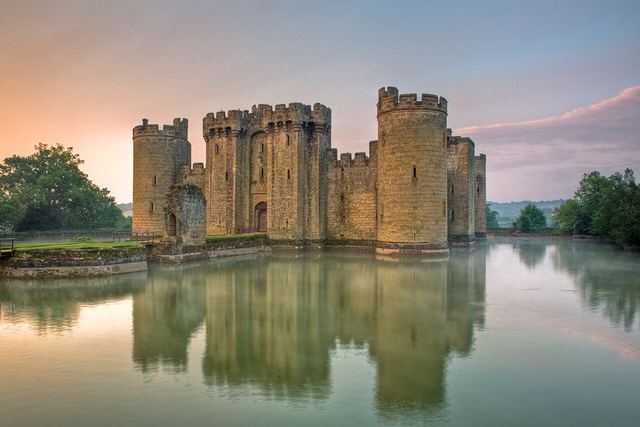
The picture everyone has of a moat, and the one castle historians argue hardest about. Built from 1385 by Sir Edward Dallingridge, set in a wide sheet of still water with the approach staged across it, and read by some as defence and by others as display.
Caerphilly Castle
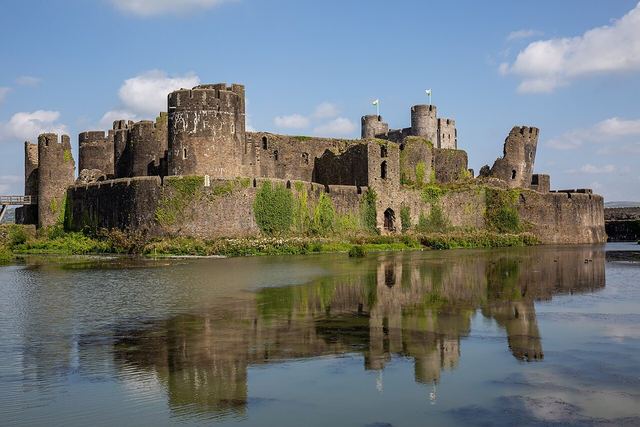
Gilbert de Clare dammed two brooks from 1268 to flood the valley floor around a central island. Allen Brown called the result the most elaborate water defences in all Britain; the lakes were drained by the sixteenth century and re-flooded after 1950.
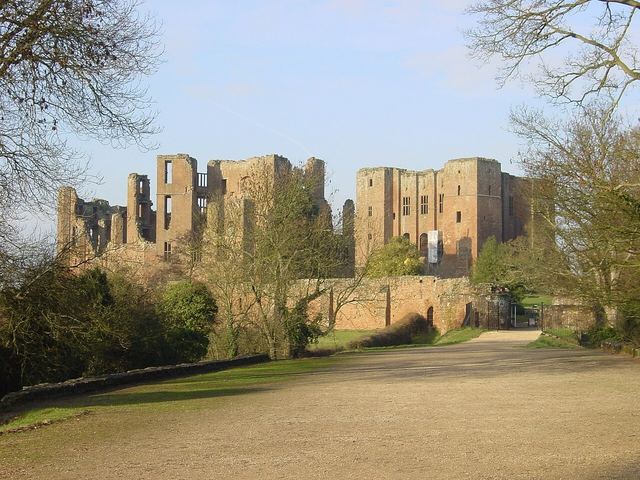
Kenilworth Castle
The Great Mere, about 100 acres of dammed brook held back by the Tiltyard causeway, and the reason the castle survived 172 days of siege in 1266. Drained after the Civil War, so the ground you cross today was once the defence.
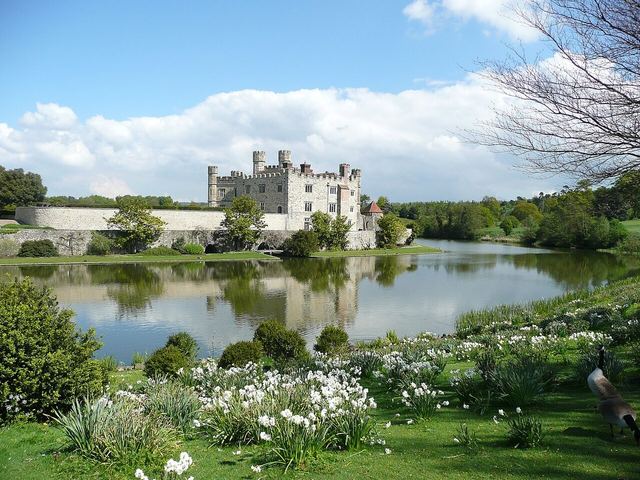
Leeds Castle
Two islands in a lake made by damming the River Len, with the buildings bridged between them. The most complete surviving picture in England of what a castle set in its own water was meant to look like.
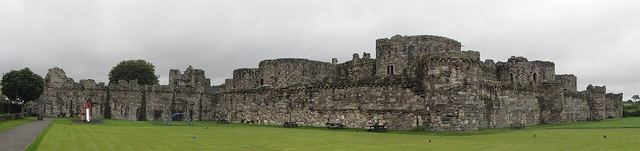
Beaumaris Castle
A tidal moat fed straight from the Menai Strait, with a dock on the south side that let ships of about 40 tons come to the castle gate. Water as supply line as much as barrier.
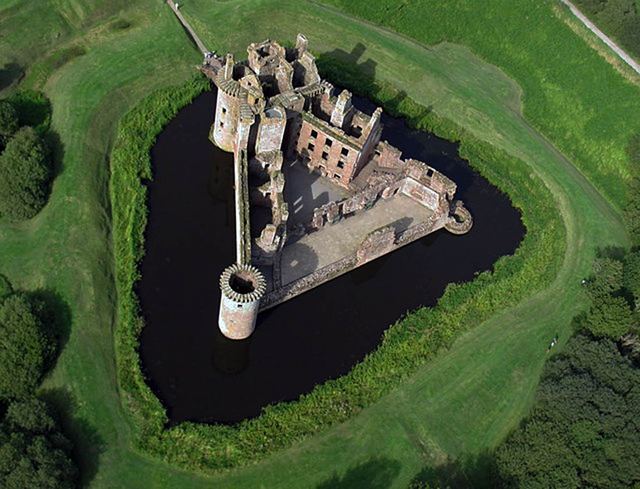
Caerlaverock Castle
A triangular castle inside a triangular moat on the Solway marshes, still wet. Besieged by Edward I in 1300 and written up in an Anglo-Norman poem that names the besieging knights.
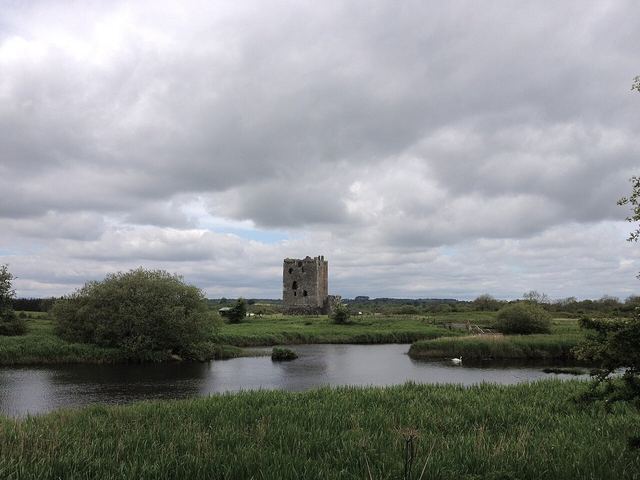
Threave Castle
Archibald the Grim's tower on an island in the River Dee, reached now as it was then, by boat. The water is the curtain wall.
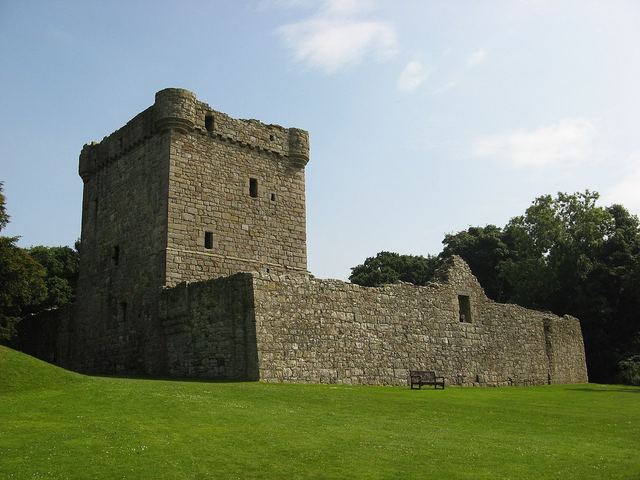
Lochleven Castle
Mary, Queen of Scots was held here from June 1567 to May 1568, when the loch reached the walls. An 1830 drainage scheme dropped the water by several feet and quadrupled the island, so the site now looks far roomier than the prison it was.
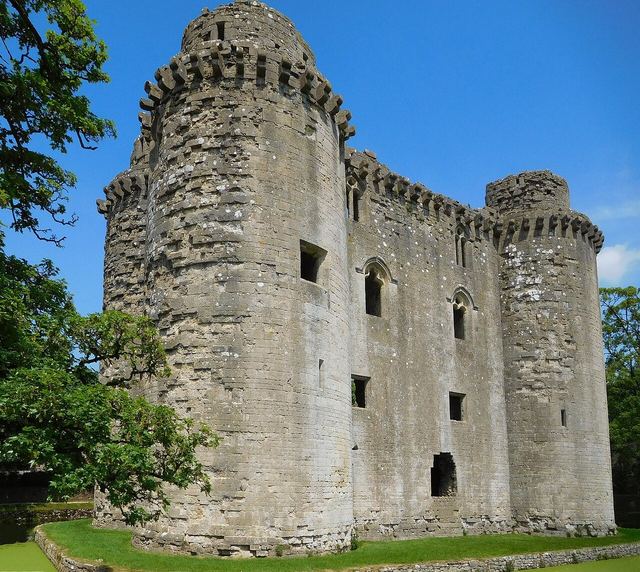
Nunney Castle
A tall French-looking tower house of the 1370s dropped into a wet moat about 3 metres deep, fed from Nunney Brook. Sir John de la Mare's licence to crenellate is dated 1373.
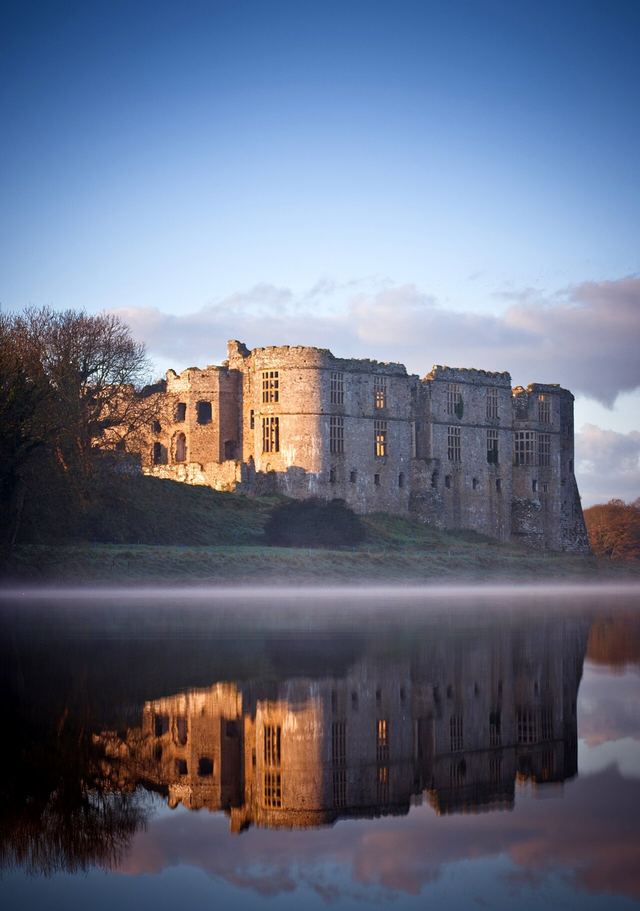
Carew Castle & Tidal Mill
Water put to work rather than to war. The tidal creek that gave the castle its site was later dammed by a causeway into a 23-acre millpond, and the mill at the end of it is the only restored tidal mill in Wales.