Guide No. 39 · The Castle Rolls
What Is an Oubliette? Castle Prisons and What the Record Shows
Some of the pits shown to visitors as prisons were built to hold sewage or grain, and a few of them really were built to hold people. Telling the two apart takes more than a look at the hole, and it usually comes down to who first called the room a dungeon, and when.
An oubliette is a pit with no door, entered only through a hatch in the ceiling, into which a prisoner was lowered and left. The name is French, from oublier, meaning to forget. Pits of that shape genuinely exist in British castles and a handful of them genuinely were prisons, so the feature isn't an invention. What is largely invented is the system around it: the idea that castles built these routinely, to make people disappear, rests on almost no medieval evidence and a great deal of nineteenth-century storytelling. The same word also gets attached to cesspits and storerooms, so it helps to know how to tell those apart on a visit.
The word is much younger than the buildings
No medieval builder in Britain is recorded calling a room an oubliette. The word doesn't appear in the medieval English record at all, and it didn't arrive here until long after the castles had stopped being built. The Oxford English Dictionary's earliest English evidence for it comes from the eighteenth century, and it reached a wide readership when Walter Scott used it in Ivanhoe in 1819. Scott was writing a novel set in the twelfth century from the vantage point of the nineteenth, and what he handed the English language was a French word for a piece of imagined medieval cruelty.
Castle owners charging for entry had a commercial reason to reach for it, and at Warwick you can date the moment they did. A ruin that sells tickets needs something to show people, and a hole in a floor with a frightening French name is easier to sell than an empty vaulted room. Warwick's own guidebooks from 1815 through the 1960s describe dungeons and don't use the word oubliette, which puts the relabelling a good deal later than the Victorians.
The word dungeon changed its sense far earlier than that, and not for commercial reasons. It descends from the French donjon, the great tower: the strongest and most prestigious building in a castle, and the one named for the lord himself. English borrowed it around 1300 in that sense, and within a generation it had also come to mean a cell under the tower rather than the tower itself. That shift is genuinely medieval, so a sign reading dungeon is using an old word whose sense turned upside down long ago.
Warwick, and how a cesspit became an attraction
Warwick Castle has the best-documented example of the process, because someone has gone back and checked. The room shown to visitors as the oubliette is a side chamber in the basement of Caesar's Tower, the earliest part of the east range, built in the later fourteenth century. Andrew Parkyn and Tom McNeill surveyed that range and published the results in the Archaeological Journal, and their reading of the basement is that it was a working space rather than a prison: somewhere servants handled water for long stretches, with a dairy the most likely original use.
The side room matches the dimensions and the orientation of the garderobes on the floors above it, and its shafts arrive exactly where those upper-floor latrines were. The straightforward explanation for a small stone chamber sitting directly beneath a stack of medieval toilets is that it's the cesspit they emptied into. The word oubliette doesn't appear in a Warwick guidebook until 1973, six centuries after the tower was built and five years after the castle's management was reorganised around visitor entertainment. The same guidebook advertised a number of the exhibits in its new display of medieval torture instruments as coming from the Nuremberg Castle collection, and didn't mention that many of them had been bought from shops in Amsterdam the year before.
Warwick did hold prisoners, though. Piers Gaveston was brought there in 1312 before his execution on Blacklow Hill, Edward IV was held there by the Earl of Warwick in 1469, and a graffito in the tower records a priest named Richard Fysher imprisoned in the 1560s. The Parliamentary garrison of the 1640s held royalist soldiers and Catholics in the castle, and at least one account describes a man dying in a stinking vault there. So real confinement happened at Warwick, just not in the room the sign is on.
The pits that really are prisons
Set against Warwick, St Andrews shows what the genuine article looks like. The bottle dungeon is cut about 22 feet down into the rock below the Sea Tower, narrow at the neck and wider at the bottom, so that the walls widen away from anyone lowered into it on a rope. Sources differ over whether it's 22 or 24 feet, which is the sort of disagreement you get with a hole cut in bedrock, and they agree on what the hole was for. Archbishop Patrick Graham may have been held at the castle before he was declared insane and deposed in 1478, though his recorded imprisonment that year was at Loch Leven, where he died. John Knox wrote of God's children imprisoned there, and after Cardinal Beaton was murdered in 1546 his body was kept in it. The mouth is covered by a grate now, so a visitor looks down into it from the vault floor rather than going in.
Scotland has the clearest surviving pattern of purpose-built confinement, because the tower house stacked its rooms vertically and the bottom of the stack was the obvious place to put someone. At Dundonald in Ayrshire there are two prison rooms one above the other. The lower is a bare pit of roughly 1.9 by 3.3 metres with no latrine, entered through the vault above it. The upper room has a fireplace and a garderobe. That gives two grades of confinement in the same tower, and the likeliest explanation is the prisoner's standing rather than the seriousness of the crime: the heated room with a latrine for someone who mattered, the bare pit for someone who didn't.
Hermitage, out on its own in the Borders, holds the British case that comes closest to the storybook version, and it's the one place on this page where the frightening detail is the better-attested half. In June 1342 William Douglas broke up the sheriff court Sir Alexander Ramsay of Dalhousie was holding at Hawick, in a quarrel over the sheriffdom of Teviotdale, and carried him off wounded to Hermitage. Walter Bower's chronicle reports that he was chained in a storeroom for seventeen days and kept alive by grains falling through the floorboards from the granary above, and that he died about 6 July of his wounds and of starvation. The story that turns out to be tradition is the later one: that masons clearing the castle broke into a sealed vault and found his bones with a saddle, a bridle and a sword. The conservation report on the castle rejects that outright, not least because a starved prisoner would hardly have been left his sword.
Lydford in Devon is the odd one out, because it was built for the job. John, then Count of Mortain and still five years short of the throne, authorised a tower there in 1194 to hold offenders against the forest and stannary laws, the pipe roll of 1195 records the money spent building it, and it went on holding stannary offenders, fitfully, into the eighteenth century. What happened to it afterwards is the part worth knowing. In the later thirteenth century the ground floor was filled in solid with earth and a mound was thrown up around the building, which raised the entrance to first-floor level and made a purpose-built gaol look like a Norman keep standing on a motte. A small pit was left in one corner of the filled floor. Lydford reverses the usual pattern: the drama is in the earthworks, and the prison is the honest part.
The best-documented confinement isn't medieval
The strongest evidence for people being held in British castles comes from after the Middle Ages, which is the reverse of what most tours imply. Medieval justice didn't use imprisonment as a punishment in the modern sense. Courts fined, mutilated, pilloried or hanged, so a castle held suspects briefly until the next court sat, and held valuable people for ransom or as hostages. Feeding a prisoner for years cost money and served no purpose the courts recognised.
Religion and politics changed that. At the Tower of London, the space called Little Ease is traditionally described as about 1.2 metres on each side, too small to stand up in or lie down in, though the architectural reading is that it began as a passage between two chambers. The Jesuit Edmund Campion is said to have spent four days in it in July 1581, on a Jesuit history written the following century rather than a contemporary record, and the claim that Guy Fawkes was put in there in 1605 is tradition alone. Walter George Bell's 1921 study of the Tower, which records the Fawkes tradition, adds that there is some doubt the cell ever held prisoners at all. Colchester used its Norman keep's vaults as the county gaol, including for people arrested in the Essex witch trials of the 1640s. Pontefract keeps underground chambers cut into the rock where Civil War prisoners carved their names into the walls, which is harder proof of who was held where than an empty pit can ever be.
Carlisle has the grimmest example, and it dates from 1746. After Culloden the government held more than three hundred Jacobite prisoners at the castle. Most were sent south for trial, and about ninety were kept at Carlisle through that summer, most of them in the keep basement and dungeons, waiting for trials that didn't begin until September. Water was scarce enough that they licked damp out of hollows in the stone, which are still pointed out as the licking stones. Of those ninety, roughly a third were executed for treason, a third transported to the West Indies, and a third let go.
Then there is Chepstow, which is the useful corrective. Henry Marten signed Charles I's death warrant in 1649, and after the Restoration he was sent to Chepstow in 1668 and stayed there until he choked to death at supper in September 1680. Twelve years is real long-term imprisonment in a castle. He served it in a suite of rooms in what's now called Marten's Tower, a thirteenth-century building with a private chapel and good decoration, and he seems to have been allowed out at times. That's closer to what a long castle imprisonment actually looked like when it happened, and it draws far less attention than the pits do, because a suite of rooms with a private chapel isn't frightening.
Quick answers
What is an oubliette?
An oubliette is a pit with no door, entered only through a hatch in the ceiling above it, into which a prisoner was lowered and left. The word is French, from oublier, to forget, and it means a place where someone is forgotten. Pits of that shape genuinely exist in castles, so the feature isn't imaginary. What's much shakier is the claim that castles routinely built them to make people disappear, because there's very little medieval documentation of the practice and a great deal of nineteenth-century retelling of it.
Is the word oubliette medieval?
No. No castle builder in Britain is recorded using the word, and it doesn't appear in the medieval English record at all. The Oxford English Dictionary's earliest English evidence for it comes from the eighteenth century, and it reached ordinary English use after Walter Scott put it into Ivanhoe in 1819. That matters for a practical reason: when a guidebook or a tour calls a room an oubliette, the label tells you what a later owner believed about the room, not what the builders called it or used it for.
Does Warwick Castle have a real oubliette?
Almost certainly not. The room shown as Warwick's oubliette is a side chamber in the basement of Caesar's Tower, and the survey of the castle's east range by Andrew Parkyn and Tom McNeill, published in the Archaeological Journal, reads that basement as a working space rather than a prison. The side room matches the dimensions and the orientation of the garderobes on the floors above it, with shafts arriving exactly where those upper-floor latrines were, which points to a cesspit. The word oubliette doesn't appear in a Warwick guidebook until 1973.
What is a bottle dungeon, and is it different?
A bottle dungeon is a pit cut with a narrow neck at the top and a wider chamber below it, shaped like a bottle so that its walls widen away from anyone inside. Britain's best-known one is at St Andrews Castle, cut about 22 feet down into the rock below the Sea Tower. It's a purpose-cut prison and it's documented as one, which makes it a real example of the type rather than a relabelled storeroom. The opening is covered by a grate now, so visitors look down into it from the vault floor rather than going in.
Did medieval castles imprison people for years?
Rarely, and almost never as a sentence. Medieval justice punished with fines, mutilation, the pillory or the gallows, so a castle held people briefly until a court sat, or held high-status captives for ransom or as political hostages. The long, documented confinements in British castles mostly come later. Henry Marten was held at Chepstow from 1668 until he died in 1680, in a suite of rooms and apparently allowed out at times, and the Jacobite prisoners packed into the basement at Carlisle in 1746 were waiting for trial rather than serving a term.
Where to stand inside the idea
Eleven castles on the roll where the prison, real or claimed, is the thing worth finding:
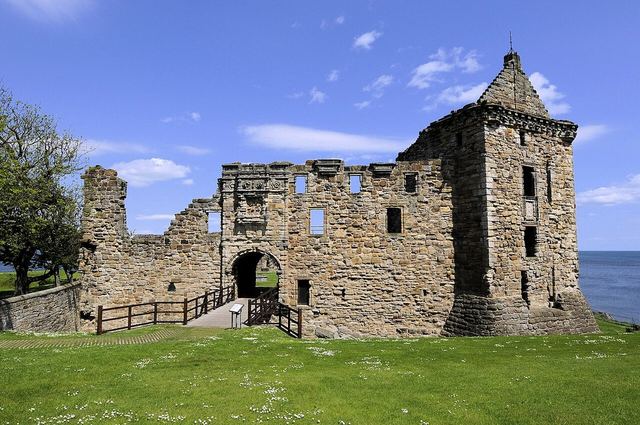
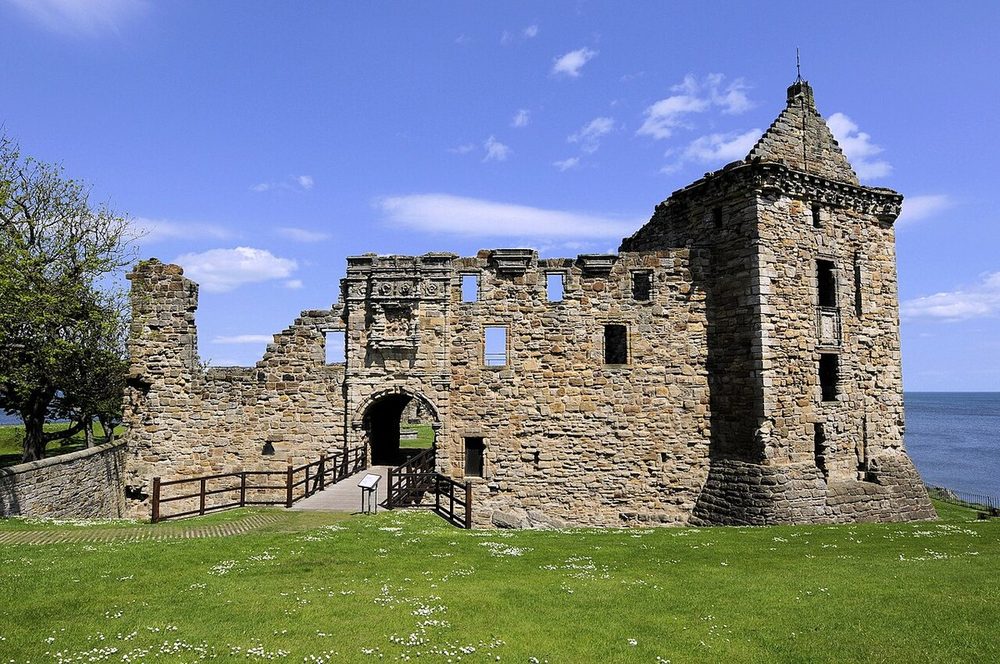
St Andrews Castle
The bottle dungeon: a genuine pit prison, cut about 22 feet into the rock below the Sea Tower with a narrow neck and a wider chamber under it. The mouth is covered by a grate, so you look down into it rather than go in.
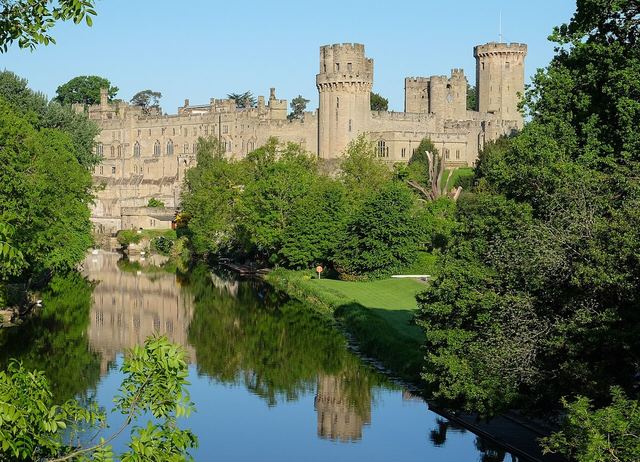
Warwick Castle
The room sold as an oubliette, in the basement of Caesar's Tower. The published survey of the east range reads that basement as a servants' working space, most likely a dairy, and the void below the side room lines up with the garderobe shafts above it. The word first appears in a castle guidebook in 1973.
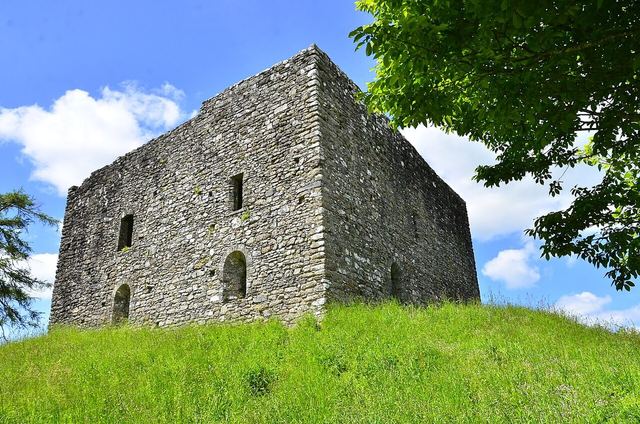
Lydford Castle and Saxon Town
A tower built as a prison rather than converted into one, authorised in 1194. Its ground floor was later filled solid with earth and a mound raised around it, so a working gaol was made to look like a Norman keep on a motte.
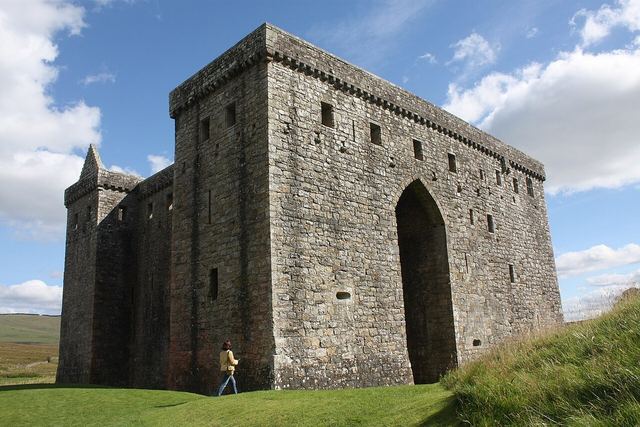
Hermitage Castle
Where Sir Alexander Ramsay of Dalhousie was carried in 1342, wounded, and left to die. Bower's chronicle says he lasted seventeen days on grain falling from the granary above him. The later story of masons finding his bones with a sword is the part that's tradition.
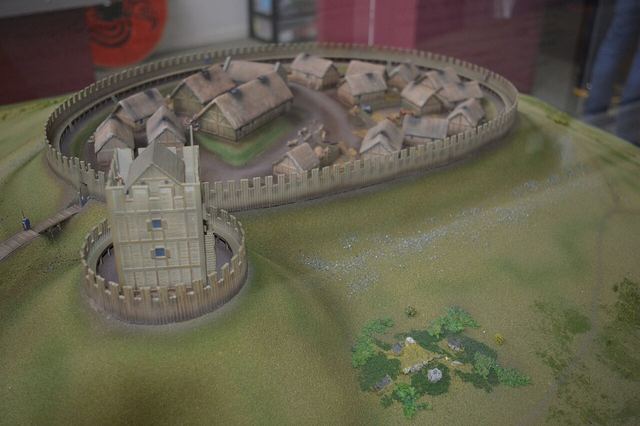
Dundonald Castle
Two prison rooms stacked one above the other: the lower a bare pit entered through the vault, the upper fitted with a fireplace and a latrine. The arrangement suggests rank decided which of the two you went into.
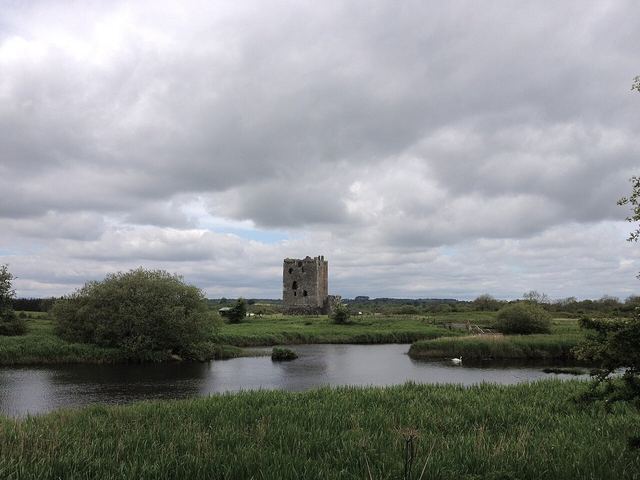
Threave Castle
A Douglas tower house on an island in the Dee, with its prison at the bottom of the tower in the standard Scottish arrangement of service floors below and the hall above. Reached by ringing a bell for the boatman.
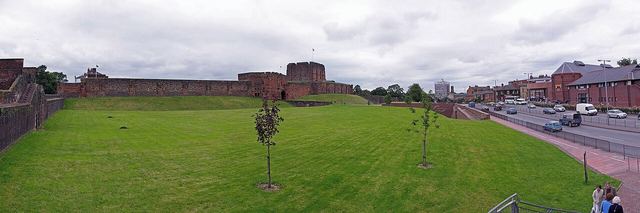
Carlisle Castle
The licking stones in the keep basement, where Jacobite prisoners held in the summer of 1746 licked moisture from hollows in the wall. The most vivid confinement story in an English castle, and it's Georgian rather than medieval.
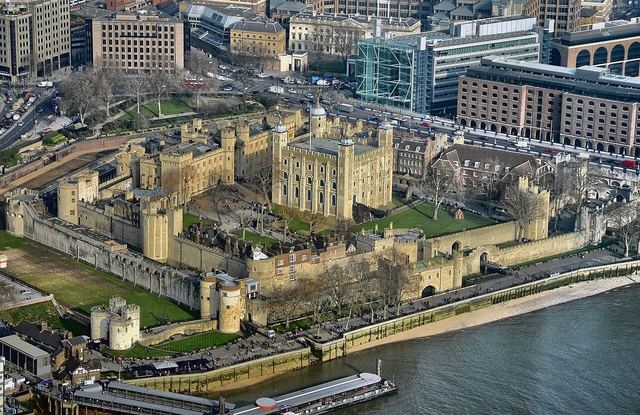
Tower of London
Little Ease, a cell too small to stand up or lie down in, said to have held the Jesuit Edmund Campion for four days in July 1581, on an account written a century later. The famous claim that Guy Fawkes was put in there is tradition alone.
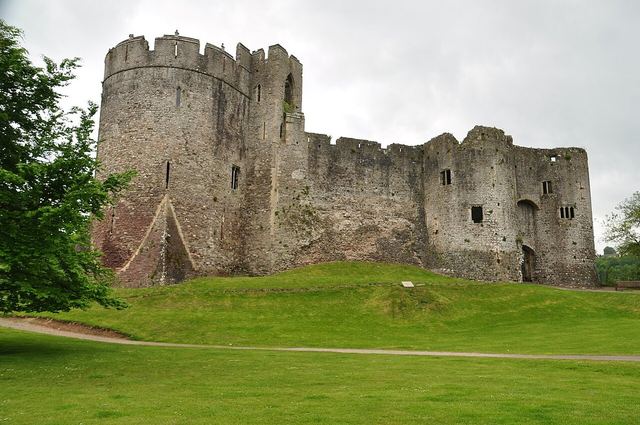
Chepstow Castle
Marten's Tower, where the regicide Henry Marten was held from 1668 until his death in 1680. Twelve years in a castle, in a suite of rooms, sometimes allowed out. Long imprisonment in a castle rarely looked like a pit.
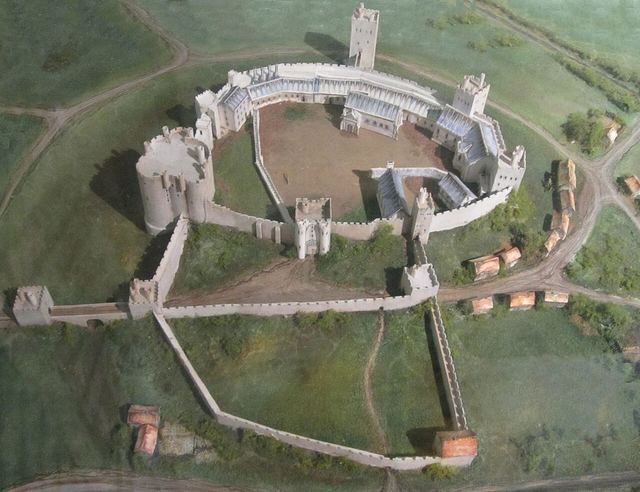
Pontefract Castle
Underground chambers cut into the rock below the castle, carrying carved graffiti left by prisoners held during the Civil War sieges. Names and dates scratched into a wall are evidence of a kind a bare pit can't give you.
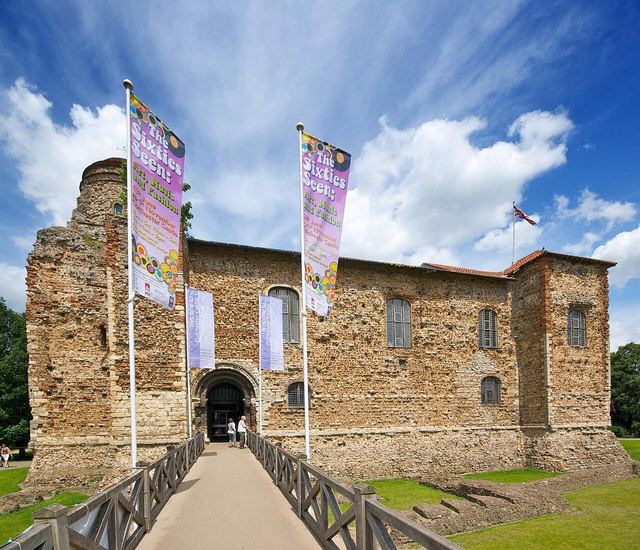
Colchester Castle
The castle vaults, used as the county gaol and holding people arrested in the Essex witch trials of the 1640s. A Norman keep's basement doing prison work six centuries after it was built.