Guide No. 21 · The Castle Rolls
Irish Castles: Norman Motte to Plantation Bawn
Ireland has one of the densest concentrations of late-medieval fortified houses anywhere in Europe, and most of them are not the sort of castle the word usually conjures. They are tall, narrow, private, and there are thousands of them.
Castle-building in Ireland ran in three distinct waves. First the Normans, arriving from 1169, who threw up earthwork mottes in large numbers and then built in stone from the 1170s. Then, from about 1400 to 1650, the tower house: a tall stone-vaulted private stronghold, raised in the thousands by lords of middling rank on both sides of the Gaelic and Anglo-Irish divide. Last, from 1610, the Plantation castle, built to order by English and Scottish grantees under the terms of their land grants. The three waves answer three different questions, and they look it. This roll covers the castles of the United Kingdom, so the ones you can stand inside here are the Northern Irish survivals - which happen to include an unusually clean run through all three phases.

The Normans build in earth first
An Anglo-Norman force landed in County Wexford in 1169. Strongbow followed in 1170 and Henry II came in person in 1171, and within a few years the newcomers were holding ground they had to fortify fast. What went up first was not masonry. It was the motte: a raised mound of piled earth with a timber tower on top and a stockaded yard beside it, cheap, quick, and buildable by unskilled labour under supervision. They were raised in large numbers across Leinster and Ulster, and their grassy mounds are still all over the Irish landscape, usually unlabelled and often mistaken for natural hillocks. The same argument, and the same shape, is set out in full in the motte-and-bailey guide on this roll.
Stone came within a generation, and in Ulster it came with one man. John de Courcy invaded in 1177, on his own initiative rather than the king's, took Downpatrick, and began Carrickfergus Castle on a rock jutting into Belfast Lough in the same year. He also raised Dundrum on its hilltop above the bay. De Courcy was pushed out by Hugh de Lacy in the first years of the next century, but the castles outlasted the quarrel comprehensively: King John besieged and took Carrickfergus in 1210, and it went on holding a garrison until 1928.
The tower house, and the ten-pound castle
The building that actually defines the Irish castle landscape came later, and it was not a royal or baronial project. From roughly 1400 onwards, lords of middling rank across the island started raising tower houses: tall, narrow, stone-vaulted residences, four or five storeys over a small rectangular plan, with walls several feet thick and a base that slopes outward at ground level so that anything dropped from the parapet would ricochet outward into an attacker.
Government gave the idea a shove. A statute of 1429 offered a subsidy of ten pounds to anyone building a fortified tower at least twenty feet long, sixteen feet wide and forty feet high, with the money raised by levy within Louth, Meath, Dublin and Kildare - the counties of the English Pale. The aim was to harden a frontier. What happened instead was that the form escaped the frontier entirely and was taken up by Gaelic and Anglo-Irish lords far outside the area the grant ever covered. Estimates of how many were eventually built vary a good deal between authorities, and no figure should be quoted as settled, but it runs into several thousand.
Read one from the outside and it tells you what it is. The batter at the base. A single small door, with a murder hole in the ceiling of the lobby just inside it so that anyone forcing the entrance could be dealt with from above. A spiral stair climbing inside the thickness of the wall. A stone vault over one of the floors, often still carrying the impression of the woven wicker mats the masons built it on. And, originally, a walled yard called a bawn around the base holding the cattle and the outbuildings, which is the part that has almost always disappeared. It is a house that can be defended, not a fortress that happens to be lived in.
Kilclief, on the shore of Strangford Lough, is the earliest datable one in County Down: built between 1413 and 1441, reputedly for John Sely, Bishop of Down, who was ejected from his see in 1443 for living in it with a married woman. Down the coast at Ardglass, Jordan's Castle stood in a port so thick with towers that it functioned as a fortified trading town, and Simon Jordan held it through a three-year siege in the Nine Years' War until Mountjoy relieved him in June 1601.
The Plantation, and a Scottish accent
The last wave was administrative. The Plantation of Ulster, begun in 1610, granted confiscated land to English and Scottish undertakers on conditions, and one of the conditions was building: a bawn on every grant, and a stone house inside it on the larger ones, within a fixed term of years. The buildings that resulted are recognisably a different species. There is more window and less wall, the roofline is gabled rather than battlemented, and the defensive features are increasingly gestures.
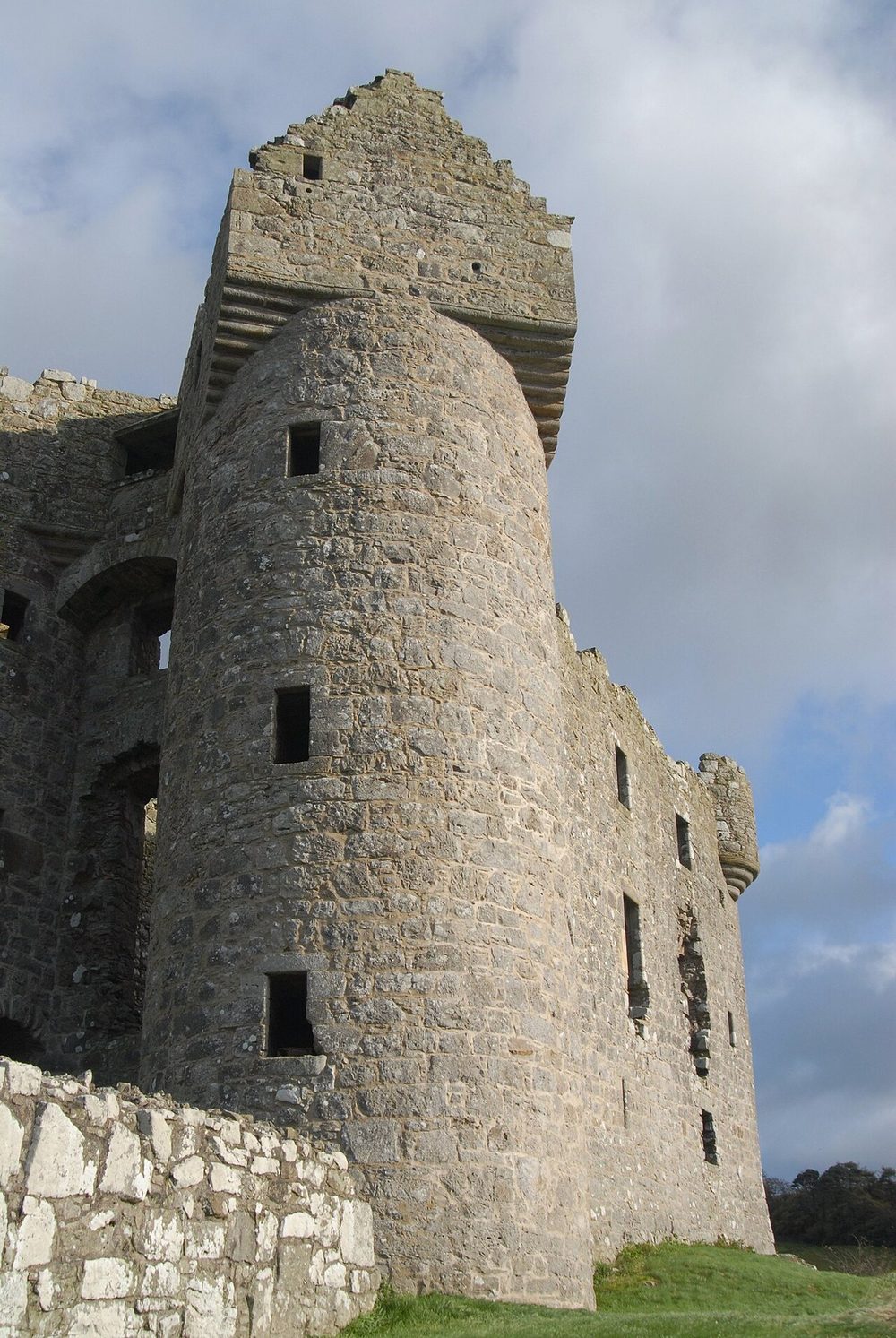
The interesting part is who built them. On the Scottish-held grants the detailing arrived wholesale from Scotland. Monea in Fermanagh, finished around 1618 for Malcolm Hamilton, has two full-height round towers guarding its entrance which are corbelled out at attic level to carry square caphouses with crow-stepped gables. That is not an Irish idiom at all; it is the language of the Scottish tower house, carried over by the men who commissioned it.
These buildings had a short working life. The rising of 1641 caught most of them barely a generation old. Tully, built for Sir John Hume around 1611 to 1613, was surrendered to Rory Maguire on Christmas Eve 1641; its occupants were killed the next day and the castle was burnt and never lived in again. Monea was attacked in the same rising. What you walk round at Tully now is a shell and a replanted formal garden, which is an honest enough memorial.
Why so many, and why so ruined
The density is the thing that surprises visitors. England produced a few hundred serious castles and stopped; Ireland produced thousands of tower houses and kept going for two and a half centuries. The reason is political rather than architectural. Ireland had no single dominant authority able to license or forbid private fortification the way the English crown could, and it had a great many lordships of roughly comparable middling strength, each of which needed somewhere defensible to keep its people, goods and cattle against the raid rather than the army. A tower house is exactly the right building for that problem, and it is cheap enough that a lord of no great wealth could raise one.
Most are ruins now, and mostly not because anyone knocked them down. Tower houses stopped being useful once the raiding stopped and the fashion moved to the undefended country house; roofs came off, and a stone-vaulted building with no roof empties itself out over a couple of centuries. The ones still standing to full height tend to be the ones somebody adopted - taken into state care, restored by an enthusiast, or simply never abandoned.
Quick answers
What is an Irish tower house?
An Irish tower house is a tall, narrow, stone-vaulted fortified residence built between roughly 1400 and 1650. It usually rises four or five storeys over a small rectangular footprint, with a battered base that slopes outward at ground level, walls several feet thick, a spiral stair rising in the thickness of the wall, and a murder hole in the ceiling of the entrance lobby. Most stood inside a walled yard called a bawn, which held the animals and outbuildings and has usually vanished. It is a house first and a fortress second: somewhere a minor lord could live, store his goods, and hold out against a raid rather than a siege.
What was a ten-pound castle?
A tower house built under a statute of 1429, in the reign of Henry VI, which offered a subsidy of ten pounds to anyone raising a fortified tower of at least twenty feet long, sixteen feet wide and forty feet high. The money was to be raised by levy within Louth, Meath, Dublin and Kildare, the counties of the English Pale, and the aim was to harden the frontier of the Dublin government's territory. The form then spread far beyond the area the grant covered, taken up by Gaelic and Anglo-Irish lords across the island.
When did the Normans start building castles in Ireland?
From 1169, when an Anglo-Norman force landed in County Wexford, followed by Strongbow in 1170 and by Henry II in person in 1171. The first castles were earthworks, not masonry: a raised mound with a timber tower on top and a stockaded yard beside it, thrown up quickly and in large numbers across Leinster and Ulster. Stone followed within a generation. John de Courcy invaded Ulster in 1177 and began Carrickfergus Castle in the same year.
What is a Plantation castle?
A fortified house built under the Plantation of Ulster, the settlement scheme begun in 1610 that granted confiscated land to English and Scottish undertakers. Grantees were required to build a bawn, and on the larger grants a stone house within it, inside a set term of years. The results look different from a medieval tower house: more window, less wall, gabled rather than battlemented, and on the Scottish-held grants they carry an unmistakable Scottish accent in the detailing.
What is the difference between an Irish and a Scottish tower house?
Less than you might expect, and the two traditions were in contact across a narrow sea. Both are tall stone-vaulted houses for a lord of middling rank, built over the same broad period for much the same reasons. Irish examples tend to be plainer and narrower, and often carry a distinctive rounded or stepped base batter and elaborate wall-walk machicolation. The clearest crossover on this roll is Monea Castle in Fermanagh, built for a Scottish planter around 1618, where the round entrance towers are corbelled out at attic level into square caphouses with crow-stepped gables, straight out of the Scottish repertoire. See Scottish Tower Houses for the other half of the story.
Where to stand inside the idea
Ten castles on the roll that run the whole sequence, from de Courcy's Norman stonework through the tower houses of Lecale to the Plantation castles of Fermanagh:

Carrickfergus Castle
The one to start at. Begun by John de Courcy in 1177 on a rock in Belfast Lough, besieged and taken by King John in 1210, and then held by a garrison more or less without a break until 1928 - about 750 years of continuous military occupation before it passed to the Government of Northern Ireland as an ancient monument.
Dundrum Castle
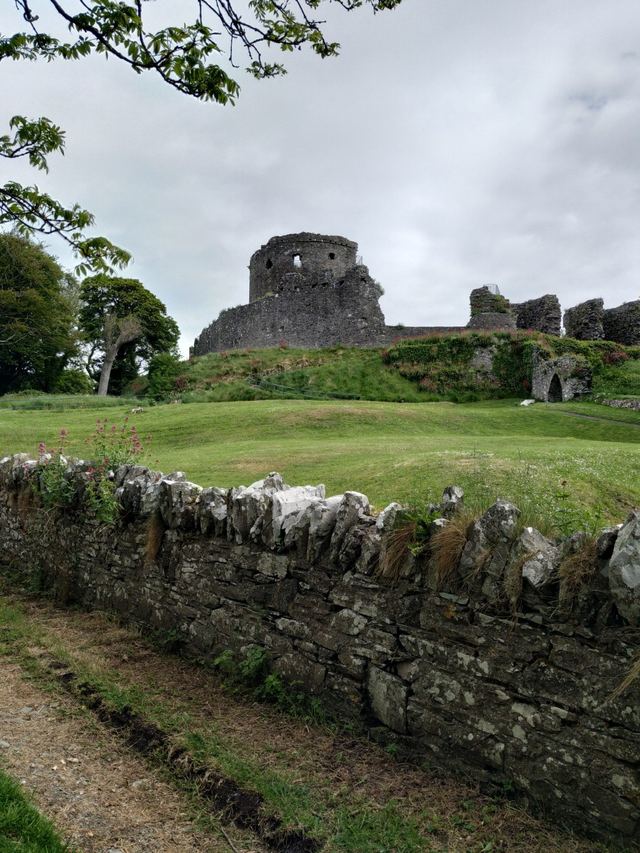
De Courcy again, on a hilltop above Dundrum Bay. Its circular great tower, added in the early thirteenth century, is one of the few round keeps in Ireland and shows the same shift away from the vulnerable square corner that was happening in England and Wales at exactly the same moment.
Greencastle Royal Castle
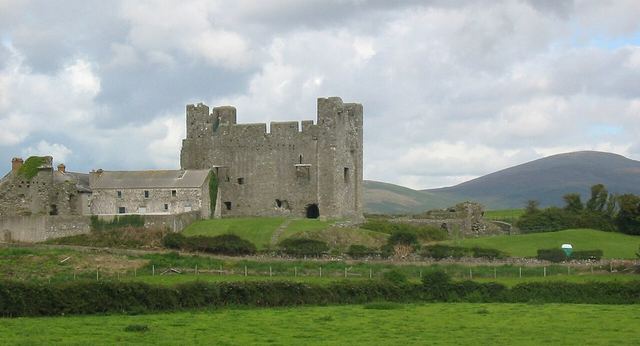
A thirteenth-century stone castle guarding the entrance to Carlingford Lough, later held as a royal castle. The point of it is the water: whoever held both shores of the lough controlled the sea route into the whole of south Down and north Louth.
Kilclief Castle
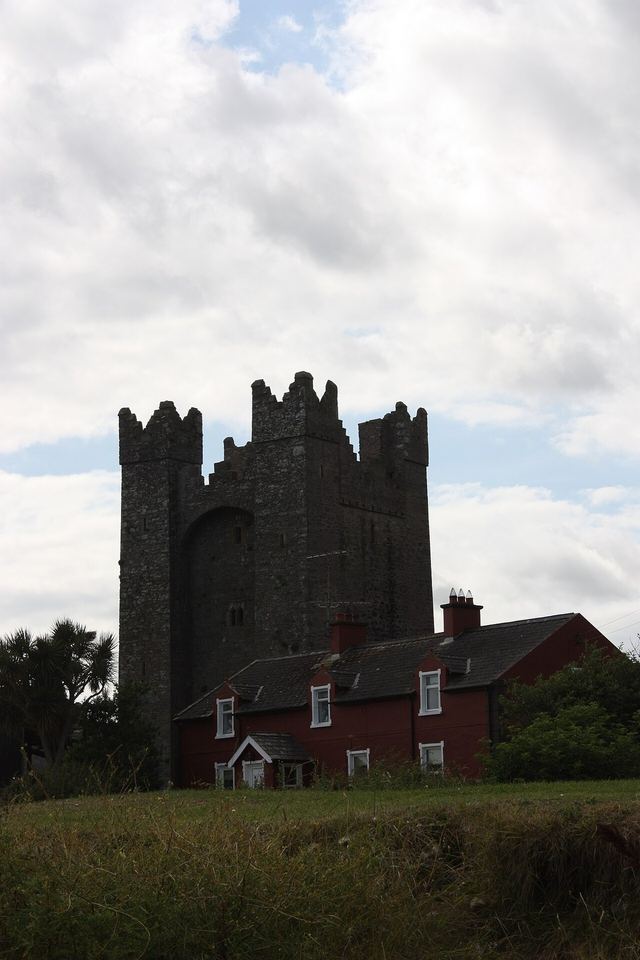
The earliest datable tower house in County Down, built somewhere between 1413 and 1441 and reputedly by John Sely, Bishop of Down. He was ejected from the bishopric in 1443 for living here with Lettice Whailey Savage, a married woman. Archaeologists use its date to anchor the sequence of the other Lecale towers.
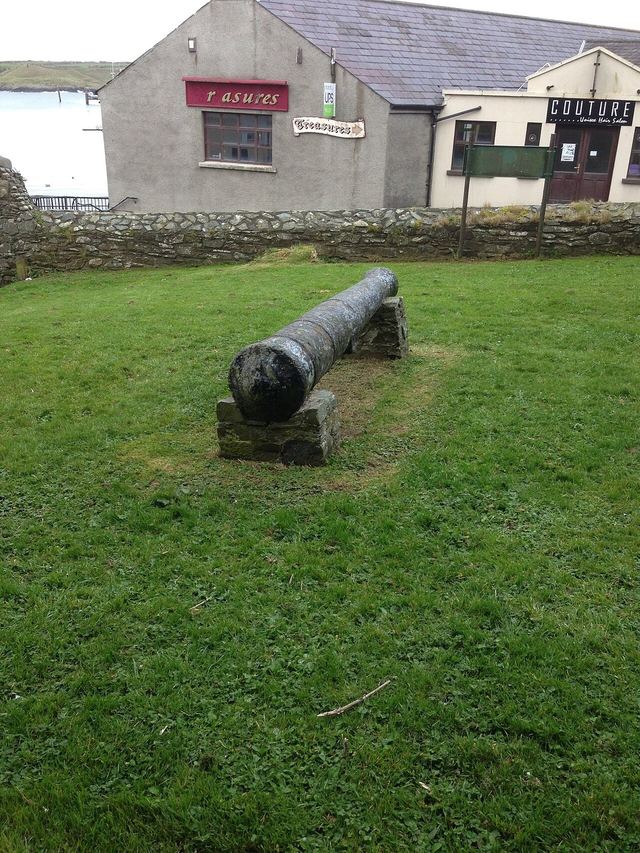
Jordan's Castle
A tower house in the middle of Ardglass, which was a walled trading port stuffed with towers. Simon Jordan held it through a siege lasting three years during the Nine Years' War, and was relieved by the Lord Deputy, Mountjoy, in June 1601. It survives because Francis Joseph Bigger bought and restored it from 1911.
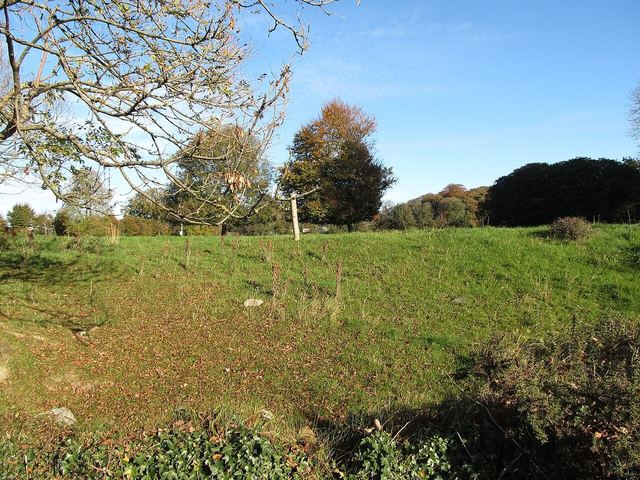
Narrow Water Keep
Built in the 1560s by the English government rather than by a local lord, to sit at the narrowest point of the Newry River and stop anything coming up it. The same tower-house form, put to a straightforwardly military purpose.
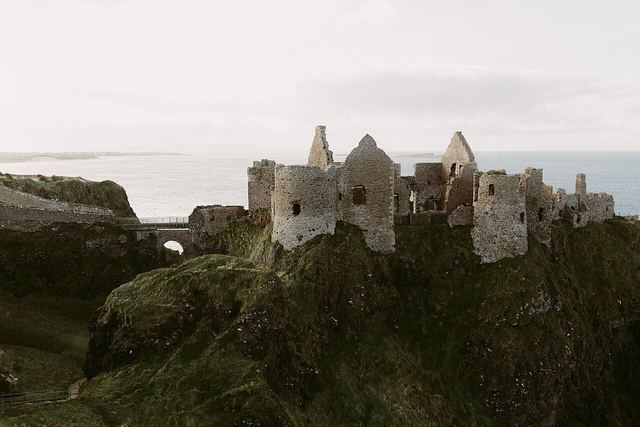
Dunluce Castle
The Gaelic and Hebridean side of the story, on a stack of basalt with the sea underneath. Held by the MacQuillans and then taken by the MacDonnells in the sixteenth century, it was the seat of a lordship that faced Scotland as much as Dublin. The tale of the kitchen falling into the sea is much repeated locally, though historians treat it with caution.
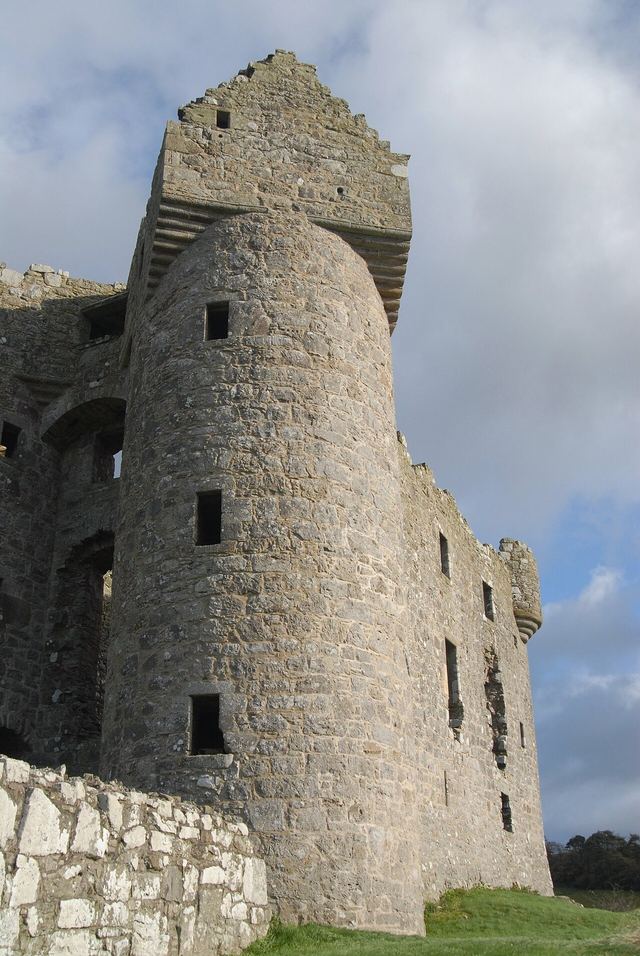
Monea Castle
The best Plantation castle on the roll, completed around 1618 for Malcolm Hamilton, a Scot who later became Archbishop of Cashel. Two full-height round towers flank the entrance and are corbelled out at attic level into square caphouses with crow-stepped gables - a Scottish tower house dropped whole into Fermanagh.
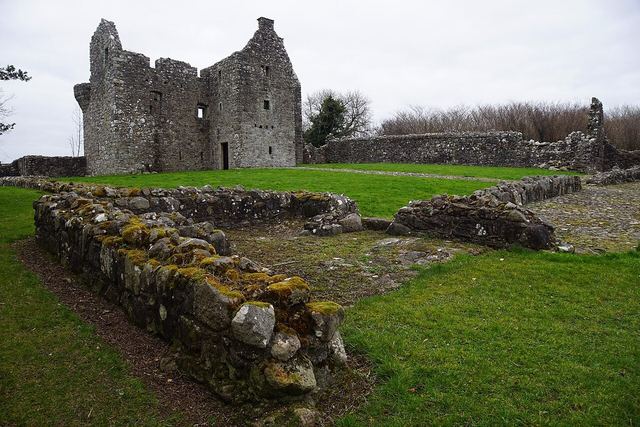
Tully Castle
Built for Sir John Hume, another Scottish grantee, in the years around 1611 to 1613, with a bawn and a formal garden that has been replanted. It was surrendered to Rory Maguire on Christmas Eve 1641, its occupants were killed the following day, and it was burnt and never lived in again.
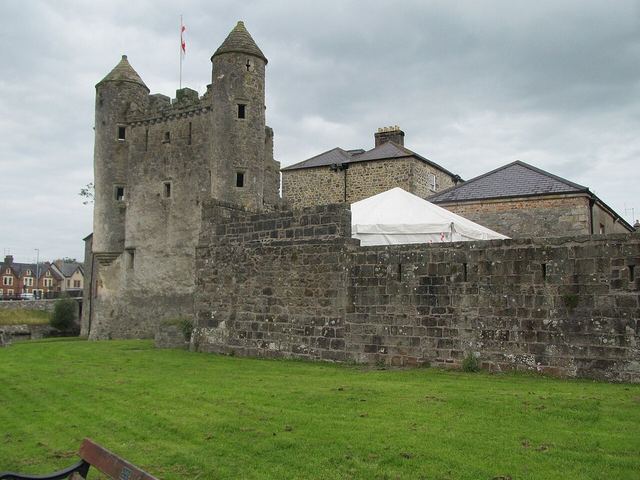
Enniskillen Castle
A Maguire stronghold on the water before the Plantation, taken in 1594 and granted afterwards to Captain William Cole, who rebuilt it. The Watergate, with its pair of slim turrets over the river, is the seventeenth-century work and the image the town is known by.