Guide No. 18 · The Castle Rolls
Who Was Master James of St George?
Almost nobody who built a medieval castle in Britain is known to us by name. One man is the exception, and he was not English. He came from the Alps, he worked for a king who had seen his castles abroad, and the greatest concentration of fortresses ever raised in these islands went up under his hand.
Master James of St George (c. 1230-1309) was a mason and military engineer from Savoy who ran Edward I's castle-building programme in Wales. He first appears in English records in April 1278, sent to Wales to put the works of the castles in order, and by the mid-1280s he was master of the king's works in Wales at a wage of three shillings a day. Under him rose Flint, Rhuddlan, Builth and Aberystwyth, then Conwy, Caernarfon and Harlech, and finally Beaumaris - the most concentrated and expensive burst of castle-building in British history. He is often called Britain's first named architect. How much of the design was really his, as opposed to his organisation of other men's work, is still argued over by historians, and this guide takes that argument seriously rather than tidying it away.
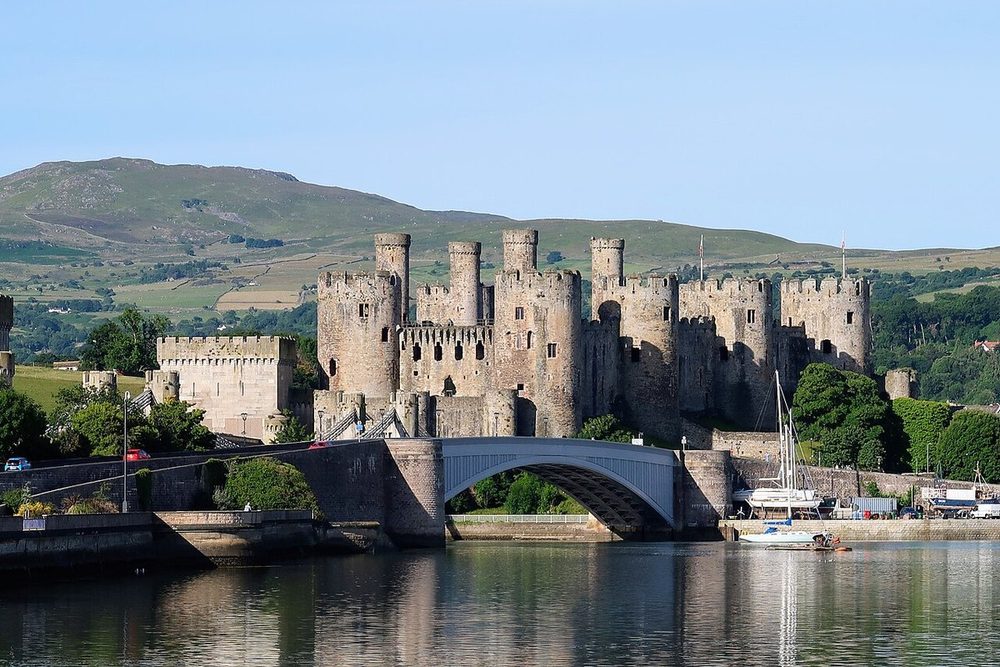
The man from Savoy
He was born around 1230, probably at Saint-Prex on the shore of Lake Geneva, into a family that built things: his father was a mason working on Savoyard projects before him. Through the 1260s and early 1270s Master James worked on the castles of the Counts of Savoy in the Alps and the Viennois - and one of those jobs gave him the name we know him by. "Of St George" is not a surname. It is the site he was working on: Saint-Georges-d'Esperanche, the castle he was raising for Count Philip of Savoy. Medieval craftsmen were routinely identified by the place or the job, which is a large part of why so few of them are traceable at all.
The connection to England was made through that same building site. Edward I, travelling home overland from crusade, came through Savoy in 1273 and stayed at Saint-Georges while the work was in progress. Whatever he saw there stayed with him. Five years later, with a war in Wales to consolidate, the king sent to the Alps for the man who had built it.
Master of the king's works in Wales
The first campaign against Llywelyn ap Gruffudd in 1277 produced four castles at once: Flint and Rhuddlan in the north-east, Aberystwyth on the west coast, and Builth in mid-Wales. Master James was overseeing this work from 1278. When Wales rose again and was crushed for good in 1282 and 1283, the king went further and started three enormous castles simultaneously - Conwy, Caernarfon and Harlech - each with a garrison town or defended port attached, each able to be supplied by sea. Running three sites of that size at once, in a hostile country, is the achievement that made his name.
By the mid-1280s his position was formal: master of the king's works in Wales, paid three shillings a day, a sum far above the craftsmen he directed. He was also trusted with something masons were not usually given. From 3 July 1290 until 14 December 1293 he was constable of Harlech - not building the castle but commanding it, drawing a soldier's pay for holding the place he had raised.
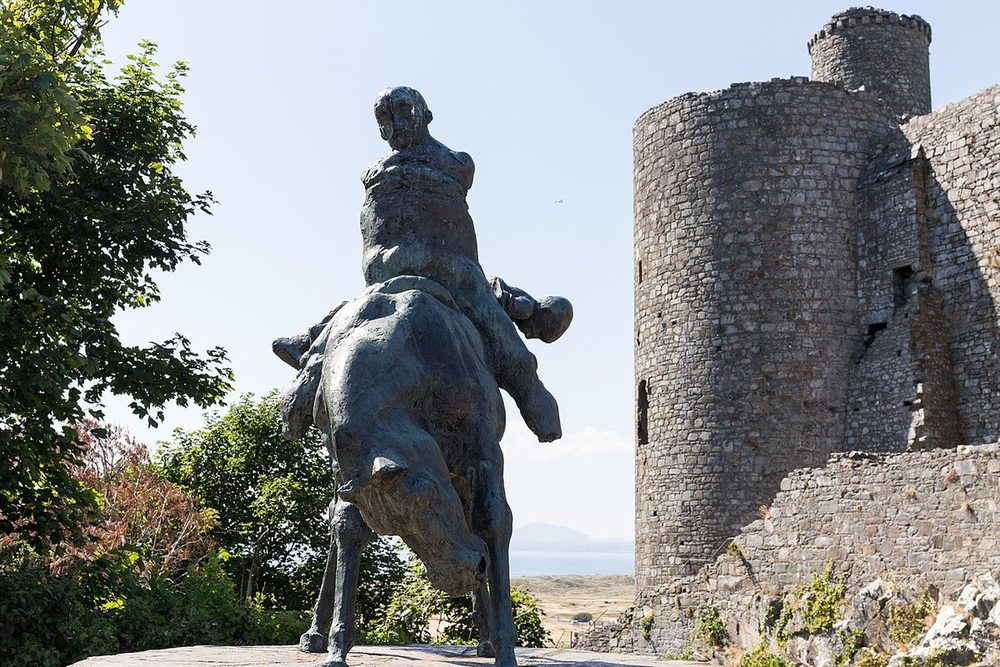
The letter from Beaumaris
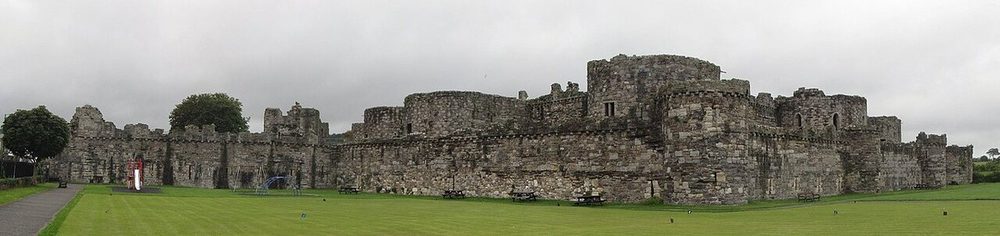
The best surviving glimpse of what this work actually involved comes from his last castle. Beaumaris was begun in April 1295, on flat ground on Anglesey, after Madog ap Llywelyn's revolt had shown the king that the job in Wales was not finished. In February 1296 a letter went from the works to the king's Exchequer over Master James's name, explaining where the money was going and asking, urgently, for more.
The numbers in it are the reason it is quoted so often. The site needed 400 masons, both cutters and layers; 2,000 less-skilled workmen; 200 quarrymen; 30 smiths; and carpenters for the joists and floorboards. Bringing in stone and sea coal took 100 carts, 60 wagons and 30 boats. And then the part that makes it a human document rather than an invoice: the men's wages were badly in arrears, and they were having the greatest difficulty keeping them, because the workforce simply had nothing to live on.
The money never did catch up. Edward's attention and treasury turned to Scotland, the walls at Beaumaris were left standing short of their intended height, and the most perfectly planned castle in Britain was quietly abandoned half-built. It is still like that today, which is why it looks so oddly squat in photographs - a subject the Concentric Castle guide takes up in more detail.
Scotland, and the end
When the Welsh programme wound down the king took his master builder north with the war. In the early 1300s Master James overhauled the defences of Linlithgow, the fortified base Edward established between Edinburgh and Stirling, and he worked at Stirling and probably at Kildrummy in Aberdeenshire. It is a quieter final chapter - repairs, siegeworks and timber peels rather than another Conwy - but it shows how far the crown still trusted him thirty years on.
His last recorded payment was made in September 1306. He died in 1309, with Beaumaris still unfinished, and two sons, Giles and Tassin, recorded after him. For a man who shaped the skyline of north Wales, remarkably little else about his life survives.
Was he really the architect?
Here is the honest position. Almost everything popularly said about Master James rests on the work of one historian, Arnold Taylor, who from the 1950s onward identified the English Master James with the Savoyard mason Jacques de Saint-Georges and traced shared construction details between the Alpine castles and the Welsh ones. Taylor set the case out fully in Castle-Building in Thirteenth-Century Wales and Savoy in 1978, and for a generation it was simply the accepted story: a great foreign architect, imported, who designed the iron ring.
That has since been picked at, most seriously by Nicola Coldstream in 2010. The doubts are reasonable ones. The Rhuddlan accounts describe him overseeing the works "by view and testimony", which is the language of supervision and audit rather than of design. Edward I took a famously close personal interest in his own castles and had the final word on how they looked. And a great medieval building site had many masters on it, most of whose names never made it into the rolls at all. What survives about Master James may reflect the accounting system as much as the architecture.
What has not been challenged is the organisation. Somebody moved thousands of men, thousands of tons of stone and an unprecedented amount of the king's money across a conquered country, and kept several of the largest building projects in Europe running at once. Whether or not he drew the plans, the iron ring is the thing he made happen - and at Caernarfon, treated at length in its own guide, you can still walk through the result.
Quick answers
Who was Master James of St George?
Master James of St George (c. 1230-1309) was a mason and military engineer from Savoy who ran King Edward I's castle-building programme in Wales. He first appears in English records in April 1278, going to Wales to put the works of the castles in order, and by the mid-1280s he held the post of master of the king's works in Wales at a wage of three shillings a day. He is one of the very few medieval builders in Britain whose name can be attached to specific buildings that still stand.
Which castles did Master James of St George build?
He oversaw the first group - Flint, Rhuddlan, Builth and Aberystwyth - from 1278, then directed the three great castles begun in 1283 after the conquest of Gwynedd: Conwy, Caernarfon and Harlech. His last was Beaumaris on Anglesey, begun in April 1295 and still unfinished when he died. He later worked in Scotland, overhauling the defences at Linlithgow in the early 1300s and working at Stirling and probably Kildrummy.
Why is he called 'of St George'?
It is not a surname. He is named after Saint-Georges-d'Esperanche in the Viennois, the castle he was building for the Count of Savoy in the early 1270s - medieval craftsmen were commonly identified by the job or the place they were working on. Edward I is thought to have seen that work at first hand while travelling home overland from crusade in 1273, a few years before Master James turned up in Wales.
Was Master James really the architect of Edward I's castles?
This is genuinely argued over. Arnold Taylor's Savoyard thesis, set out fully in 1978, identified him with the Savoyard mason Jacques de Saint-Georges and read the Welsh castles as carrying Savoyard design fingerprints. Nicola Coldstream's 2010 reassessment questioned how much of the design was his: the Rhuddlan accounts describe him overseeing work by view and testimony, which is the language of supervision, and Edward I himself took a close personal interest in what his castles looked like. What nobody disputes is his organisation of the works.
Can you visit the castles Master James of St George worked on?
Yes - nearly all of them, and most are in Cadw's care. Conwy, Caernarfon, Harlech and Beaumaris together form a UNESCO World Heritage Site and are open to visitors; Rhuddlan and Flint are open ruins, and what survives of Aberystwyth stands in a public park on the seafront. They are listed at the foot of this guide.
Where to stand inside the idea
Eight castles on the roll from the programme he ran, from the first works of 1277 to the one that was never finished:
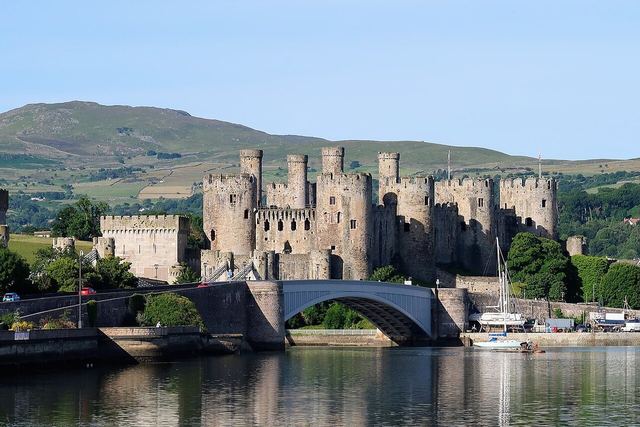
Conwy Castle
Begun in 1283 and largely finished within about four years, which is the real measure of the man - eight towers, a walled town and a quay, raised at speed on a rock above the estuary.
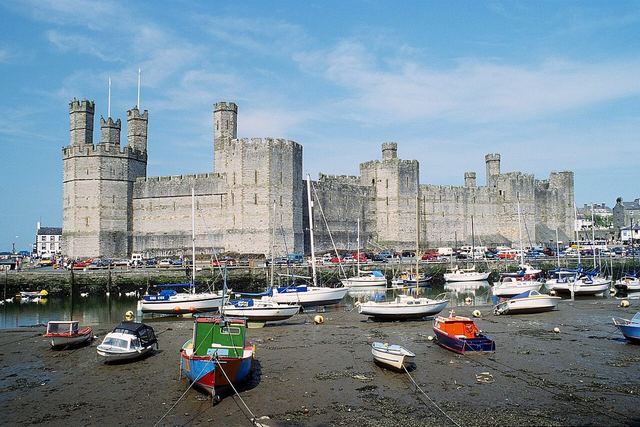
Caernarfon Castle
The same programme working as propaganda rather than engineering: polygonal towers and banded stone, begun 1283, and the one place where the design is clearly making an argument.
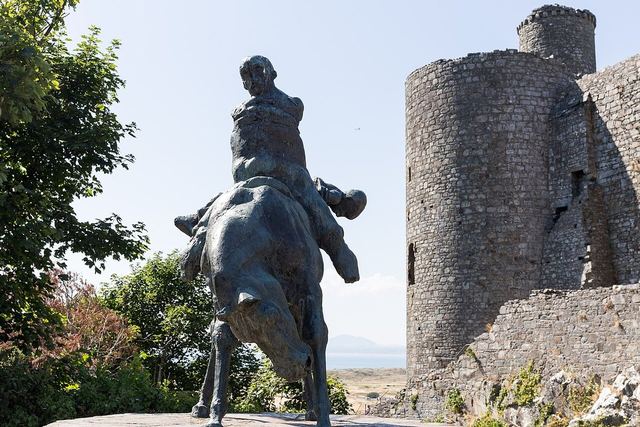
Harlech Castle
A concentric castle on a crag, supplied from the sea by a fortified stairway. Master James was its constable from July 1290 to December 1293, a paid command as well as a building site.
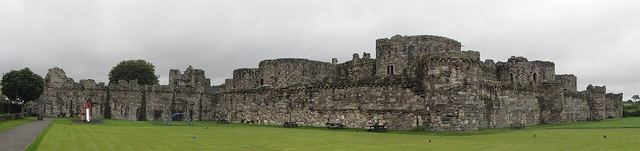
Beaumaris Castle
His last and most perfectly planned castle, begun April 1295 and never finished. The February 1296 letter begging the Exchequer for money was written from this site.
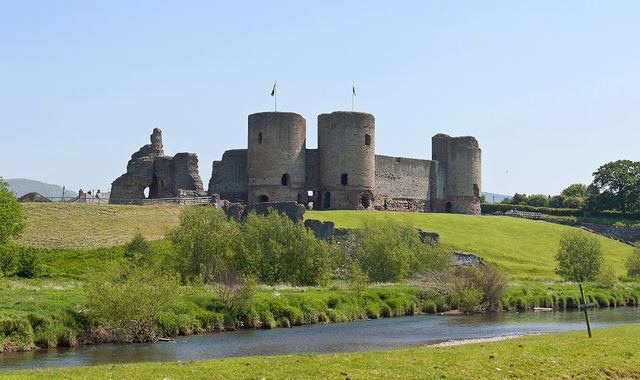
Rhuddlan Castle
Where his English career starts, from 1277. The River Clwyd was canalised for about three miles so that seagoing ships could tie up at the castle gate - engineering as much as masonry.
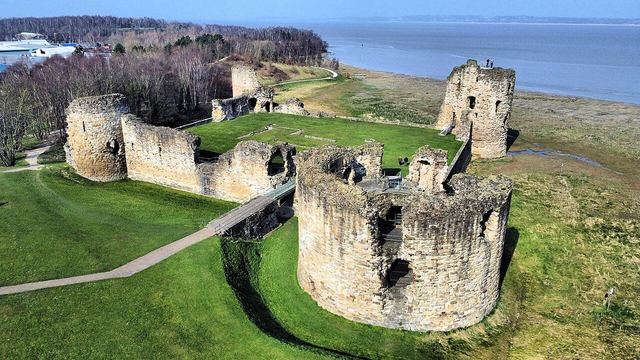
Flint Castle
The first of the 1277 castles, with a great round tower standing apart from the rest of the enclosure - a plan unlike anything else in Britain, and often compared to the Tour de Constance at Aigues-Mortes.
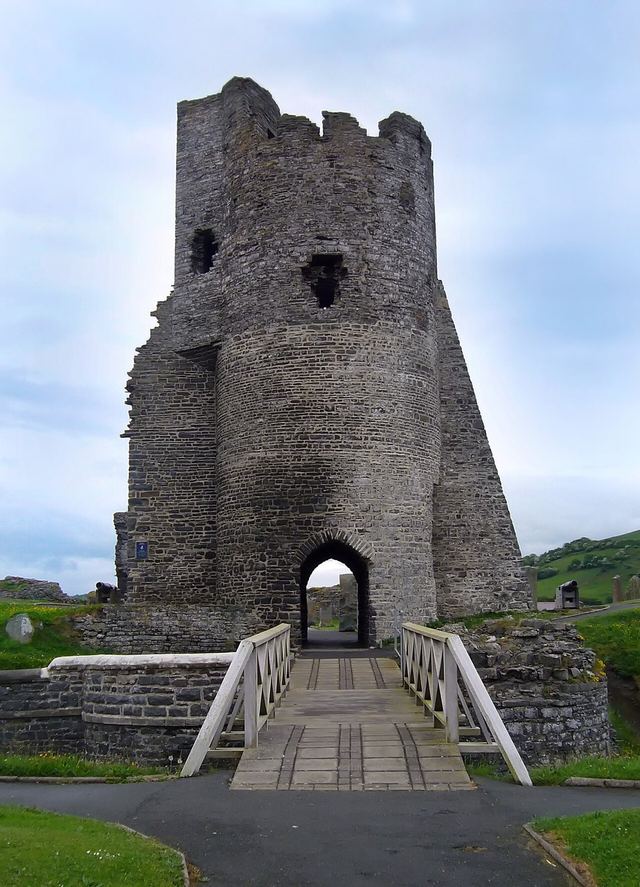
Aberystwyth Castle
The western end of the first campaign, begun 1277. Badly knocked about since, so what is left on the seafront is fragmentary, but it belongs to the same burst of work.
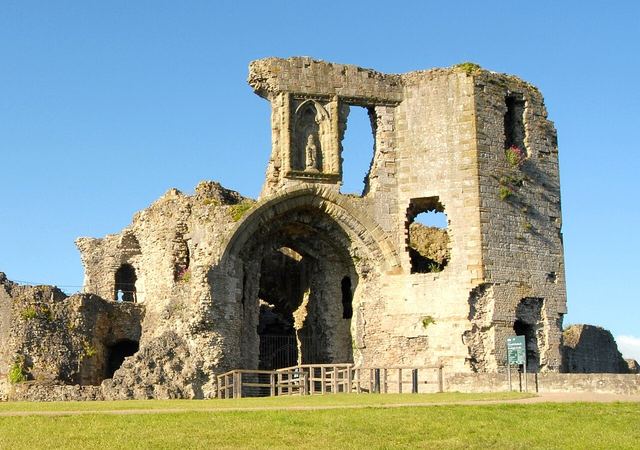
Denbigh Castle
Not a royal castle and not documented as his - it was Henry de Lacy's - but built in the same years and to the same standard, which is why its great triple-towered gatehouse invites the comparison.