Guide No. 19 · The Castle Rolls
Why Are Some Castle Keeps Round?
For a hundred years the great tower of an English castle was a square box. Then, within a couple of generations, builders started rounding them off. It was not a matter of taste. It was a matter of what happens to a corner when somebody digs underneath it.
A keep - the great tower or donjon at the heart of a castle - was square or rectangular in almost every stone castle the Normans built in Britain. From the later twelfth century a new shape appears: the cylindrical keep, round on plan, with no corners at all. The reason usually given is that corners are what a besieger attacks, because an undermined angle brings down two walls at once and cannot be defended from the wall-head above. That reason is broadly right, but it is not the whole story, and the change was slower and less tidy than the textbook version suggests.
What was wrong with a corner
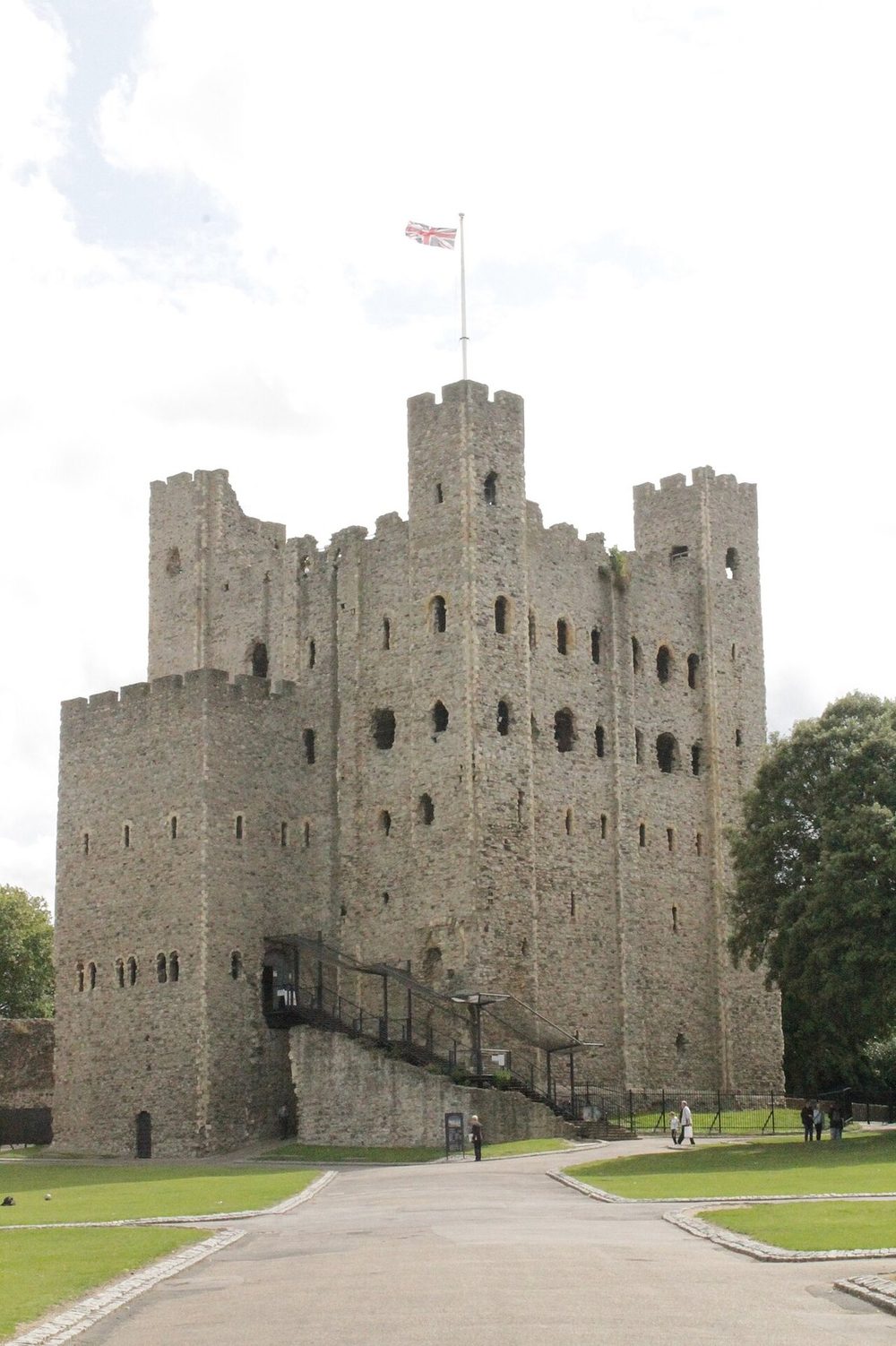
The square great tower is the classic Norman building. The White Tower at the Tower of London set the pattern in the 1070s and 1080s, and for the next century that was simply what a serious castle had: an enormous rectangular block with walls up to five metres thick at the base, the lord's hall and chamber stacked inside it, and the entrance lifted to first-floor level and reached by an outside stair. Hedingham in Essex, built around 1140, is the type at its most complete. Dover, put up for Henry II in the 1180s, is the type at its most expensive.
The weakness was structural and it was well understood. A besieger who cannot get over a wall goes under it: miners dig a gallery towards the foundations, prop the roof with timber as they go, pack the gallery with brushwood, and then fire it. When the props burn through, the ground drops and the masonry above comes down with it. Anywhere on a straight wall this is bad. At a corner it is far worse, because the angle carries the load of two walls, so a collapse there opens two faces at once. A corner is also the one part of a tower the defenders cannot easily cover from directly overhead, and its squared quoin stones can be prised out one by one by men working under a shed at the base, in a spot where dropped missiles glance away instead of landing square.
Rochester, 1215: the proof
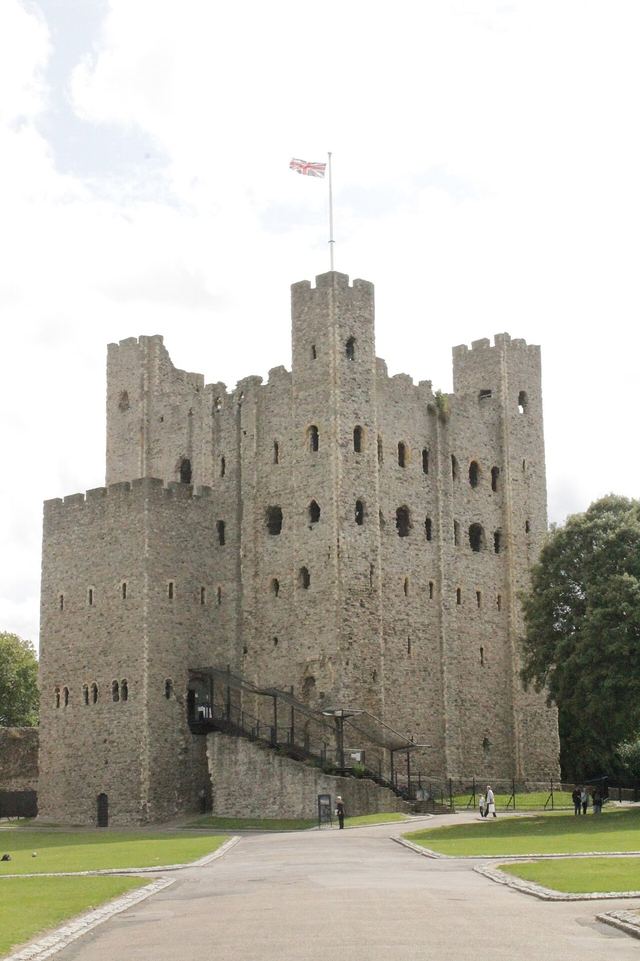
The best demonstration of the problem is also the most famous siege in English castle history. In the autumn of 1215, with the barons in revolt and Magna Carta already a dead letter, King John besieged Rochester. He broke the bridge, took the bailey, and battered the keep with stone-throwing engines without result. So he set his miners on the south-east corner.
They dug their gallery, propped it, and then John sent an order to his justiciar that has survived: send forty of the fattest pigs, of the sort least good for eating. The fat was rendered and used to fire the props. The corner of the keep came down. Even then the castle did not fall at once, because a cross-wall runs through the middle of the tower, and the garrison simply retreated into the northern half and held on until they were starved out.
When the keep was repaired in the years that followed, the fallen corner was not rebuilt square. It was rebuilt as a rounded tower, and it is still there - one curved angle on an otherwise rectangular Norman keep, with the join visible in the masonry. There is no clearer piece of evidence anywhere in Britain that the builders had drawn a conclusion and acted on it.
The round keep arrives
The conclusion was not, in fairness, drawn at Rochester. French builders had been experimenting with cylindrical great towers since the middle of the twelfth century, and under Philip Augustus in the 1190s the round donjon became close to a standard component of a French royal castle. In Britain the shape arrives in stages, and the stages are visible.
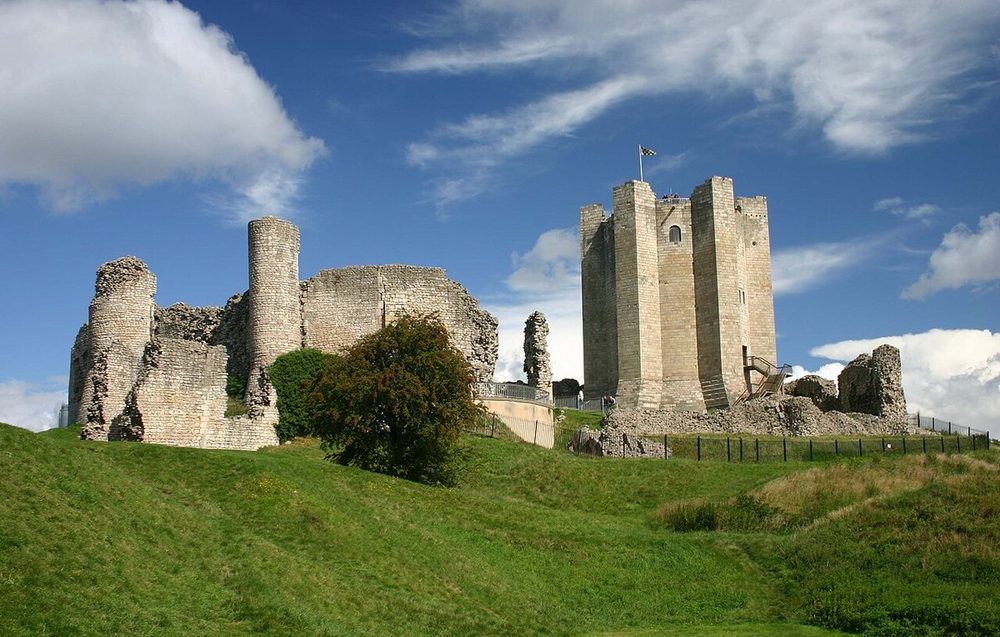
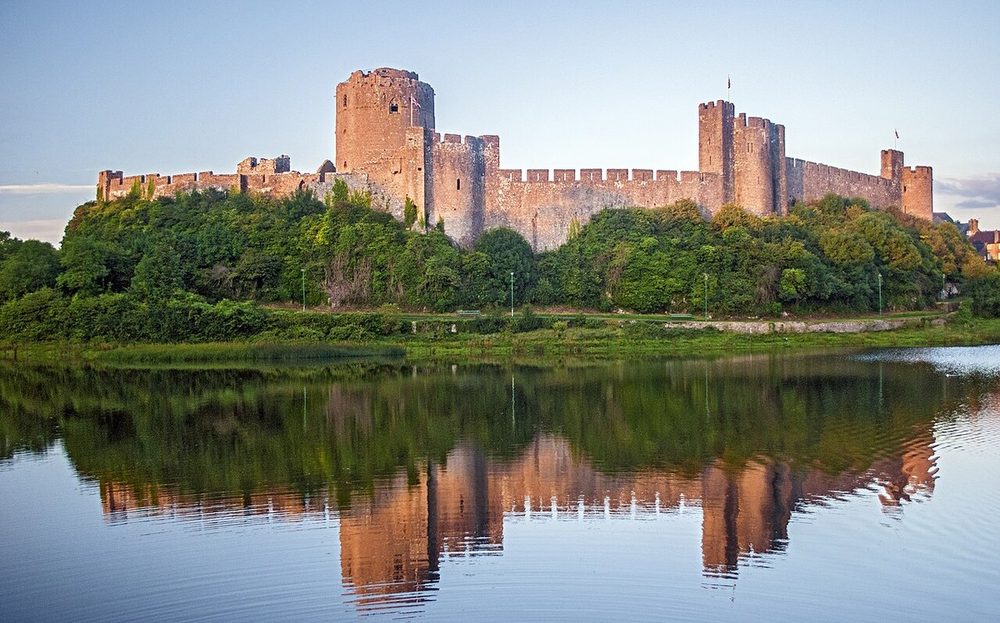
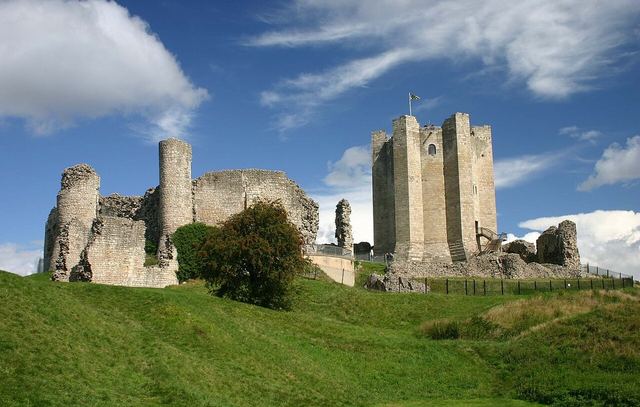
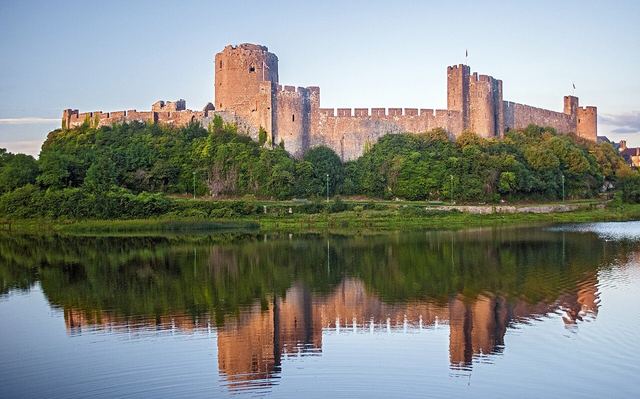
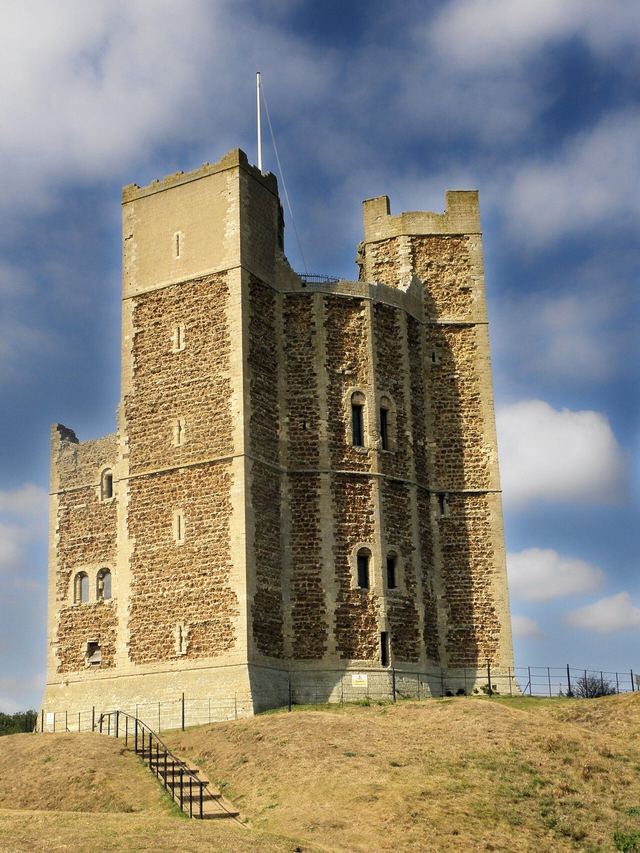
Orford in Suffolk, begun for Henry II in 1165, is the transitional object: circular inside, polygonal outside, with three square turrets attached to the shell. It has hedged every bet at once. Conisbrough in South Yorkshire, built about 1180 by Hamelin Plantagenet, half-brother of Henry II, goes further - a genuinely cylindrical keep, wrapped in six great wedge-shaped buttresses that stiffen it and give archers a projecting platform. By about 1200, when William Marshal raised the great round keep at Pembroke and roofed it with a stone dome, the argument was settled and the new shape was being built at full scale.
After that the round keep spreads quickly along the Welsh border and into Wales, where a run of modest but complete examples survives: Skenfrith, Bronllys, Longtown and Caldicot among them. At Tretower in Powys a round tower was built inside an older shell keep, which is about as literal a picture of the new idea replacing the old as any site can offer. And the shape was not only a Norman or English one: Dolbadarn, above Llyn Padarn, is a round keep built for Llywelyn the Great, a Welsh prince adopting the best available military architecture of his day.
What round cost you
If circular was simply better, the change would have taken a decade rather than a century. It did not, and the reasons are worth knowing before you next stand in front of one.
A curved wall is harder to build. Every facing stone has to be cut to a curve, which means more skilled mason-hours and more waste at the quarry, and the scaffolding and centering are fiddlier. Inside, a round room is awkward: floor joists have to be framed into a curve, furniture and partitions fit badly, and the useful floor area is smaller than the same span of squared building. Fireplaces, garderobes and stairs all have to be driven into a wall that is curving away from them. For a lord who wanted a hall to live in as much as a tower to survive in, the square block was the more comfortable and much the cheaper answer, and that is why great square keeps went on being built long after the weakness was understood. Dover is the proof of that: enormous, rectangular, and begun within twenty years of Orford.
It is also worth being honest about the limits of the standard explanation. A round tower is harder to undermine, not immune to it, and the same miners who took Rochester's corner could have dug under a cylinder given time. The move to round towers went along with a wider change in how castles were defended, and it was reinforced by fashion and by the example of the French crown as much as by pure engineering.
And then neither shape won
The round keep had a short reign. Within roughly a century of Conisbrough the great tower itself was going out of use in new castles, for a reason that had nothing to do with its plan. Defence was moving outward. Rather than concentrating strength in one tower at the centre, builders spread it around the perimeter: round mural towers spaced along a curtain wall so that every stretch of it could be covered by fire from the towers on either side, and a gatehouse made so strong that it took over the keep's old role as residence and last redoubt. Edward I's castles in Wales, treated in The Concentric Castle, mostly have no keep at all.
So the corner problem was solved twice. First by rounding the great tower off, and then by deciding the great tower was the wrong idea in the first place. Both answers are still standing, often within a few miles of each other, and once you know to look for the shape of a tower on plan you will not be able to stop noticing it.
Quick answers
Why are some castle keeps round?
Because corners are the weak point. The angle of a square tower can be undermined or prised apart stone by stone, and when a corner goes it takes two walls down with it. A cylindrical tower has no angle to attack, deflects missiles rather than taking them square on, and gives the defenders an uninterrupted field of view all the way round. Round great towers appear in France from the middle of the twelfth century and in Britain from the later twelfth century onward.
What is the difference between a keep and a tower?
A keep - also called a great tower or a donjon - is the principal tower of a castle: the strongest building on the site, usually the lord's residence, and the last place the garrison could retreat to. Every other tower is subordinate to it: mural towers spaced along the curtain wall, towers flanking the gate, and small turrets carried on the wall-head.
Which is better, a round keep or a square keep?
It is a trade rather than a straight win. Round is better against mining, battering and bombardment. Square is cheaper and quicker to build, because straight walls need less skilled cutting, and it gives squared rooms and simpler floor framing inside. Both shapes were being built at the same time for decades, which is the clearest sign that nobody at the time thought the answer was obvious.
Which castles in Britain have round keeps?
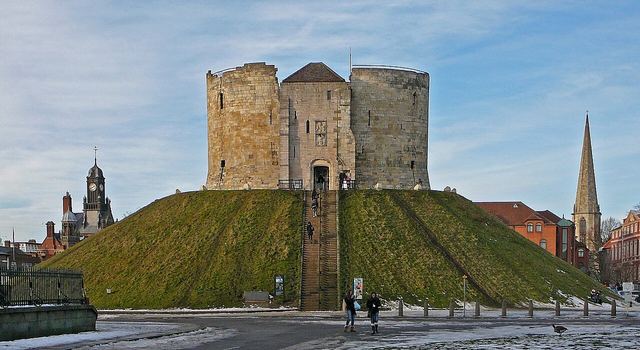
Pembroke has the grandest, raised by William Marshal around 1200 and roofed with a stone dome. Conisbrough's cylindrical keep of about 1180 is ringed by six wedge-shaped buttresses. Skenfrith, Tretower, Bronllys, Longtown, Caldicot and Dolbadarn all have round great towers, Clifford's Tower at York is a four-lobed variation on the idea, and Orford is circular inside a polygonal outer shell. They are listed at the foot of this guide.
When did castles stop building keeps altogether?
By the later thirteenth century the great tower had largely been dropped from new castles in Britain. Defence moved outward to the curtain wall, with round mural towers spaced along it and an enormously strong gatehouse doing the job the keep used to do. The Concentric Castle guide covers what replaced it.
Where to stand inside the idea
Ten castles on the roll where the shape of the great tower is the point - eight round or transitional, two square for comparison:
Rochester Castle
The whole argument in one building: three square corners and a fourth rebuilt as a round tower, after King John's miners brought the south-east angle down in 1215.
Conisbrough Castle
Hamelin Plantagenet's cylindrical keep of about 1180, ringed by six wedge-shaped buttresses. The most striking round great tower in England, and still climbable.
Pembroke Castle
William Marshal's great round keep, raised around 1200 and roofed with a stone dome - the new shape built at full height and full confidence.
Orford Castle
Henry II's experiment, begun 1165: circular on the inside, polygonal on the outside, with three square turrets attached. The shape being argued out in real time.
Clifford's Tower, York
Not a circle but a quatrefoil - four lobes on plan, another way of getting rid of the corners. Rebuilt in stone in the reign of Henry III.
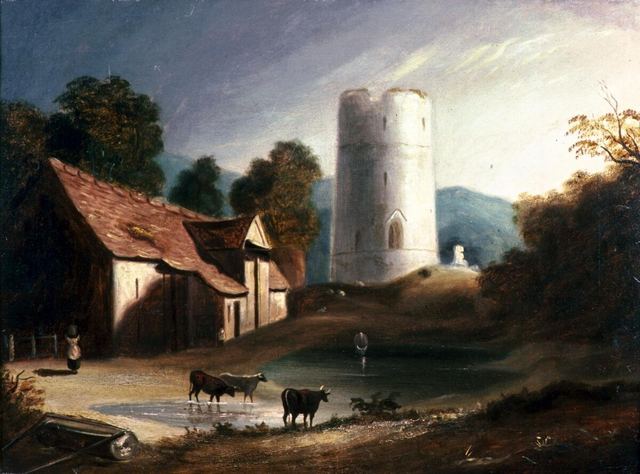
Tretower Court and Castle
A round tower dropped inside an earlier shell keep, so one site shows you the new idea retro-fitted straight into the old one.
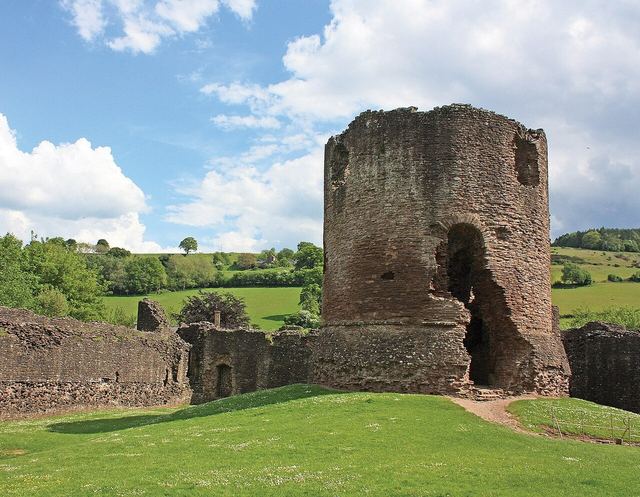
Skenfrith Castle
Hubert de Burgh's round keep on a low mound beside the River Monnow, plain and complete enough to read in a single glance.
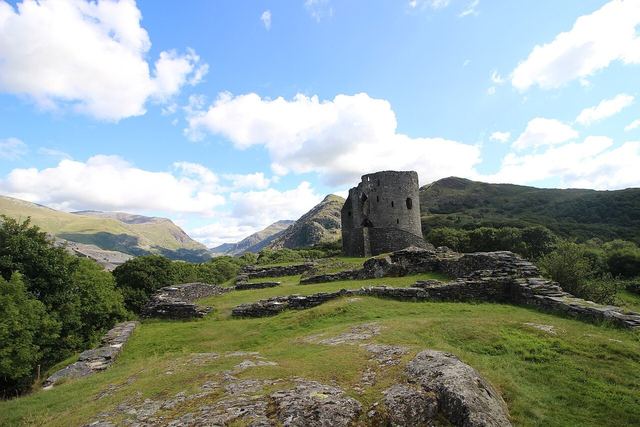
Dolbadarn Castle
The round keep as Welsh rather than Norman - built for Llywelyn the Great above Llyn Padarn, guarding the pass rather than the coast.
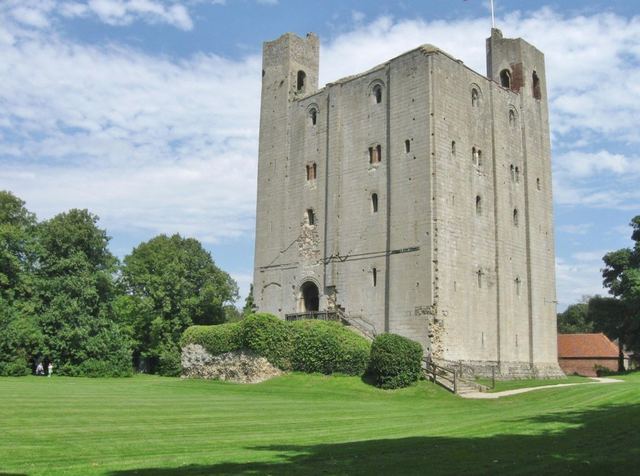
Hedingham Castle
The square great tower at its best: a Norman keep of about 1140, still roofed, with the enormous arch of its hall still standing inside.
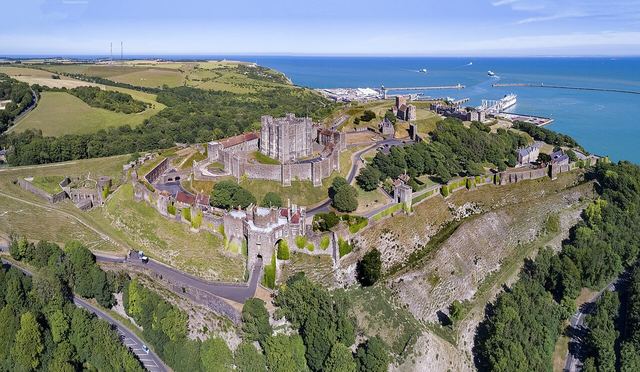
Dover Castle
Henry II's vast square keep of the 1180s, built at ruinous expense within twenty years of Orford - proof the old shape was not abandoned overnight.