Guide No. 25 · The Castle Rolls
What Is a Shell Keep?
The Normans threw up hundreds of earth mounds with wooden towers on them. When the wood rotted and the money was there to rebuild in stone, a good number of those mounds did not get a tower at all. They got a ring.
A shell keep is a ring of stone wall built around the flat top of a castle motte, standing where the timber palisade had stood. There is no great tower inside it. The strength is the ring itself, and the buildings a lord needed - hall, chamber, kitchen, chapel, sometimes a well - were ranged against the inside face of the wall around a small open courtyard. Shell keeps belong mainly to the twelfth and early thirteenth centuries, and they are nearly always a second act on an earthwork raised a generation or two before. Historic England's scheduling record for Restormel counts seventy-one known examples in England and Wales.
The problem with putting stone on a mound
Start with what a motte actually is. It is piled earth, clay, chalk and rubble, dug from the surrounding ditch and heaped up by hand, often in a matter of weeks. The motte and bailey guide covers how fast that could be done and why William's men did it everywhere. What matters here is what happens next: a hand-built mound of loose material keeps settling for years, and it is a poor thing to stand a very heavy building on.
A great square keep of the sort the Normans built at Rochester or Hedingham concentrates thousands of tonnes on one footprint. Put that on a fresh motte and you invite differential settlement, cracking and, at worst, the whole tower leaning into the ditch. Builders did sometimes manage it, by founding the tower on the natural ground and heaping the mound up around it afterwards, or by driving foundations down through the made ground. Both are expensive answers.
The ring is the cheap answer, and a clever one. Spread the wall right round the edge of the mound top and the load is distributed instead of concentrated, carried where the material is most compacted and where the footings can often reach solid ground at the mound's outer slope. You also get, for far less stone than a tower would need, a defensible enclosure the full width of the motte rather than a building standing in the middle of it. For a lord holding a dozen sites, the sums were not close.
Living inside a ring
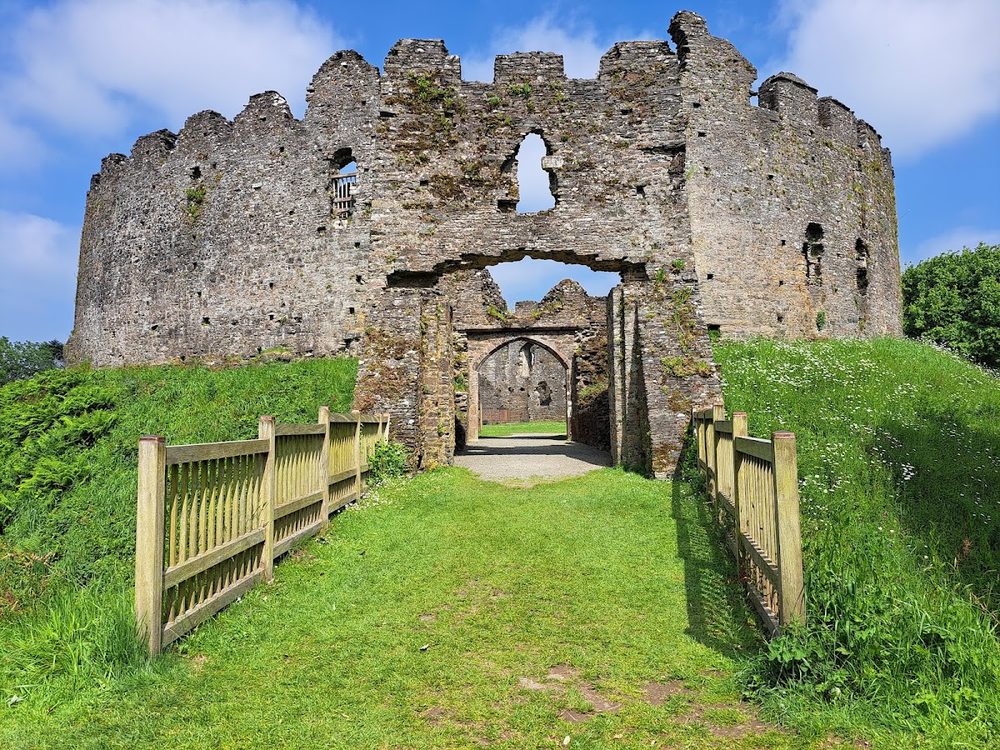
The name is a modern architectural label rather than a medieval word, and it is a good one: the wall really is a shell, with the useful building tucked inside it. Ranges of hall, kitchen, chamber and chapel were built against the inner face, usually in two storeys, leaving a courtyard in the middle no bigger than a decent garden. At Restormel you can still walk that courtyard and read the room outlines in the wall behind you, which is why it is the site everyone photographs.
Getting in meant climbing. The entrance was reached from the bailey below by a flight of steps or a covered stair up the side of the motte, sometimes with a small gate tower at the top, and that climb is still the experience at Carisbrooke and Totnes. Water was the awkward part, since a well sunk from a mound top has to go a very long way down before it reaches anything.
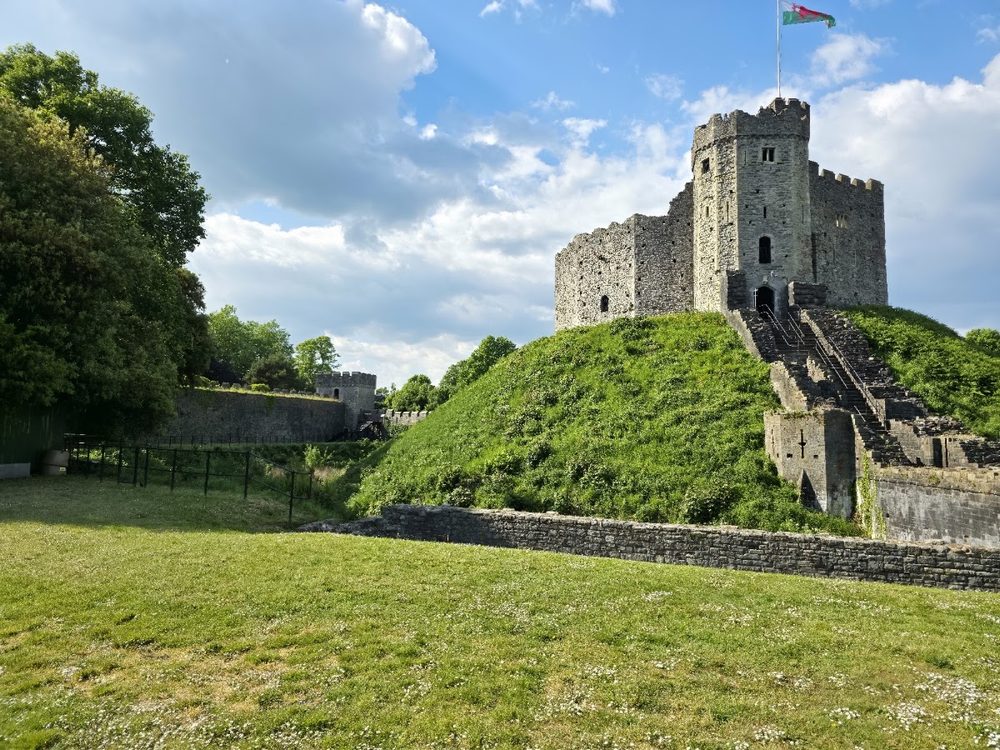
The shape follows the mound rather than a drawing board. Restormel is close to a true circle, roughly forty metres across. Cardiff is a twelve-sided polygon, built about 1140 for Robert Consul, Earl of Gloucester, replacing the timber defences of the first Norman lord of Glamorgan. Others are lopsided ovals or irregular polygons that simply trace the top of the earthwork they sit on.
Conquest mounds, later stone
It is worth being straight about the dates, because the phrase Norman castle tends to collapse a century and a half into a single moment. The mounds are Conquest-era: raised in the decades after 1066, when holding a hostile country meant a garrison within a day's ride of everywhere. The stone rings on top of them are mostly later, from roughly the 1120s to the 1220s, built by the grandsons of the men who dug the mounds.
Restormel makes the gap visible. The earthwork castle was raised there around 1100; the stone ring that now defines the site was probably the work of Robert de Cardinham, lord of the manor between 1192 and 1225. Launceston, twenty miles away, goes one step further and shows the two stone phases stacked: a circular shell first, and then a thirteenth-century round tower dropped inside it by Richard, Earl of Cornwall, so you now climb through a keep within a keep. At Totnes the surviving shell is later still, largely fourteenth-century work on a mound three hundred years older.
By then the idea was already being overtaken. The great round tower had arrived, treated in Why Are Some Castle Keeps Round?, and after that defence moved outward to the curtain wall and the gatehouse altogether. Very few shell keeps were built from scratch after the middle of the thirteenth century.
What became of them
Two fates, roughly. Some rings were left to weather once the castle stopped mattering, and those are the ones that read most clearly today: Restormel, Totnes, Pickering and Carisbrooke among them. A ruined shell keep is an unusually legible ruin, because the plan is a circle and there is not much of it to lose.
The others were absorbed. At Berkeley the twelfth-century shell became the core of a house that has been lived in ever since; at Arundel the keep on the motte sits at the centre of a castle that kept building outward around it; at Tamworth a Tudor and Jacobean house was fitted inside the ring, and part of the shell wall still shows herringbone masonry. Windsor is the grandest case of all. Henry II's stone shell on William's motte is the ancestor of the Round Tower, though the silhouette that reads across the Thames valley today owes much of its height to Jeffry Wyatville, rebuilding for George IV in the 1820s.
So the ring is easy to miss. Half the time it is not presented as a shell keep at all, but as the round bit in the middle of somewhere famous. Once you know the shape, and know why a mound got a ring rather than a tower, a good number of British castles start making a different kind of sense.
Quick answers
What is a shell keep?
A shell keep is a ring of stone wall built around the flat top of a castle motte, taking the place of the timber palisade that stood there first. The strength sits in the ring rather than in a single great tower, and the hall, chamber, kitchen and chapel were ranged against the inside face of the wall around a small open courtyard. Most were built in the twelfth and early thirteenth centuries, almost always on an earthwork that already existed.
Why did they build a ring instead of a tower?
Mostly because of what a motte is. A motte is piled earth and rubble, thrown up quickly and still settling for years afterwards, and it is a poor foundation for the concentrated weight of a great square keep. A ring spreads the load right around the edge of the mound, where the ground is firmest and where the wall can often be founded at or near the old land surface. A ring was also cheaper and quicker than a tower, which mattered when the site was one of dozens a lord had to hold.
How many shell keeps are there in Britain?
Historic England's scheduling record for Restormel gives seventy-one known examples in England and Wales, which makes the shell keep one of the rarer castle forms. The Castle Studies Group has been publishing a site-by-site catalogue of them. Not all seventy-one are visitable or even visible: some survive as a complete ring you can walk round, others as a fragment of wall or a buried footing under later building.
Is a shell keep the same as a motte and bailey castle?
No, but the two go together. Motte and bailey describes the whole earthwork plan: a mound with a tower on it and an enclosed yard beside it. A shell keep is one of the things that could later be built on the mound, once the timber tower had rotted or burned and the site was thought worth rebuilding in stone. Almost every shell keep sits on a motte raised a generation or two earlier.
Which is the best-preserved shell keep to visit?
Restormel in Cornwall is the usual answer, and a fair one: a near-circular ring about forty metres across, standing to most of its height, with the outlines of the hall, kitchen and chapel still readable against the inside wall. Cardiff's twelve-sided keep is the finest in Wales and sits in the middle of a city. Launceston, Totnes, Carisbrooke and Arundel all give you the shape clearly, and Windsor's Round Tower is the same idea grown into a royal landmark.
Where to stand inside the idea
Ten castles on the roll where a shell keep is the thing to look for, from bare rings to the ones swallowed by a house:
Restormel Castle
The most complete of them all: a near-circular ring above the Fowey, with the hall, kitchen and chapel still readable against the inside wall. Free to walk right round the top.
Cardiff Castle
A twelve-sided shell keep of about 1140, raised for Robert Consul, Earl of Gloucester, and still crowning its Norman motte in the middle of the modern city.
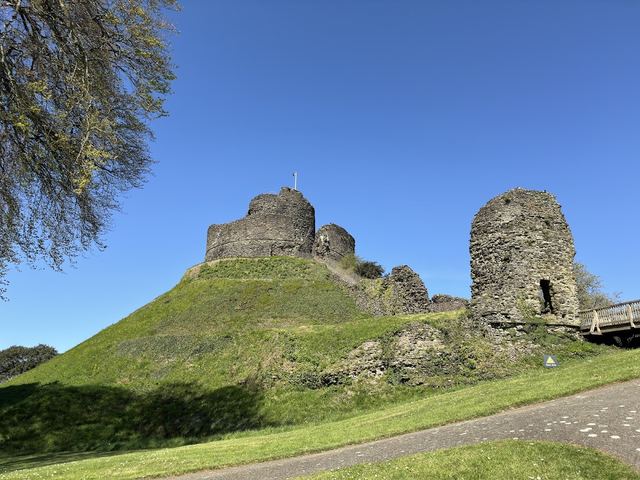
Launceston Castle
A keep inside a keep: Richard, Earl of Cornwall dropped a thirteenth-century round tower into the middle of an earlier circular shell, so you climb through both.
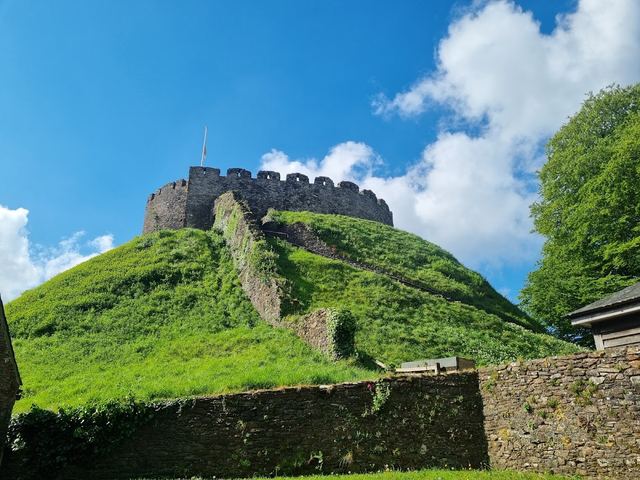
Totnes Castle
A small, almost perfect stone ring on a steep Norman mound above the town. The surviving shell and bailey wall are largely fourteenth-century work on a much older earthwork.
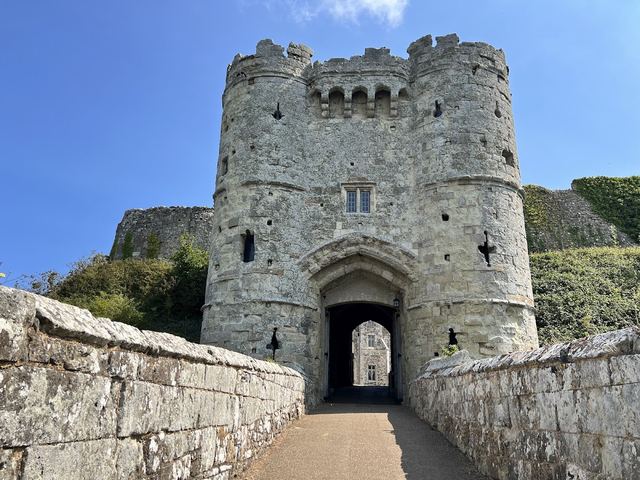
Carisbrooke Castle
The shell keep sits at the top of a long flight of steps up the motte, with the rest of the castle spread out below it and a Norman plan still easy to read.
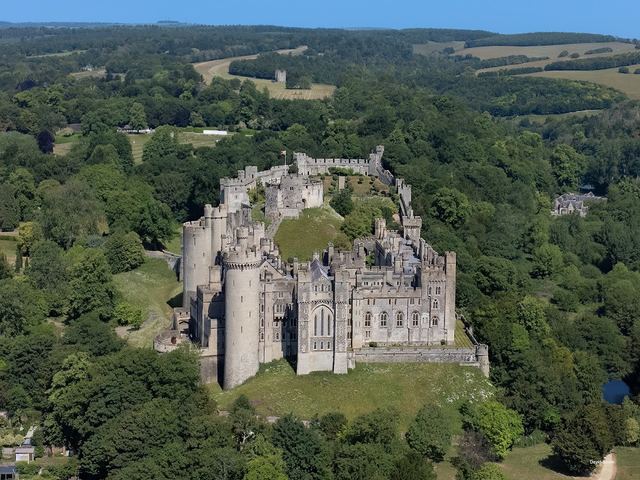
Arundel Castle
A twelfth-century shell keep on the motte at the heart of a castle that kept growing round it, and one of the few you reach through a still-lived-in house.
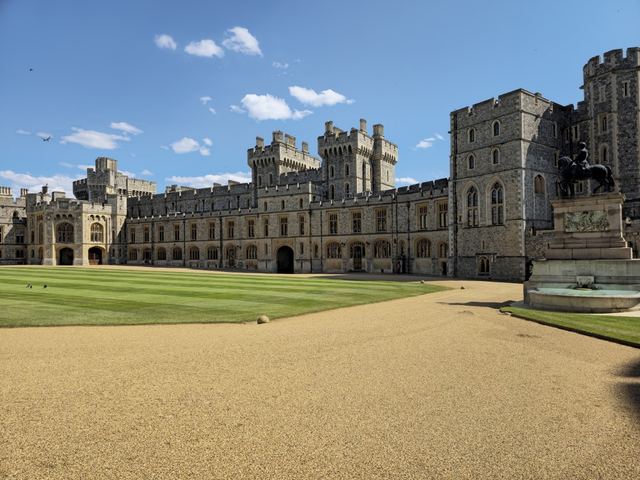
Windsor Castle
The Round Tower began as a stone shell on William's motte under Henry II. Its present height owes a great deal to Jeffry Wyatville's rebuilding for George IV.
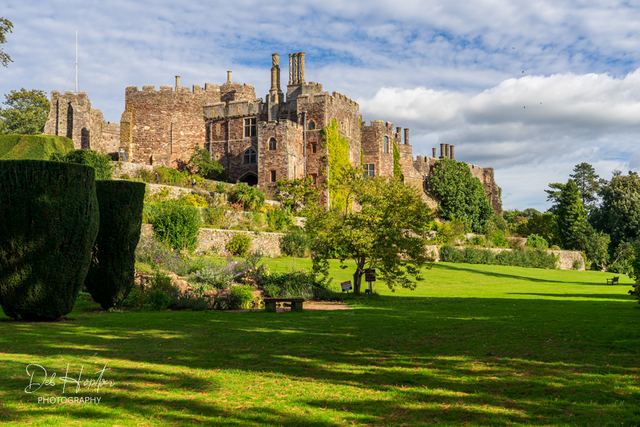
Berkeley Castle
The twelfth-century shell was never left to fall down. It was absorbed into the house that grew around it, and the same family has lived there for centuries.
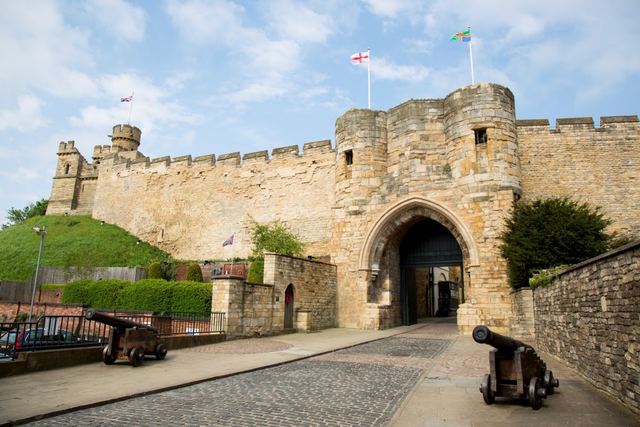
Lincoln Castle
The Lucy Tower is a shell keep on the larger of Lincoln's two mottes, reached along a wall walk that runs the whole circuit of the castle.

Tamworth Castle
A shell wall with herringbone masonry in it, wrapped round a mound beside the Tame, with a Tudor and Jacobean house built inside the ring.