Guide No. 36 · The Castle Rolls
Arrow Loops, Murder Holes and Machicolations
Most visitors photograph the towers and walk straight past the openings that did the actual fighting. Three of them are worth learning, because between them they date a building and give away what it was really for.
Arrow loops, murder holes and machicolations are the three openings through which a castle's defenders reached an enemy who could not reach back. An arrow loop is a narrow slit in a wall, widening inside into a splayed recess so that one shooter gets a broad arc through a target a few inches across. A murder hole is an opening in the vault above a gate passage, worked from the room overhead. A machicolation is a stone parapet carried out on corbels with the floor left open between them, so that anything can be dropped straight down the wall face. They solve the same problem in three places: the wall, the gate and the parapet. And all three went on being built as ornament long after they stopped being useful, which is why learning to read them tells you a building's date about as often as it tells you its purpose.
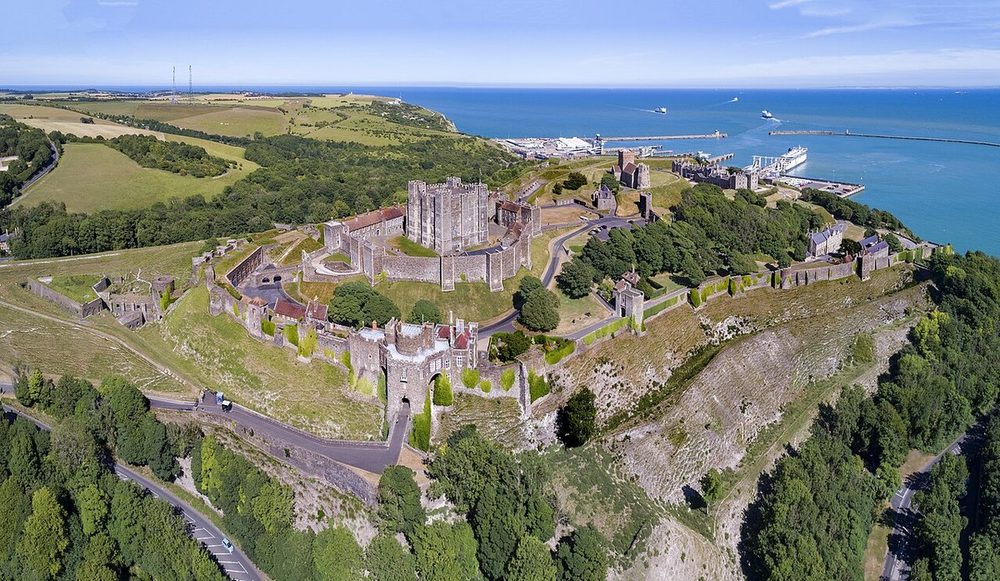
The loop, and the man behind it
An arrow loop is easy to misread from outside, because from outside it is just a scratch in a wall. The whole design is on the inside. Behind the slit the masonry opens out into an embrasure wide enough to stand and turn in, usually with a stepped or sloping sill, so that a single archer can cover a wide arc of ground by moving his body rather than the hole. An attacker shooting back has a slot a few inches across to hit at forty paces, in shadow, from below. The trade is heavily in the defender's favour, and it is worth remembering the corollary: a loop can only be worked by one man at a time, so the number of loops on a face is close to the number of defenders that face could hold.
They arrive in Britain later than most people expect. Roman and late antique fortification used shooting slits, but the medieval revival is a matter of the very end of the twelfth century, and the earliest surviving English examples are usually credited to Dover and Framlingham. Dover's Avranches Tower, built in the 1180s, is the set worth travelling for: a polygonal tower carrying two tiers of loops, arranged to cover the re-entrant angle where the outer curtain kicks back on itself. Framlingham is the one to walk, because its curtain wall-walk survives complete round thirteen towers and you can stand where the loops were served instead of squinting up at them from the grass.
After that the type multiplies. The plain vertical slit gains a horizontal bar and becomes the cross-shaped or cruciform loop of the thirteenth century, usually explained as widening the field of view and allowing a crossbow to be shot level; a crossbow is held flat, and a slit built for a longbow drawn upright does not suit it. A round hole opened at the foot of the slit, an oillet, does the same work downwards and lets a defender reach the base of his own wall. At Caernarfon the idea is taken to its conclusion: the south curtain carries wall-passages at more than one level behind the loops, so that one face of the castle could be shot from several heights at the same moment.
Not all of it was ever used. Historians looking closely at individual buildings, the great tower at Kenilworth among them, have argued that some loops are sited where nothing useful could be covered, or are unreachable from any floor, and that what they were doing was announcing a lordly, martial building rather than defending one. That argument is worth carrying round a castle with you. It is often the difference between a wall and a costume.
Murder holes, and the oil that mostly was not there
The murder hole has the best name and the worst reputation in castle architecture. It is an opening, or a row of them, in the stone vault over a gate passage, worked from the chamber above, and it belongs to the sequence of obstacles our guide to the castle gatehouse sets out in full: drawbridge, doors, portcullis, passage, portcullis again. Anyone caught between the two grates is in a stone box with people standing on the lid.
What came through the lid is where the popular account goes wrong. Stones and shot, certainly. Water, constantly, and that is the use with the firmest documentary footing: the late Roman military writer Vegetius recommends the arrangement specifically as a way of dousing a fire lit against the gate doors, and burning the doors was the single most obvious thing an attacker could try. Boiling oil, the answer everyone gives, was expensive, difficult to heat in useful quantity, awkward to move along a parapet in a fight and a genuine fire hazard to the people carrying it. A handful of scattered references to hot oil survive from the whole medieval period. The murder hole was, most of the time, a fire hose that could also kill you.
Carrickfergus is the clearest one to stand under in these islands. The vaulted entrance passage, the portcullis grooves at either end and the murder hole above them were inserted into an older castle by Hugh de Lacy, who died in 1248 without seeing the work finished; it was completed around 1250 under Henry III. You walk in underneath it. At Warwick the same arrangement survives inside a gatehouse and barbican built as one piece of engineering under Thomas de Beauchamp in the middle of the fourteenth century, with machicolated towers on either side.
From hoarding to machicolation
The problem at the top of a wall is the same one as at the gate. A defender who wants to reach the men at the foot of his own masonry has to lean out over a parapet, at which point he is the exposed one. The early answer was the hoarding: a covered timber gallery built out from the wall-head when trouble was expected, floored so that the ground directly below could be seen and shot through, and hung with fresh hides to make it harder to burn. It was framed on heavy joists called putlogs, dropped into sockets left in the masonry for the purpose.
Almost no medieval hoarding survives, for the reason you would expect. The sockets do. A level row of small square holes running along a wall just under the parapet is often the ghost of one, and it is one of the more satisfying things to notice on a visit. The honest caveat is that ordinary construction scaffolding was built on putlogs too, and left the same holes, so the row alone does not prove a hoarding. A defensive row sits high and level along the wall-head; a scaffolding row tends to climb or repeat at working heights.
Machicolation is that gallery rebuilt in stone. The parapet is carried out beyond the wall face on projecting corbels and the floor between them is simply left open. It costs more and it is heavier, and it repays both, because masonry does not burn, does not rot, does not need hides, and does not have to be assembled while an army is on the horizon. Through the thirteenth and fourteenth centuries it displaces the timber version at the places that mattered most, above all over gates. The Great Tower at Raglan, begun around 1435, shows the finished idea in one object: a hexagonal tower standing in its own moat, studded with arrow loops and machicolated all round the parapet, with gargoyles carved into the corbels because by then the corbels were being looked at.
When the detail stops meaning anything
That last point is the one worth carrying home. Every feature in this guide outlived its usefulness and went on being built anyway, because by then it read as lordship.
Tattershall is the honest example. Ralph Cromwell, Lord Treasurer of England, built his brick great tower in the 1430s and 1440s with machicolations round the top, and also with traceried windows too large to defend, walls too thin to matter and too many ways in. Its turrets rise well clear of the roofline and are finished in brickwork styled to look machicolated. Nobody was deceived and nobody was meant to be. The machicolation is a quotation.
Bodiam sits on the line and is argued about for exactly that reason. Sir Edward Dalyngrigge got his licence in October 1385, at a moment of real French raiding, and fitted the castle with keyhole gunports, a round hole for a hand cannon's barrel with a slit above it to sight through, which was advanced for the date. Several of them are placed where they could not usefully cover anything. Whether that makes Bodiam a serious defence with sloppy detailing or a soldier's dream house wearing the right clothes is still an open question among castle historians, and the gunports are the best evidence either side has.
By the time you reach Craigievar, finished in 1626, the argument is over. The corbelling, the turrets and the mock defences run round the top of a house that was never going to be attacked, and they are there because that is what a laird's house looked like. The openings had become a vocabulary. Learning to read them is mostly learning to tell the sentences from the quotations.
Quick answers
What is an arrow loop?
An arrow loop, also called an arrowslit or loophole, is a narrow vertical opening in a wall or tower for shooting through. The slit on the outside face is only a few inches wide, but inside it opens into a splayed recess called an embrasure, often with a stepped sill and enough floor for a man to stand and turn. The shape does two things at once: it gives the archer or crossbowman a wide arc of fire, and it gives anyone shooting back a target a few inches across at forty paces. The term balistraria is used for a loop built specifically for a crossbow.
Why are some arrow loops cross-shaped?
The cross-shaped or cruciform loop, with one or more horizontal bars cut across the vertical slit, spreads from the late twelfth and thirteenth centuries. The usual explanation is that the horizontal arm widens the field of view and allows lateral shooting without exposing the shooter, which suits a crossbow held level rather than a longbow drawn upright. A round hole at the foot of the slit, sometimes called an oillet or a fishtail, does the same job downwards, letting a defender reach the base of his own wall. Not every variation had a clear function, and some are best read as a mason's house style.
What were murder holes actually for?
Both fighting and firefighting, and the firefighting is far better documented. A murder hole is an opening in the vault of a gate passage, worked from the room above, so that defenders could shoot or drop stones on anyone trapped between the portcullises. It was also the way to pour water on a fire lit against the gate doors, which is the use the late Roman military writer Vegetius recommends the arrangement for. Boiling oil is the popular answer and almost certainly the wrong one: oil was expensive, hard to heat in quantity, awkward to carry along a parapet and a serious fire risk to the defenders. Only a handful of scattered references to hot oil survive at all.
What is a machicolation?
A machicolation is a stone parapet carried out beyond the wall face on projecting corbels, with the floor between the corbels left open, so defenders on the wall-walk can drop or shoot straight down the face of the wall without leaning over it. It is the permanent version of a timber hoarding: the same overhang, built in masonry rather than wood. The advantage is that stone does not burn, does not rot, and does not have to be put up when a siege is expected. Machicolation spreads through the thirteenth and fourteenth centuries and survives as decoration long after that.
What is a hoarding, and how do I spot one that has gone?
A hoarding was a covered timber gallery built out from the top of a wall when fighting was expected, giving the same downward reach a machicolation gives permanently. It was framed on heavy joists called putlogs, and hung with fresh hides to stop it being set alight. The timber has almost never survived, but the sockets often have. A regular row of small square holes running along a wall just below the parapet is usually putlog holes, and it is worth pausing over them, because the same holes are also left by ordinary scaffolding during construction. Position and regularity are the clue: a defensive row sits high and level, a scaffolding row climbs.
Where to stand inside the idea
Ten castles on the roll where the loop, the hole or the corbel is the thing worth finding:
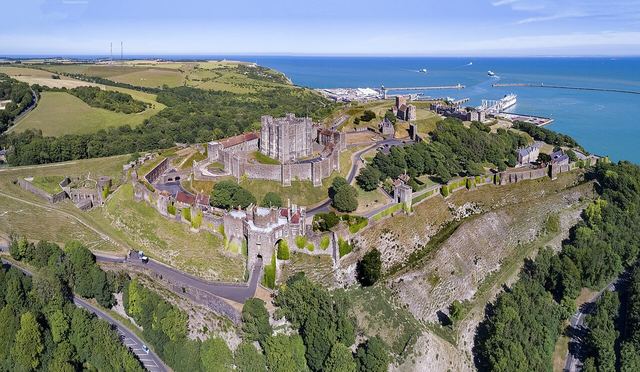
Dover Castle
The Avranches Tower of the 1180s, with two tiers of arrow loops covering the angle where the outer curtain kicks back on itself. Among the earliest surviving arrow loops in England.
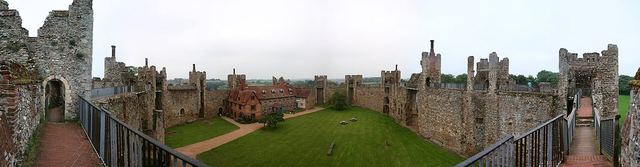
Framlingham Castle
The other early set, and the one you can walk. A complete curtain wall-walk round thirteen towers, so you stand where the loops were served rather than looking up at them.
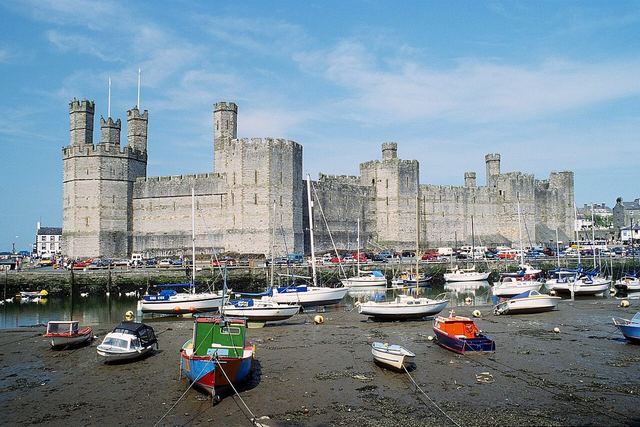
Caernarfon Castle
Wall-passages at more than one level behind the loops on the south curtain, so a single face of the castle could be shot at from several heights at once.
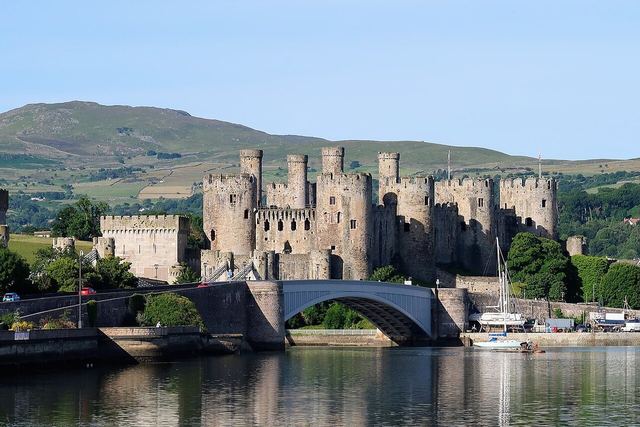
Conwy Castle
Go to the town wall near the Mill Gate for the row of twelve latrines corbelled out over the drop. They look exactly like machicolations and are nothing of the kind.

Carrickfergus Castle
The murder hole and the portcullis grooves in the gatehouse vault, inserted by Hugh de Lacy before his death in 1248 and finished around 1250. You walk under it to get in.
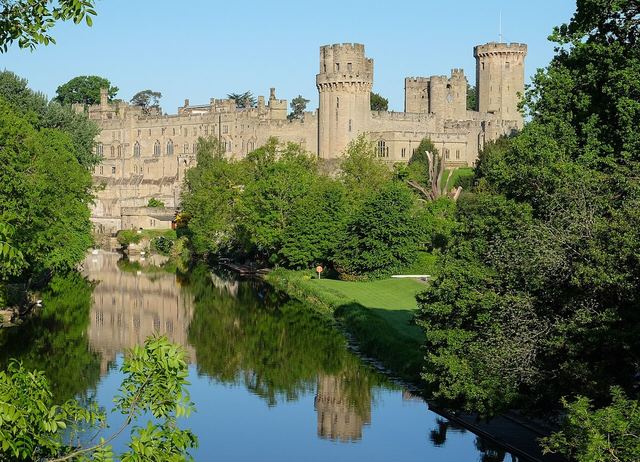
Warwick Castle
Machicolated towers either side of a gatehouse and barbican built as one scheme under Thomas de Beauchamp, with the murder holes still overhead in the passage.
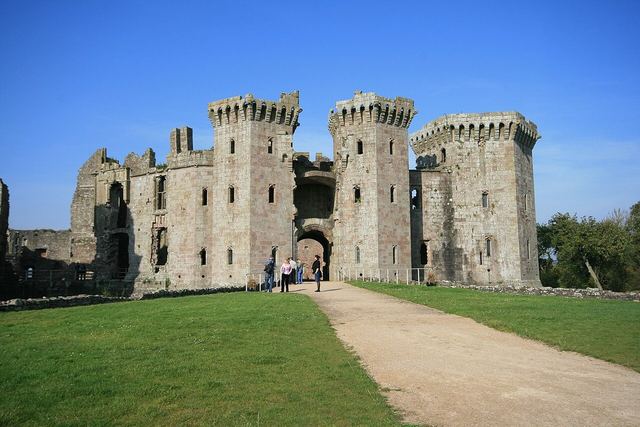
Raglan Castle
The hexagonal Great Tower of about 1435, moated on its own, studded with arrow loops and machicolated at the parapet, with gargoyles worked into the corbels.
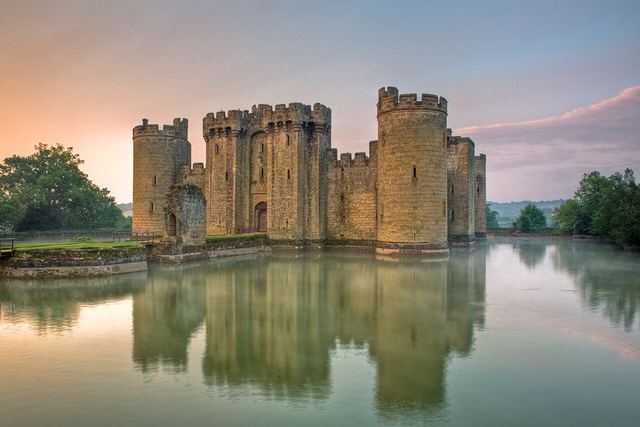
Bodiam Castle
Keyhole gunports of 1385, a round hole for the barrel under a slit for sighting. Several are set where they could not usefully cover anything, which is half the argument about Bodiam.
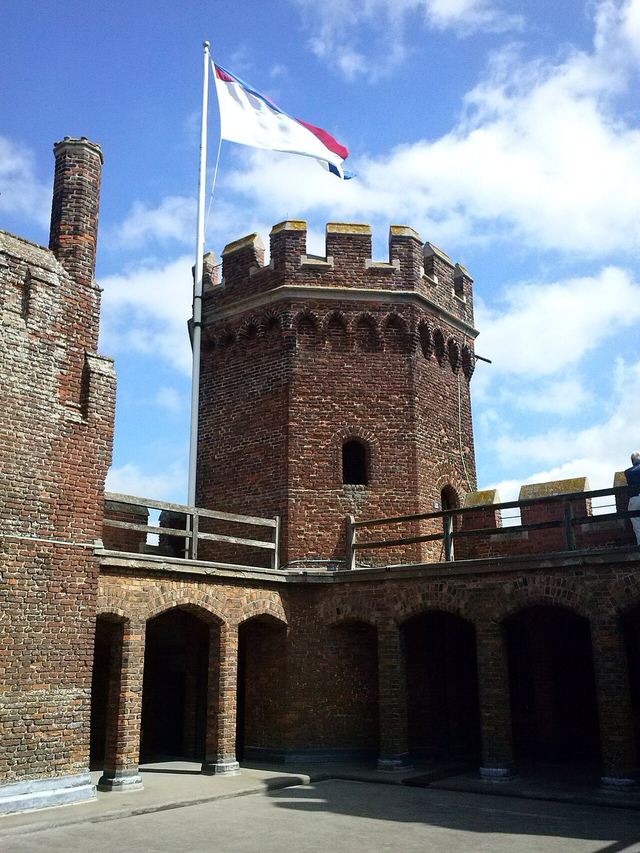
Tattershall Castle
Brick machicolations of the 1430s on a tower with windows far too large to defend, and turret tops built to look machicolated. Ornament quoting a weapon.
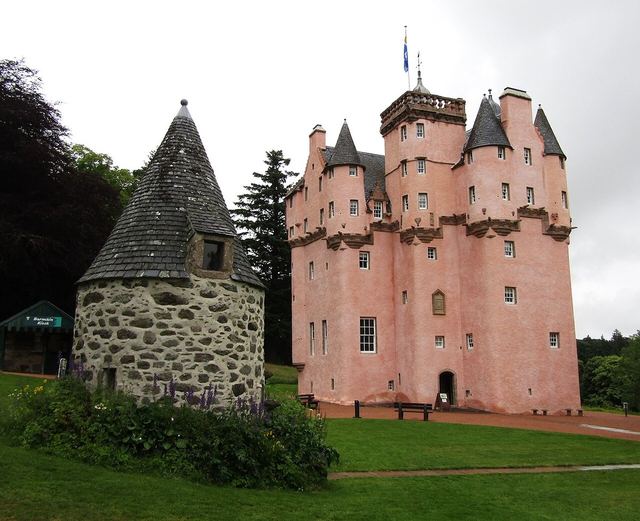
Craigievar Castle
The Scottish afterlife of the idea, finished in 1626: corbelling, turrets and mock defences carried round the top of a house that was never going to be attacked.