Guide No. 28 · The Castle Rolls
Ringwork Castles: the Norman Castle With No Motte
Everyone knows the mound. Far fewer people know that a good many early Norman castles never had one, and were built instead as a ring of bank and ditch around flat ground. Here is why a builder made that choice, and where the ring is still there to walk round.
A ringwork is an early castle built as a bank and ditch enclosing a level platform, with a timber palisade along the top of the bank and the hall, stores and chapel standing on the natural ground inside. There is no mound. Where a walled yard was attached to it, archaeologists call the arrangement a ringwork and bailey, and it did the same job as a motte and bailey: a defensible base that unskilled labour could dig in a few weeks. A survey by D. J. Cathcart King and Leslie Alcock, published in 1969, counted 198 sites in England and Wales they were confident were ringworks, with about fifty more listed as possible.
What the builder was actually choosing between
The two designs solve the same problem in opposite directions. A motte lifts the strongpoint above everything around it, which buys height for lookout, an obstacle an attacker has to climb under fire, and a last redoubt if the bailey falls. It costs an enormous amount of moved earth, and it leaves the lord with a cramped platform at the top: a mound wide enough to carry a hall would be a small hill.
A ringwork gives that space back. Everything sits on undisturbed ground, so the enclosure can be as large as the site allows and can carry a stone building from the start without waiting for a made-up mound to settle. What it gives up is height. The defence is the ditch, the bank and the palisade on top of it, with no second line to fall back to. That was an acceptable trade for a lord holding quiet country, or one whose ground offered something better than height.
That clip comes from a small university channel rather than a large history one, which is worth saying plainly: it is here because it shows a ringwork being dug rather than drawn. The Lowther project is run by the University of Lancashire with Lancaster University, Allen Archaeology and the Lowther Castle and Gardens Trust, and the ringwork it is working on sits in the park of Lowther Castle, several centuries older than the Gothic mansion on the roll.
Ground conditions usually decided it
Piling a motte needs both spoil and ground that will carry the load. Thin soil over bedrock gives you neither, and soft waterlogged ground will not hold a mound without it slumping. On sites like that a ringwork is not the cheaper option so much as the only sensible one. Speed pushed the same way, since a bank thrown up from a ditch dug in front of it produces a defensible line far faster than a mound raised high enough to matter.
There was a third argument, and it is the most visible one on the ground today: sometimes the enclosure was already there. Britain was covered in usable earthworks by 1066, and a Norman lord with a few weeks and a few hundred conscripted labourers had every reason to use them.
Reusing what was already on the hill
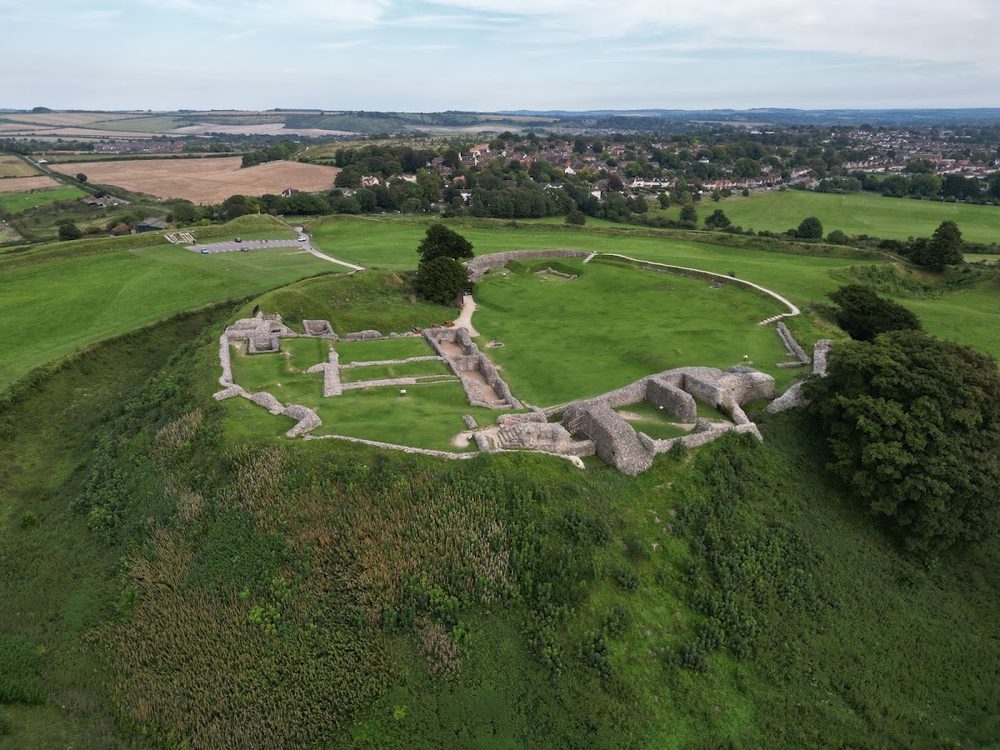
Old Sarum is the clearest case. William I founded an earth and timber ringwork and bailey inside the ramparts of an Iron Age hillfort above Salisbury, on a spot that had already held a Romano-British settlement and a Saxon burh and mint. He paid off his army there in 1070. Two concentric rings survive, one prehistoric and one Norman, and the smaller inner one is the castle.
Loughor did the same thing with Roman work. Henry de Beaumont built an oval ringwork there about 1106 on the remains of the fort of Leucarum, which gave him a defensible corner and a commanding position over the road and ford onto Gower without starting from bare ground. At Lydford the Normans put a small ringwork, roughly 55 metres by 60, into a corner of the Anglo-Saxon burh in the years after the 1068 revolt in Devon, so that the town's own defences did part of the work for them. The stone tower most visitors photograph at Lydford is a later and separate building.
What happened to the ring afterwards
Ringworks that mattered went the same way mottes did: the timber was replaced with stone, and the shape of the original earthwork decided what the stone looked like. The simplest route was to build the wall directly on the ring bank, which is why Restormel in Cornwall is so nearly a perfect circle. Its ringwork was raised after 1086, and the stone wall that later replaced the palisade simply followed the line it was given.
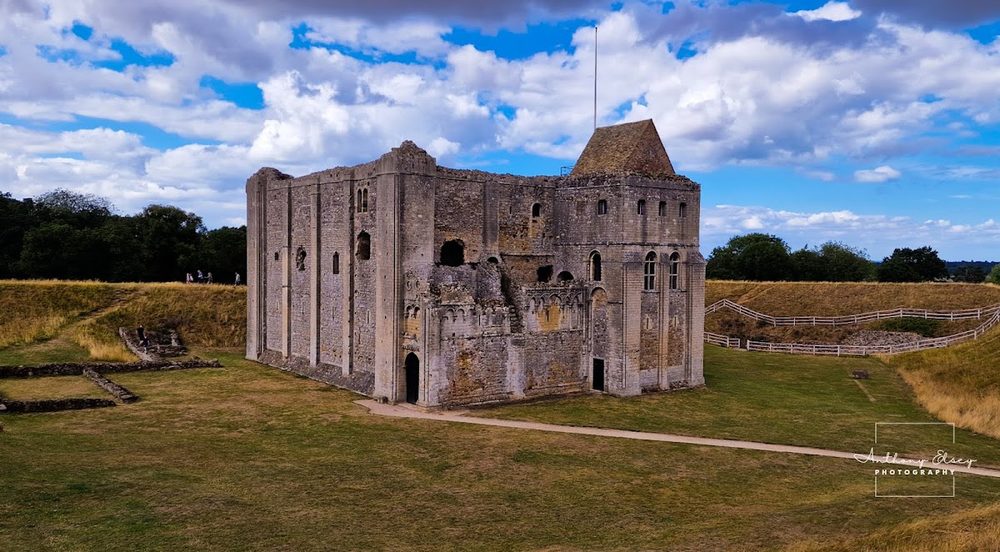
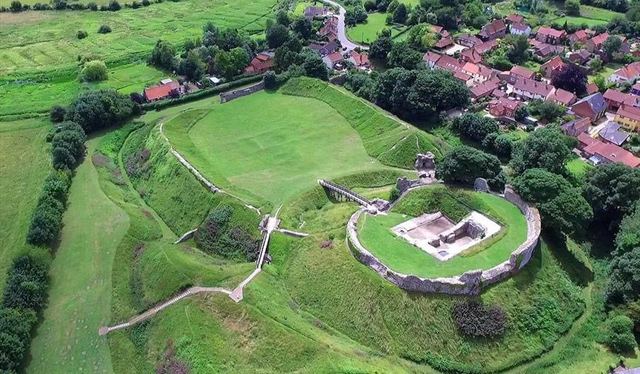
The other route was to plant a building inside the ring and leave the earthwork as the outer defence. Castle Rising is the finest example in the country. William d'Aubigny's hall keep of about 1138 stands in the middle of an oval ringwork with a bank and ditch so substantial that the keep is invisible from outside until you cross the bridge. At Castle Acre, excavation in the 1970s found something more surprising still: the first stone building inside the earthwork was a large and sophisticated house with only modest defences around it, put up by William de Warenne's family in the 1070s. It was replanned as a proper keep in the first half of the twelfth century, and by the look of the evidence never finished as intended, with occupation shrinking back into the north half.
In Wales the ringwork was the standard opening move of the conquest of the south. Ogmore was begun about 1106 by William de Londres, Coity by Payn de Turberville in the same push into Glamorgan, and Cilgerran by Gerald of Windsor around 1108 on the cliff above the Teifi. All three were earth and timber first and stone afterwards, and at Cilgerran the drum towers people travel to see are a thirteenth-century rebuild standing on ground first enclosed two centuries earlier.
The rest were left alone, and that is why the type is easy to miss. A ringwork that never got its stone is a bank in a field, low, circular and easily read as something prehistoric or as nothing at all. It takes a moment on the ground to see that the ditch is outside the bank, the enclosure is level, and somebody once thought it worth digging.
Quick answers
What is a ringwork castle?
A ringwork is an early castle built as a bank and ditch enclosing a level platform, with a timber palisade on top of the bank and buildings inside. Unlike a motte and bailey it has no mound at all. Many had a walled yard attached, which archaeologists call a ringwork and bailey, and the arrangement served the same purpose as a motte and bailey: a defensible strongpoint that could be dug by unskilled labour in weeks.
What is the difference between a ringwork and a motte and bailey?
The strongpoint. A motte and bailey puts the lord's tower on a raised mound; a ringwork puts the whole castle on the natural ground and relies on the bank, ditch and palisade around it. That gives a ringwork a larger level area to build on and saves the enormous labour of piling up a mound, at the cost of the height a motte gives you for lookout and for defence in depth.
How common were ringwork castles?
A substantial minority of early castle building rather than the norm. A survey of England and Wales published in 1969 by D. J. Cathcart King and Leslie Alcock counted 198 sites they were confident were ringworks, with about fifty more considered possible. That is far fewer than the number of known mottes, but enough that the ringwork is a standard type rather than an oddity.
Why would a Norman lord build a ringwork instead of a motte?
Usually the ground decided it. A mound needs a great deal of spoil and ground that will carry the weight, so thin soil over bedrock, or soft waterlogged ground, both argue for a ringwork. Speed and available labour mattered too, and so did opportunity: if there was already an Iron Age hillfort, a Roman fort or a Saxon town rampart on the spot, throwing a bank across a corner of it was much quicker than starting from nothing.
Can you still visit ringwork castles in the UK?
Yes, and several are free. Castle Rising and Castle Acre in Norfolk and Old Sarum in Wiltshire are in English Heritage care with the earthworks still very legible; Restormel in Cornwall has its stone wall standing on the old ring bank. In Wales, Ogmore, Coity and Loughor are free to enter and all three began as ringworks. Lydford in Devon has its Norman ringwork as a separate earthwork from the later stone tower.
Where to stand inside the idea
Ten places on the roll where a ringwork was the first castle on the site, from bare earthwork to fully rebuilt stone:
Castle Rising Castle
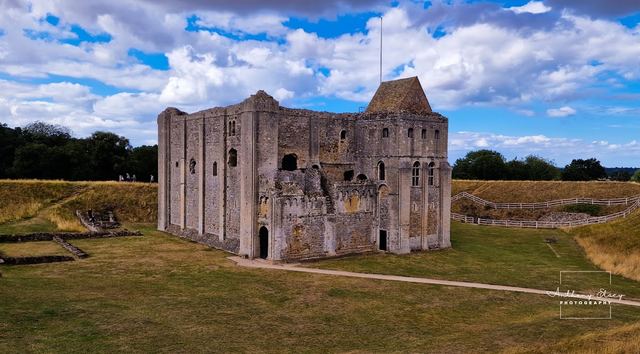
The clearest ringwork in England. William d'Aubigny's great hall keep of about 1138 sits inside an oval bank and ditch so deep that the keep is hidden from outside until you are on the bridge.
Castle Acre Castle and Bailey Gate
Excavation showed the first stone building here was a lightly defended country house of the 1070s inside its earthwork, replanned as a keep in the twelfth century and never finished as designed.
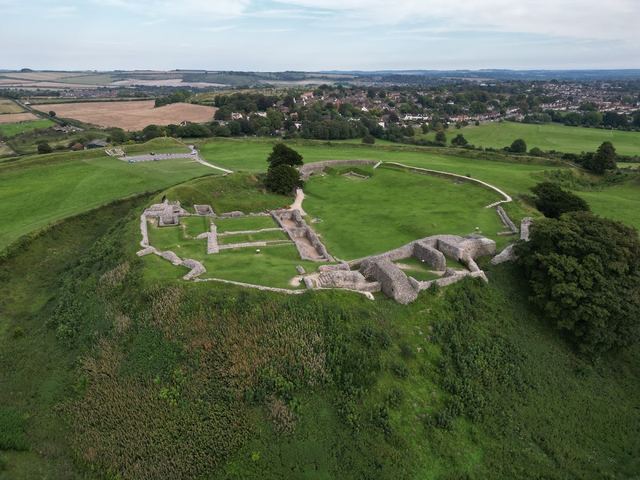
Old Sarum
William I put an earth and timber ringwork and bailey in the middle of a much older Iron Age hillfort, and paid off his army on the site in 1070. Both rings are still there to walk.
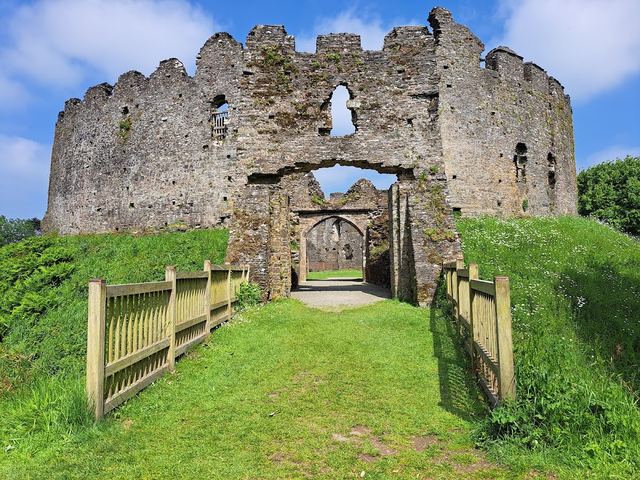
Restormel Castle
A ringwork raised after 1086 that later had its stone wall built straight onto the ring bank. The result is one of the most perfectly circular castles in Britain.
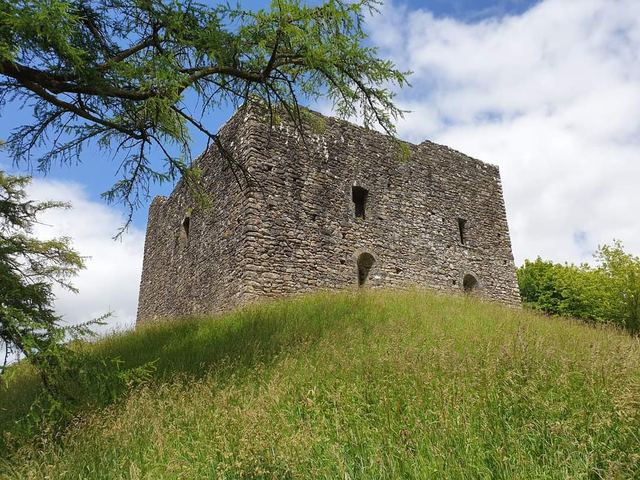
Lydford Castle and Saxon Town
The Norman ringwork here went into a corner of the Anglo-Saxon burh after the 1068 revolt, using the town's own defences on two sides. It is a separate site from the later stone tower.
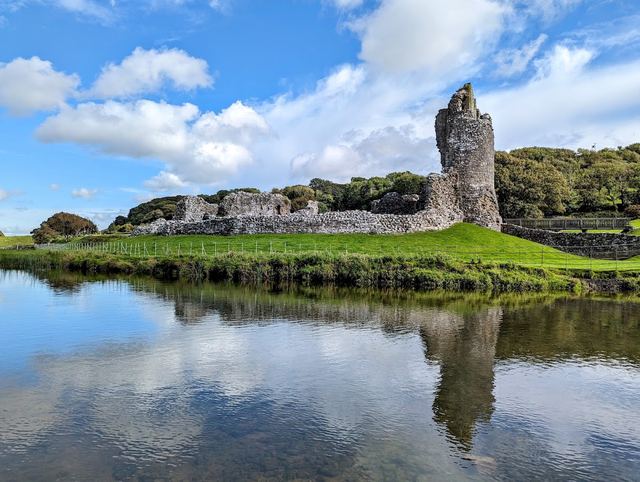
Ogmore Castle
Begun about 1106 by William de Londres as an earth and timber ringwork above the Ewenny, later rebuilt in stone. Free to enter, beside the well-known stepping stones.
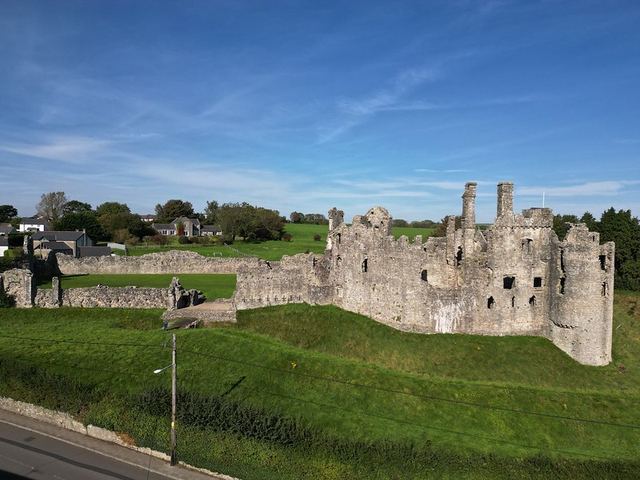
Coity Castle
Payn de Turberville raised a ringwork here in the years after the Norman push into Glamorgan, and the later stone curtain follows the line of the original ring. Free to enter.
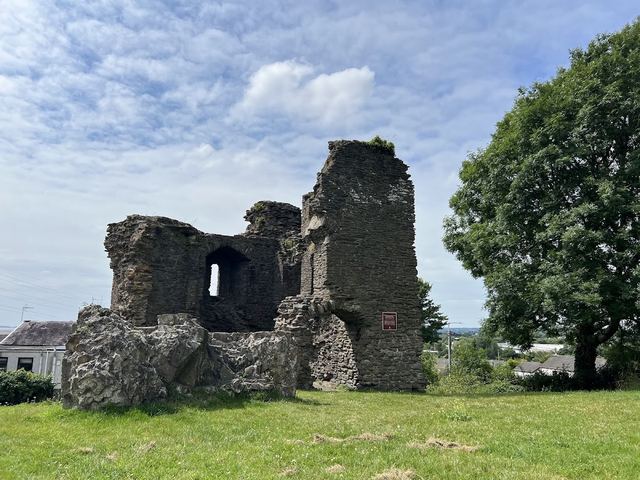
Loughor Castle
An oval ringwork built about 1106 by Henry de Beaumont on the remains of the Roman fort of Leucarum, reusing Roman defences to guard the road and ford across to Gower.
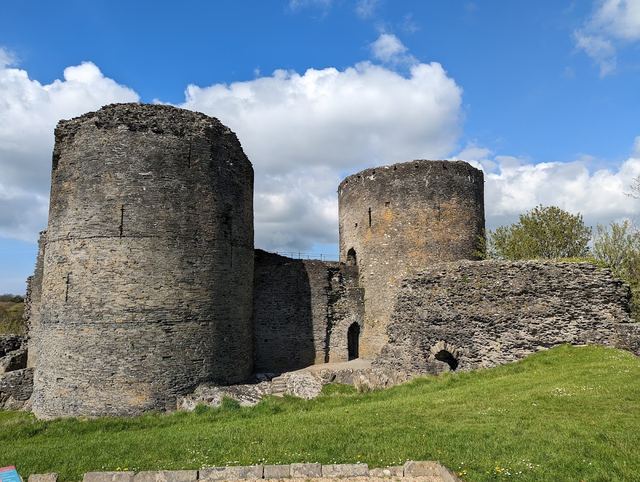
Cilgerran Castle
Founded by Gerald of Windsor around 1108 as an earth and timber ringwork on the cliff above the Teifi. The twin drum towers visitors come for are a thirteenth-century rebuild on that footprint.
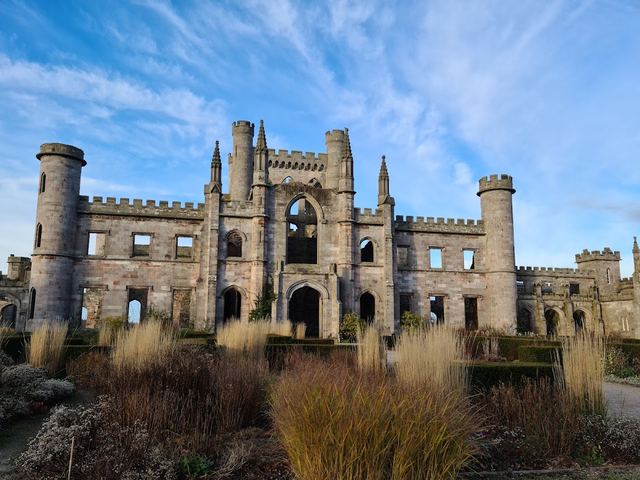
Lowther Castle
The castle on the roll is Robert Smirke's Gothic mansion, but a Norman ringwork and its village lie in the park and are being excavated, with the first season broadcast on Digging for Britain.