Guide No. 24 · The Castle Rolls
Sea Castles: How Britain Defended Its Coast
Rome fortified the same beaches the Tudors did. Henry VIII's gunners stood where Victorian artillerymen would later stand, and the men of 1940 stood there too. Britain has been rebuilding one coastline for seventeen centuries, and the reason is always the same.
A sea castle is a castle or fort built to control the water rather than the land - a harbour, an anchorage, a river mouth, or a beach flat enough to land an army on. Britain has two distinct kinds. The medieval sort held a port and a supply line, and could be fed by ship when an enemy held the country behind it. The artillery sort, from the 1500s onwards, was built the other way round: low, thick-walled and packed with guns pointing seaward, designed to shoot at ships rather than to house a lord. What links them is geography. There are only so many places on this island where a fleet can safely anchor or an army can safely land, and every era that felt threatened went back and fortified the same short list again.
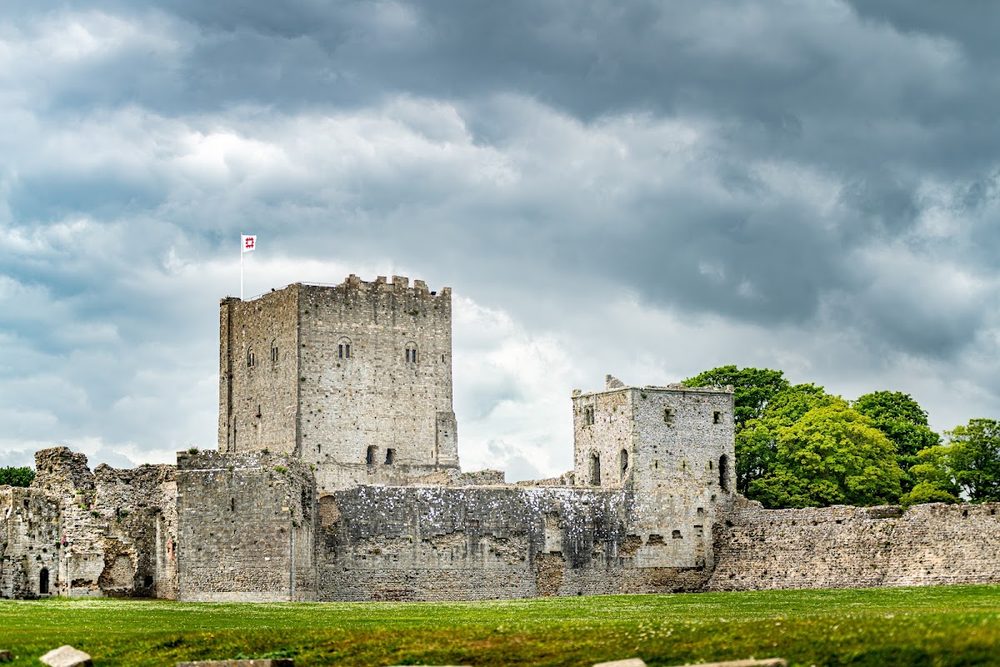
The Roman shore
The first system was Roman. Over the course of the 3rd century a chain of heavy walled forts went up along the south and east coasts against seaborne raiders, and a late Roman administrative document, the Notitia Dignitatum, lists nine of them in Britain under an officer titled the Count of the Saxon Shore. Whether that name meant the coast the Saxons raided or the coast the Saxons had settled is still argued over, and the honest answer is that nobody knows.
Three of them are on this roll. Portchester, at the head of Portsmouth Harbour, encloses about nine acres inside walls that survive more completely than any other Roman defences in northern Europe. Burgh Castle in Norfolk still stands in long stretches above the marshes. Pevensey was Roman Anderitum, and its walls were still standing usefully enough in 1066 that William the Conqueror landed beside them and put his first fortification inside them rather than building from scratch. At Portchester the Normans did the same thing two decades later, tucking a keep into one corner of a fort that was already eight hundred years old. That is the pattern for everything that follows: nobody starts again if there is already a wall on the right headland.
What a medieval coastal castle was actually for
Medieval castles on the coast were rarely built to fire at ships, because until gunpowder there was very little they could usefully fire. They were built because the sea was the fastest road in the country, and whoever held the harbour held the traffic on it - trade, customs, troops, grain, messengers.
The clearest demonstration is Edward I's Welsh programme. Harlech has a fortified stairway running down the rock to a water gate that the sea once reached, so that ships could reach the castle when Welsh forces held every road inland; the shoreline has since retreated and left the stair pointing at fields. Beaumaris was given a tidal dock so seagoing vessels could unload against the wall itself. Conwy and Caernarfon both sit on water for the same reason. A castle that can be resupplied by sea does not have to win the countryside; it only has to outlast whoever is besieging it.
The same logic explains the great coastal fortresses further north and west. Dover was called the key of England, and a French army under Prince Louis proved the point in 1216-17 by mining and bringing down part of its eastern gatehouse without ever taking the place. Carrickfergus commanded the sea approach to the north of Ireland from a rock in Belfast Lough. Bamburgh sat on its crag above the Northumberland beaches - and in 1464 became the first castle in England brought down by artillery, when the Earl of Warwick's guns broke it after a long siege. That was the moment the whole coastal argument changed.
Gunpowder rebuilds the coast
Once guns could break walls, walls had to be rebuilt to absorb guns and to mount them. Scotland got there early: Blackness, the ship-shaped fortress on the Firth of Forth, was remodelled in the 16th century with thickened, artillery-proof walls and gun positions covering the water.
England's version arrived all at once. In 1539, with Henry VIII excommunicated and the Catholic powers of Europe temporarily at peace with one another, the Crown ordered a coordinated programme of gun forts along the south and east coasts, paid for in large part out of the dissolved monasteries. Deal, Walmer, Pendennis, St Mawes, Southsea, Calshot and Hurst all belong to it. They look nothing like castles because they are not: they are low, rounded gun platforms with almost no domestic life in them at all. Henry watched the Mary Rose go down off Southsea in July 1545 from the fort he had just built there, which is about as direct a piece of evidence as this subject offers that the threat was taken seriously.
The Elizabethans extended the idea inland up the rivers, to protect the fleet where it lay at anchor. Upnor Castle was begun in 1559 to cover the Navy's Medway moorings at Chatham, and in June 1667 it got the test almost nothing else on this page ever got. A Dutch fleet under De Ruyter came up the river, broke the defensive chain, burned laid-up English warships and towed away the flagship Royal Charles. Upnor's gunners fired until, in Pepys's account, they had scarcely a gun left on its carriage. They did not stop the raid. They did help force the fleet to withdraw before Chatham dockyard itself went up, which is the sort of half-success that coastal defence usually produces.
The other lesson of the gunpowder century is that siting mattered more than size. Tudor King Charles's Castle was built on the high ground above New Grimsby on Tresco in the 1550s, and it was almost useless: to hit a ship in the channel below, its guns would have had to be depressed so steeply that the shot would have rolled out of the barrel. After Parliament took the Isles of Scilly in 1651, Sir Robert Blake simply built a new tower down at the water's edge - Cromwell's Castle - where the guns could reach what they were aimed at.
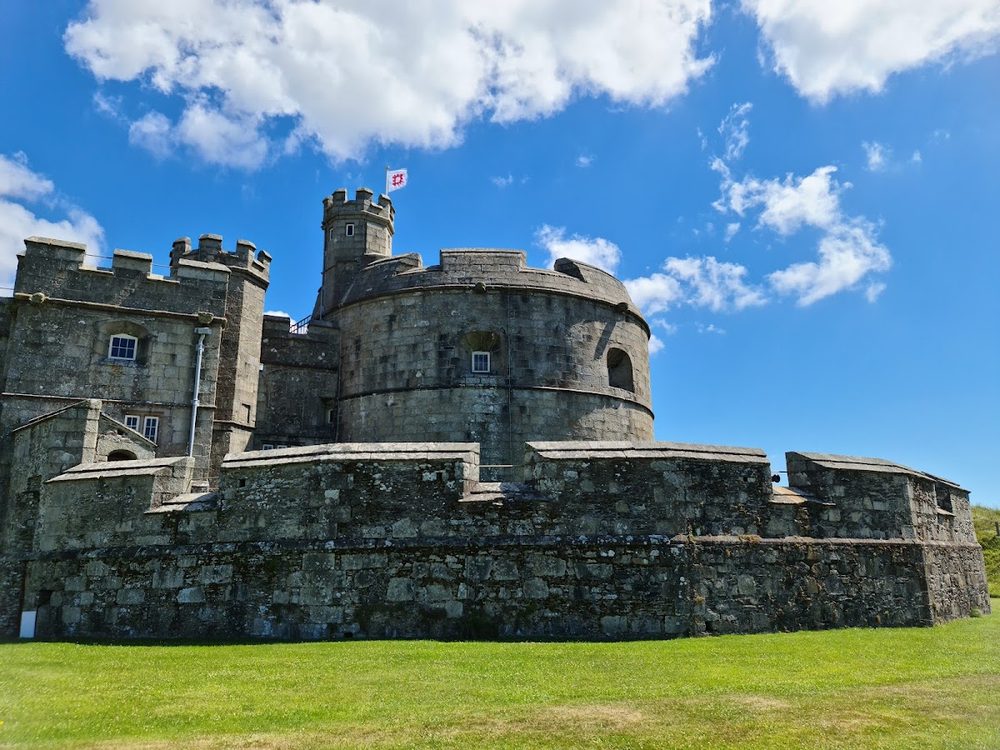
The last coastal forts, and the sea taking them back
Each later invasion scare reached for the same shoreline. The Napoleonic emergency rearmed the Tudor forts, cut barracks into the cliff at Dover and strung 103 small gun towers along the Channel and North Sea coasts, which have a guide of their own. Half a century later the fear returned, and the Royal Commission of 1859 produced the largest fortification programme in British peacetime history: over seventy forts built or upgraded around Portsmouth, Plymouth and the Medway, four of them armoured islands standing in the Solent. They were called Palmerston's Follies almost immediately, partly because the threat faded, partly because artillery advanced faster than the masonry, and partly because the Portsdown Hill forts turn their backs on the sea entirely and face inland.
The 20th century did not abandon these places; it re-manned them. Pendennis was a working coastal battery in both world wars. Calshot ended up with a flying-boat station built around the Tudor keep. Carrickfergus held ordnance in the first war and sheltered civilians in the second. And under Dover Castle, in the tunnels first cut against Napoleon, Vice-Admiral Bertram Ramsay ran Operation Dynamo in 1940 and brought an army home off the beaches of Dunkirk. Seventeen centuries after the Romans walled the same coast, the same headland was still the place from which the Channel was watched.
What finally beats these buildings is not an enemy. It is the sea. On 26 February 2021 about 38 metres of wall at Hurst Castle collapsed into the Solent as the shingle beneath it was scoured away. At Dunluce on the Antrim coast, part of the outbuildings is said to have dropped into the sea one night in 1639, though how much of that story is history and how much is tradition is not clear. Coastal forts are put where the water is, and the water is patient. Almost none of them ever fired at the invasion they were built for, and the ones that are disappearing are being taken by the thing they were built beside.
Quick answers
What is a sea castle or coastal defence castle?
It is a castle or fort built to control the sea rather than the land - to guard a harbour, an anchorage, a river mouth or a stretch of beach where an enemy could come ashore. In Britain these fall into two broad kinds. Medieval coastal castles mostly held a harbour and a supply route, and could be reinforced from the water when the land route was cut. Artillery forts from the 1500s onwards were built the other way round: low, thick and stuffed with guns pointing out to sea, designed to shoot at ships rather than to house a lord.
What is a Saxon Shore fort?
A late Roman coastal fort on the south and east coasts of Britain, built over the course of the 3rd century against seaborne raiders. Nine British forts are listed under the Count of the Saxon Shore in the Notitia Dignitatum, a late Roman administrative document, among them Portchester, Pevensey, Burgh Castle, Reculver and Richborough. Historians still argue over whether 'Saxon Shore' meant the coast raided by Saxons or the coast where Saxons had settled.
Why were so many British castles built on the coast?
Because until the railways the sea was the fastest road. A castle on a harbour controlled trade, customs, troop movements and supply, and it could be provisioned by ship when an enemy held the country behind it - which is exactly how Edward I's Welsh castles were designed to work. The threat came the same way, so the same headlands that made good harbours also made the places an invader had to take first.
Did coastal castles ever stop an invasion?
Rarely on their own, and the honest record is mixed. Pevensey's Roman walls did not stop William the Conqueror landing beside them in 1066. Upnor Castle's guns failed to keep a Dutch fleet out of the Medway in 1667, though they helped force it to withdraw before Chatham dockyard burned. The Tudor Device Forts, the Martello towers and the Victorian Palmerston forts were all built against invasions that never came. Their real work was deterrence, and the awkward truth is that deterrence leaves no evidence either way.
What are Palmerston's Follies?
The forts built after the Royal Commission of 1859, set up under Lord Palmerston's government to answer a feared French invasion. Over seventy strongholds were built or upgraded, mostly around the naval bases at Portsmouth, Plymouth and the Medway, including four armoured sea forts standing in the Solent itself. They were nicknamed follies because the threat evaporated, the guns were obsolete almost as soon as they were mounted, and the Portsdown Hill forts famously face inland, away from the sea.
Where to stand inside the idea
Ten castles on the roll where the coast was fortified, from Roman walls to Second World War gun positions:
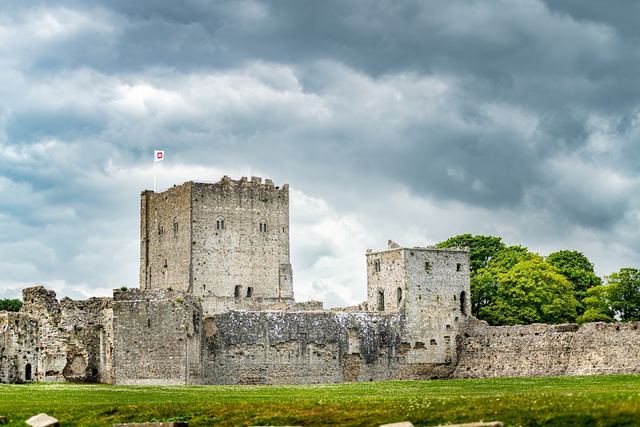
Portchester Castle
The whole argument in one place. A Roman Saxon Shore fort of the 3rd century holding the most complete set of Roman walls in northern Europe, with a Norman keep dropped into one corner and a medieval royal palace inside.
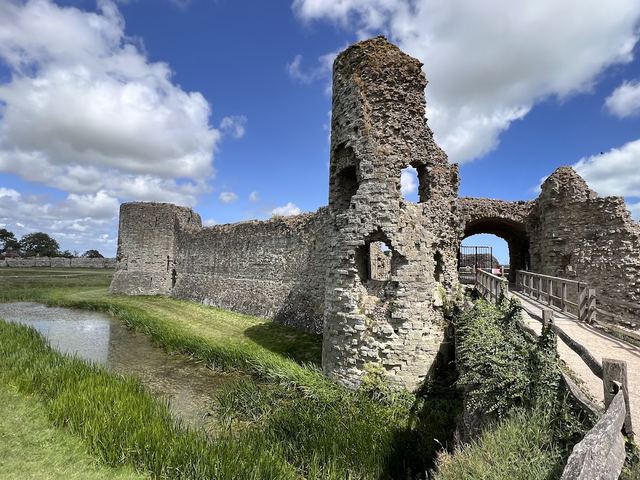
Pevensey Castle
Roman Anderitum, and the beach William the Conqueror chose in 1066. He put his first fortification inside the Roman walls rather than building fresh, and a medieval castle grew in the corner of them.
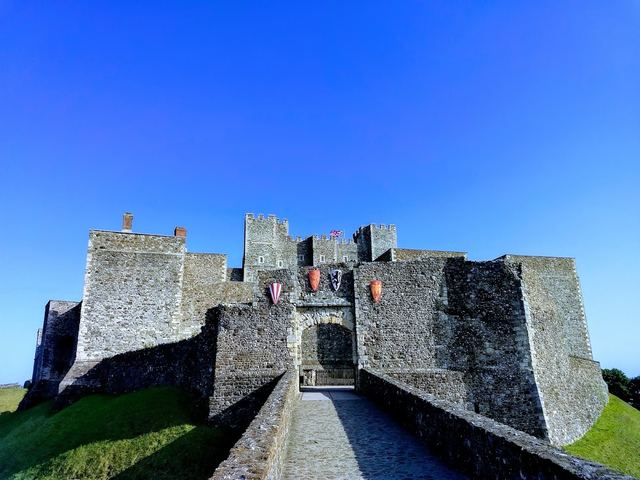
Dover Castle
The place every era fortified again. Called the key of England in the 13th century, mined by French troops in the siege of 1216-17, tunnelled beneath in the Napoleonic emergency, and the headquarters from which the Dunkirk evacuation was run in 1940.
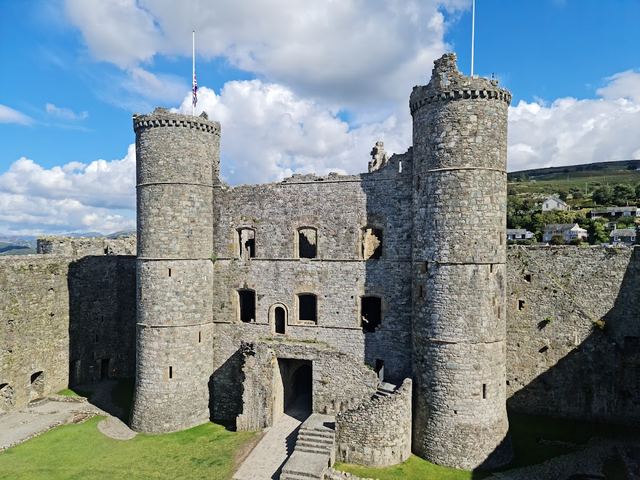
Harlech Castle
Built to be supplied from the water. A fortified stairway runs down the rock to a water gate that the sea once reached, which is how the garrison was kept alive when Welsh forces held the land around it. The shoreline has since moved away.
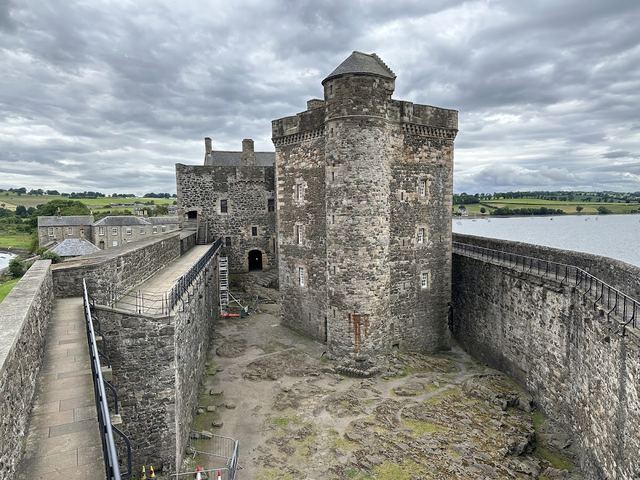
Blackness Castle
The ship-shaped fortress on the Firth of Forth, remodelled in the 16th century to carry heavy guns and to take a battering from them. It doubled as a state prison, which is what most coastal artillery forts eventually became.
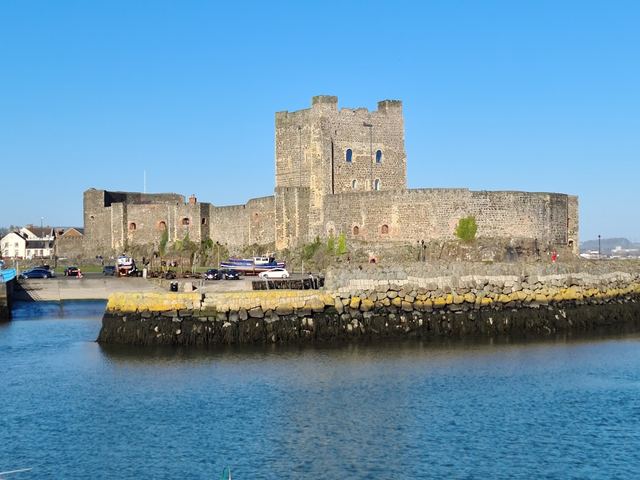
Carrickfergus Castle
A Norman castle on a rock in Belfast Lough, guarding the sea approach to the north of Ireland. It was garrisoned for around 750 years, until 1928, and served as an ordnance store in the First World War and an air raid shelter in the Second.
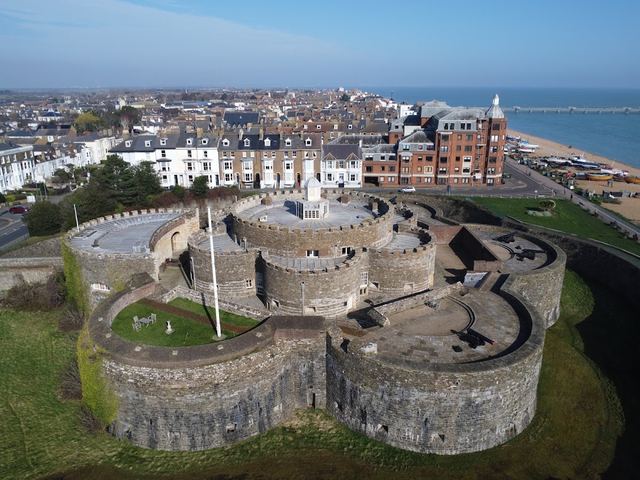
Deal Castle
The largest and most elaborate of Henry VIII's Device Forts of 1539-40, a six-lobed gun platform on the shingle covering the anchorage of the Downs. Low, round and thick, with nothing in it that is not about guns.
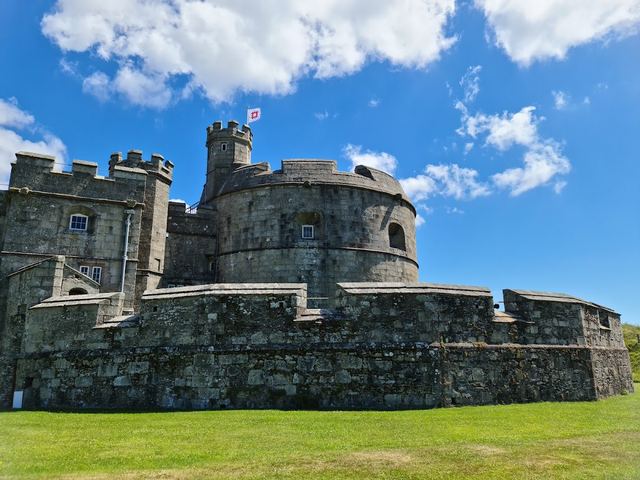
Pendennis Castle
The clearest case of a headland rebuilt for every war. A Tudor gun fort of the 1540s guarding the Fal, given Elizabethan ramparts, rearmed against Napoleon, given Victorian batteries, and finally an active coastal artillery position in both world wars.
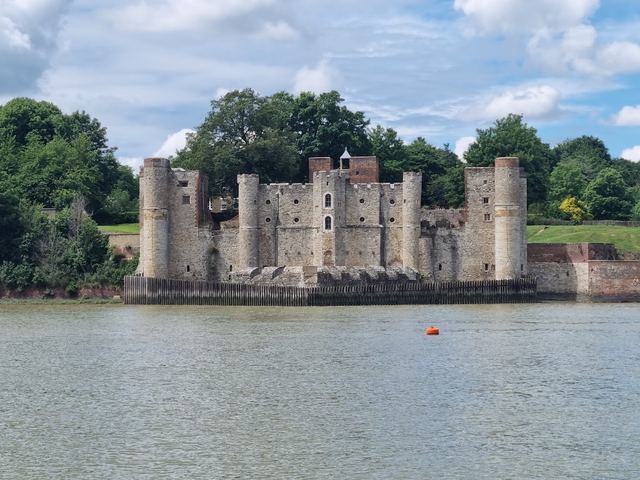
Upnor Castle
The Elizabethan artillery fort built from 1559 to protect the Navy's Medway anchorage - and the one that was tested. In June 1667 a Dutch fleet came past it, burned laid-up warships and towed away the Royal Charles.
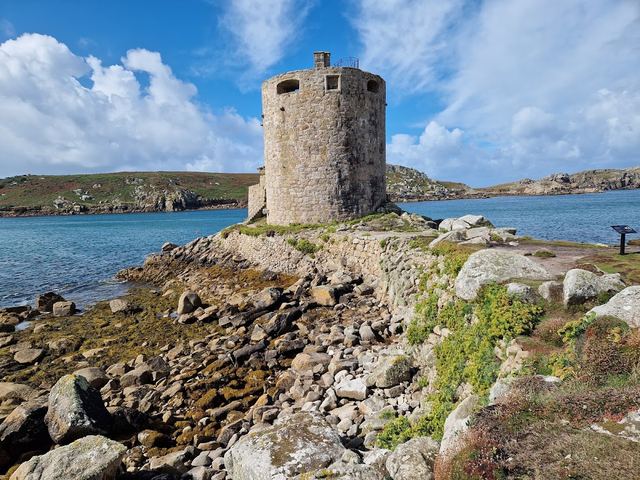
Cromwell's Castle
A tall round gun tower thrown up on Tresco in 1651-52 because the Tudor fort on the hill above could not do the job. Built at the water's edge, where the guns could actually reach a ship in the channel.